
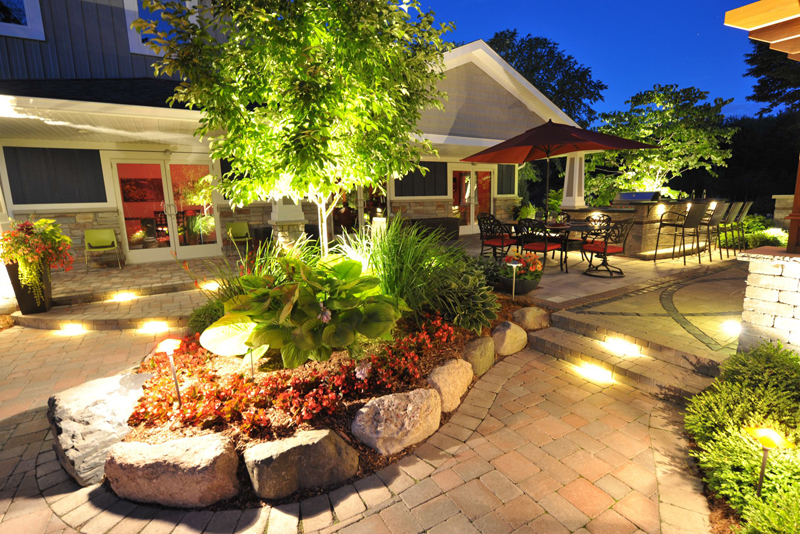
Good garden lighting starts with deciding what needs to be visible after dark, not with choosing fixtures. Garden lighting ideas work better when each area has a clear purpose: a path needs enough light to walk comfortably, a seating area needs softer illumination around the people using it, and a mature tree may need only one carefully aimed beam to become a focal point.
Lighting every part of the landscape equally tends to flatten it. A stronger plan combines practical illumination with a smaller number of accents, allowing darker areas to create depth between paths, plants, trees, and outdoor living spaces.
Plan Garden Lighting Around What You Need to See
Walk through the garden after sunset before choosing fixtures. Start with the places that feel uncertain in the dark: steps, changes in level, gates, paths, seating areas, and the route between the house and frequently used outdoor spaces.
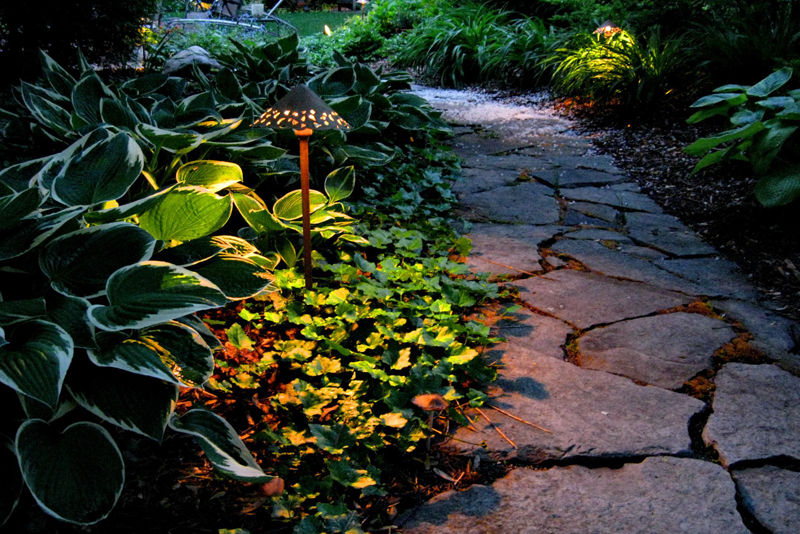
Decorative lighting comes afterward. A specimen tree, textured wall, water feature, ornamental grass, or group of shrubs may deserve an accent, but each feature should earn its light rather than simply filling another dark part of the yard.
Think in layers instead of a grid of fixtures. Ground-level path lights solve a different problem from a spotlight aimed into a tree canopy, while wall-mounted lighting beside a patio can provide comfortable ambient illumination without competing with landscape accents farther into the garden.
Separate Safety Lighting From Decorative Lighting
Safety lighting should make movement easier without becoming the main visual feature. Steps, path edges, gates, and uneven surfaces need enough illumination to be understood quickly when someone approaches them.
Decorative garden lighting can be more selective. It may reveal the bark of an old tree, graze across stone, illuminate foliage from below, or create a soft background behind a seating area.
Keeping those jobs separate also helps with fixture selection. Instead of asking one powerful floodlight to cover both the path and the planting bed, separate path and accent lights can illuminate the walking surface while keeping the planting behind it darker.
Garden Path Lighting Without Creating a Runway Effect
Garden path lighting should reveal the route rather than trace every inch of it. Closely spaced fixtures on both sides of a walkway can make a residential garden resemble a runway, particularly when every light is the same height and brightness.
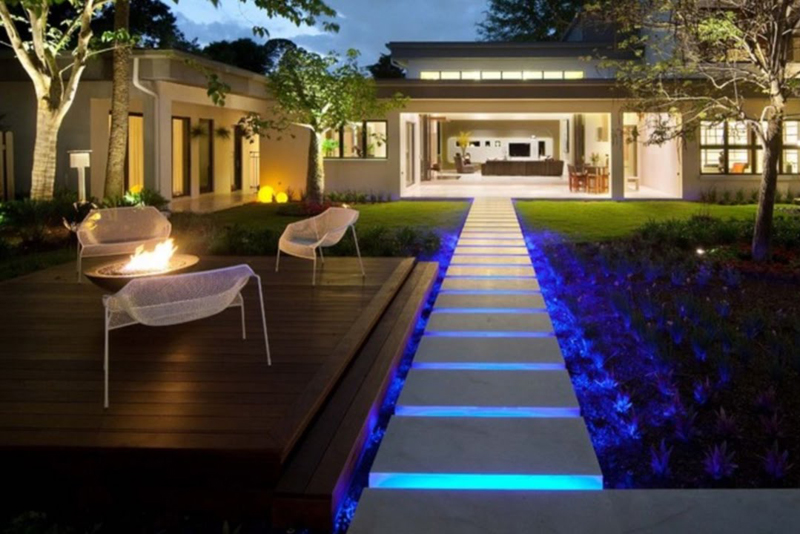
Staggering fixtures from side to side usually produces a softer result. Curves, steps, junctions, and changes in level deserve particular attention, while a straight and obvious section of path may require much less illumination.
Beam direction matters as much as fixture spacing. Light aimed downward or across the walking surface helps define the path without placing a bright source directly in someone’s line of sight.
For a natural-looking layout, concentrate on the places where lighting performs a clear job:
- place lights where the direction or level of the path changes;
- avoid perfectly symmetrical rows unless the architecture genuinely calls for them;
- leave darker gaps instead of creating continuous illumination;
- keep visible bulbs out of normal sight lines;
- check the path from both directions before fixing final positions;
- leave enough access around fixtures for routine garden maintenance.
Path lights also remain visible during the day. A fixture that works beautifully at night can still become daytime clutter if too many units are scattered through a small planting bed.
Use Spotlights and Uplights for Trees and Garden Features
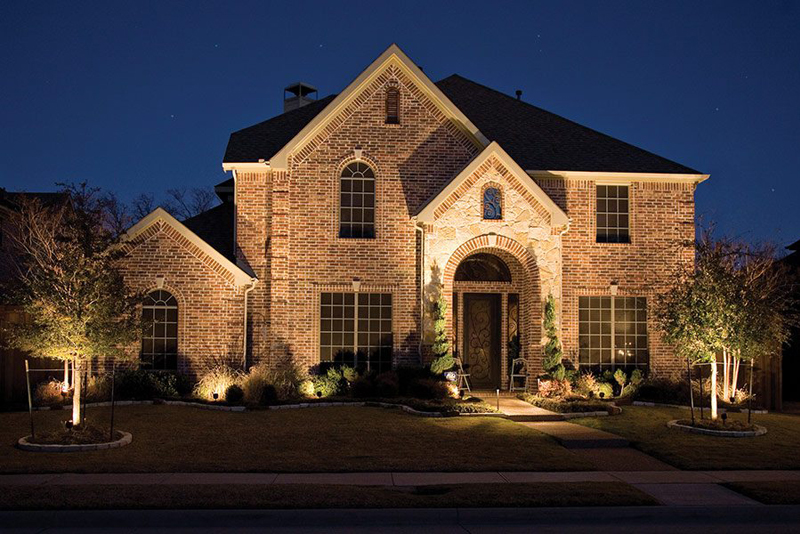
Trees are natural candidates for accent lighting because trunks, branches, and foliage react differently to directional light. A beam aimed upward can emphasize bark and branch structure, while light reaching the lower canopy produces a broader, softer effect.

Start with one light on a prominent tree and judge it from the house, patio, and main path before adding another. A single well-aimed beam often reveals more shape than several overlapping spots that wash out the shadows between branches.
Sculptures, stone walls, large planters, and water features benefit from the same kind of selective treatment. Garden spotlighting works best when the highlighted object has enough darker space around it to remain distinct.
Evergreens are particularly effective nighttime features because they retain structure through winter. If the landscape already uses garden design with juniper shrubs, one prominent specimen or carefully chosen group can provide texture after nearby seasonal plants have disappeared.
Light Trees Differently From Shrubs and Flower Beds
A mature tree can take a more directional upward beam because there is trunk, branching, and canopy to reveal above eye level. Small shrubs and perennial beds generally respond better to lower, broader illumination that shows shape and texture without concentrating all of the brightness on a few leaves.
Flower beds change much more through the year than trees or structural shrubs. Instead of assigning a fixture to every group of flowers, use permanent features such as a small tree, rock, ornamental grass, or evergreen as the visual anchor and let nearby planting pick up some of the spill.
This keeps mixed beds interesting when flowers fade or disappear. The lighting still has something worthwhile to reveal in winter rather than ending up aimed at bare soil.
Add Softer Lighting Around Patios and Seating Areas
A patio needs enough light to eat, talk, serve food, and move around comfortably. It rarely benefits from becoming the brightest zone in the garden, especially when people spend long periods sitting there.
Wall-mounted lights, shielded fixtures, soft string lights, and low lighting around the edge of the space can provide different layers without relying on one dominant source. The best combination depends on whether the area is used mainly for dining, conversation, cooking, or occasional entertaining.
Test the lighting from the actual chairs rather than only while standing beside a fixture. A lamp that looks subtle from across the garden may feel much stronger at seated eye level.
Lighting beyond the patio matters as well. One softly illuminated tree or planting group in the distance keeps the garden visually connected to the seating area instead of allowing the landscape to disappear into a dark wall beyond the terrace.
The furniture should remain the practical center of the space. Seating positions, table placement, and normal walking routes should determine where wall lights, string lights, or freestanding fixtures can fit without blocking circulation or making the layout awkward.
Solar Garden Lights vs Low-Voltage Landscape Lighting
These systems solve different problems. Solar fixtures are useful where running cable would be inconvenient and where the location receives enough direct light to recharge reliably, while low-voltage landscape lighting suits a more permanent system where predictable output and coordinated control matter.

Neither option has to serve the entire garden. A permanent low-voltage system can handle paths and key landscape features while solar fixtures provide smaller accents in places where wiring would add unnecessary work.
| Lighting System | Best For | Main Strength | Main Limitation |
|---|---|---|---|
| Solar | Path accents, small decorative areas | No landscape wiring | Output depends on sun and battery condition |
| Low voltage | Permanent paths, trees and planting beds | Reliable and easy to coordinate as a system | Requires cable planning and installation |
| Plug-in | String lights and temporary patio lighting | Simple to add or move | Limited by outlet and cable location |
| Hardwired | Integrated architectural and larger outdoor systems | Permanent, controlled installation | Usually requires professional electrical work |
Solar garden lights are also handy for testing ideas. A movable fixture can show whether a corner or section of path actually benefits from illumination before money and effort go into a permanent installation.
Efficiency becomes more important in a system that runs for several hours each evening. Timers, sensors, and automatic controls can keep lights from operating when nobody needs them, while ENERGY STAR’s smart lighting advice also covers scheduling, sensors, and photocell controls for outdoor use.
Choose Brightness and Color Temperature Before Buying Fixtures
Brightness should match the surface and task rather than the largest lumen number on the box. Steps and entrances need clear visibility, while a tree trunk, ornamental grass, or stone wall may become noticeable with considerably less output.
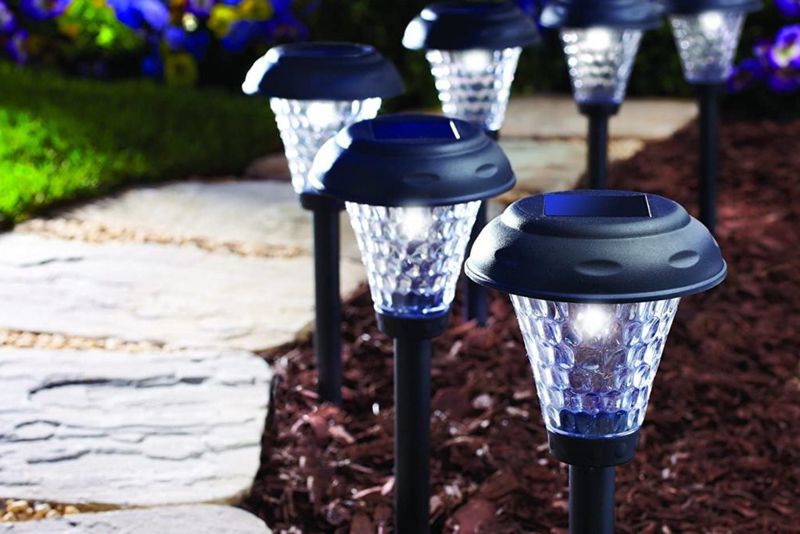
A very bright fixture can make a small garden harder to read by creating an abrupt boundary between illuminated and dark areas. Lower output often preserves more detail in foliage, bark, stone, and other textured surfaces.
Color temperature changes the character of those materials as well. Warmer light generally sits comfortably with wood, brick, greenery, and residential outdoor spaces, while colder white light can make planting beds feel stark when used too aggressively.
Before buying several identical fixtures, decide what each zone actually requires. Path lighting, patio lighting, feature lighting, and entrance lighting may all work better at different output levels.
Use Several Light Levels Instead of One Bright Setting
A convincing night garden has a hierarchy. The entrance can be clear and practical, the patio softer, and planting beds darker except for one or two deliberate accents.
Those differences help preserve depth after sunset. If the lawn, hedge, path, patio, trees, and boundary fence are all equally bright, the landscape loses the visual separation that made those areas distinct during the day.
Begin with the areas that genuinely need visibility, then add accent lighting gradually. It is easier to strengthen an underlit feature later than to restore contrast after the entire yard has been flooded with the same level of light.
Avoid Glare and Light Spill Into Windows or Neighboring Yards
Glare happens when the bright source itself becomes more noticeable than the surface it was supposed to illuminate. A garden can have relatively few fixtures and still feel uncomfortable if bulbs or intense beams remain directly visible.
Shielding and careful aiming keep more light on the intended path, wall, tree, or planting area. Once the fixtures are operating, check them from bedroom windows, seating positions, paths, the street, and directions facing neighboring properties rather than judging the installation only from beside each lamp.
Keeping beams targeted, limited to the task, controllable, and warmer where practical also follows DarkSky’s responsible outdoor lighting principles. Those principles are relevant to garden design because light that stays on the intended feature creates cleaner contrast than illumination scattered across lawns, fences, windows, and the night sky.
A small aiming adjustment can sometimes improve the result more than changing the fixture itself. The goal is for people to notice the path or plant being lit rather than wonder where the bright light in their eyes is coming from.
Use Timers and Motion Controls Instead of Leaving Everything On
Different parts of a garden rarely need the same schedule. Decorative planting and tree lights may be appropriate while the patio is occupied in the evening, while an entrance or occasional security light serves a different purpose.
Timers, dusk sensors, motion controls, and separate lighting zones make those distinctions easier to manage. They also allow one part of the garden to be adjusted without changing everything else.
A practical control plan can include:
- dusk sensors that switch fixtures on automatically;
- timers for decorative evening lighting;
- separate zones for paths, planting, entrances, and seating areas;
- motion activation where occasional illumination is more appropriate than constant light.
Zoning is particularly helpful in a larger garden. If the patio begins to feel too bright, adjust that zone without reducing the path lighting between the seating area and the house.
Controls also reduce the temptation to design around the assumption that every fixture must operate whenever any fixture is needed. A garden can use several lighting layers without running all of them at the same time.
Install Garden Lighting Without Fighting the Landscape
A good lighting plan should work with the physical layout of the garden rather than forcing cables and fixtures through it afterward. Paths, paving, lawn edges, planting beds, irrigation routes, and areas that require regular maintenance all affect where an installation can sensibly go.
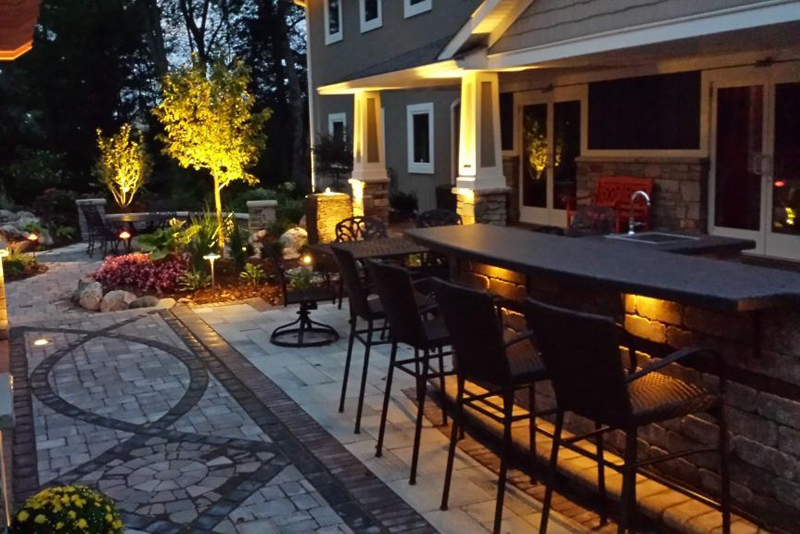
Fixtures near lawn edges should remain clear of mowing routes, while ground-mounted lights need enough access for cleaning and adjustment. Cable routes should also avoid turning routine planting or digging into a recurring risk.
If the landscape is still taking shape, plan the lighting before adding paving, mature plants, and finished beds to reduce later disturbance. An established garden requires more care because trenching or repeated excavation may damage roots, hardscape, or planting that has taken years to mature.
Planning where the light belongs is a design decision; qualified professionals should handle mains wiring and more complex electrical work according to local requirements. That keeps the article focused on lighting design rather than turning fixture placement into an improvised electrical project.
Maintain Outdoor Garden Lighting as Plants Grow
Outdoor garden lighting changes even when the fixtures never move. Dust dulls lenses, leaves spread into beams, soil shifts around ground-mounted fixtures, and branches can alter a lighting effect that worked perfectly a few months earlier.
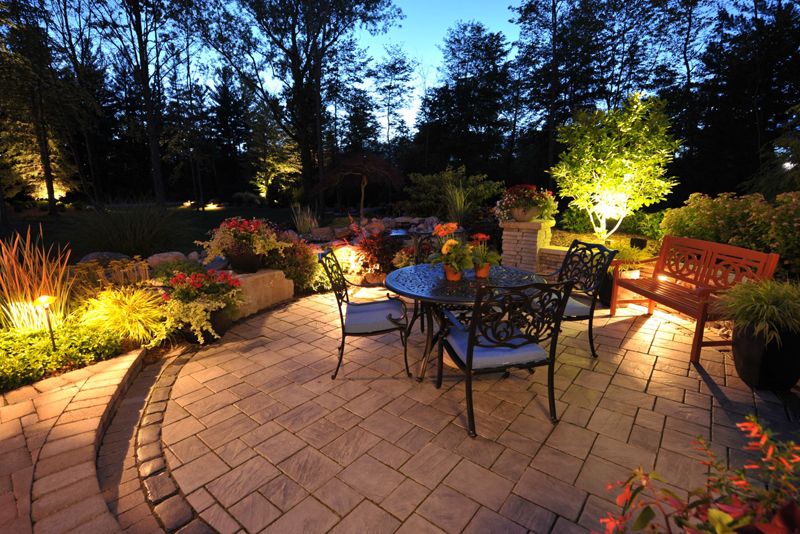
Inspect the system several times through the year rather than waiting for a fixture to stop working. Clean lenses and solar panels, clear vegetation from around lights, and check whether adjustable beams still reach the feature they were intended to highlight.
Seasonal plant growth can make the biggest visual difference. A spotlight positioned for the open structure of a spring tree may need re-aiming after the canopy fills, while a summer perennial can completely hide a path light that was clearly visible during winter.
Maintenance is also a good moment to question whether every fixture still earns its place. Gardens evolve, and a light installed for a young shrub or temporary feature may no longer serve a clear role several years later.
Repair damaged fixtures, loose components, or electrical faults instead of hiding problems behind foliage. Water, soil, tools, weather, and regular gardening activity are all part of the environment in which outdoor lighting has to keep working.
What Usually Makes Garden Lighting Look Wrong
Poor garden lighting is often easy to recognize even when the individual fixtures are attractive. The problem usually comes from placement, hierarchy, or an attempt to make every part of the landscape equally visible.
Look at the finished garden from the places where it is actually experienced: the main windows, patio, entrance, and paths. Several common problems tend to stand out quickly:
- every tree has its own spotlight;
- path lights form two perfectly parallel rows;
- exposed bulbs are brighter than the surfaces around them;
- cool white floods wash across large areas of the garden;
- decorative fixtures compete with one another for attention;
- the seating area feels brighter than necessary for conversation;
- light enters windows or crosses unnecessarily into neighboring property.
This final check is less about adding fixtures and more about editing what is already there. Remove, dim, re-aim, move, or reschedule any light that does not improve the overall result.
Garden lighting ideas become effective when every fixture has a clear role. Some lights help people move safely, some reveal plants or architecture, and others make outdoor seating comfortable after sunset.
The darker parts of the garden belong in the design as well. When paths are readable, important features have enough emphasis, and the sources themselves stay mostly out of sight, the landscape keeps its depth instead of disappearing beneath one blanket of brightness.