
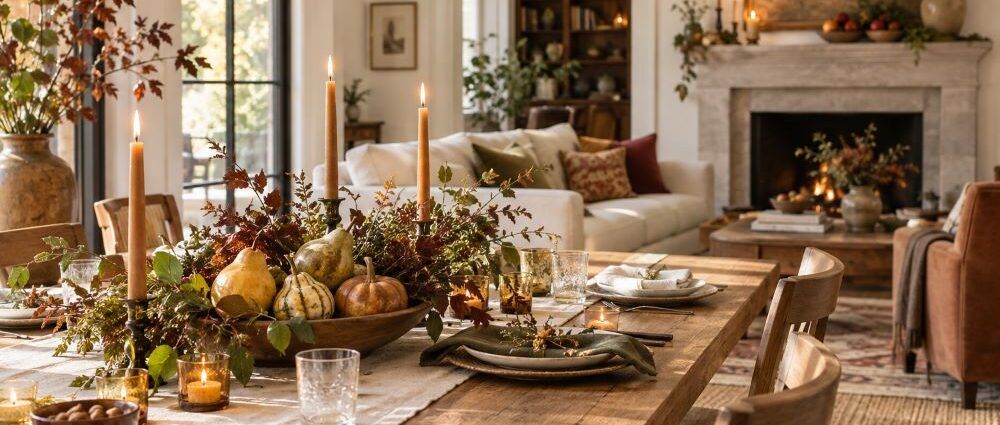
Thanksgiving decorating ideas do not need to turn every room into a display of pumpkins, turkeys, and harvest signs. The strongest Thanksgiving rooms often look as though fall was already there and the holiday simply added another layer: a better table, a few seasonal ingredients, richer color, and details that make gathering feel intentional.
There is also less to store when the holiday is over. Instead of buying a separate collection for a few November weeks, start with what already works for fall and add Thanksgiving-specific touches where people will actually notice them.
Let Fall Decor Do Most of the Work
A room that already has warm textiles, wood, autumn branches, candles, or darker seasonal colors may need very little to feel ready for Thanksgiving. The change can come from a bowl of pears on a console, a linen runner on the table, or a few small gourds mixed with objects that stay out all season.
Removing Halloween-specific pieces often makes more difference than adding another box of decor. Black bats, novelty ghosts, and obviously spooky accessories can disappear while amber glass, woven baskets, dried branches, neutral pumpkins, and heavier textiles remain.
If the house already follows a seasonal rhythm, the same principle used to transition home decor between seasons works here too: keep the useful base and change only the details that clearly belong to the outgoing moment. The same fall base can then shift toward Thanksgiving differently from room to room.
| Area | Keep From Fall | Add for Thanksgiving |
|---|---|---|
| Dining table | Linen, candles, warm-toned dishes | Low centerpiece, fruit, place cards |
| Mantel | Candlesticks, branches, neutral ceramics | Small gourds, darker foliage, seasonal fruit |
| Living room | Throws, wood, amber glass | One Thanksgiving focal arrangement |
| Entryway | Basket, lamp, autumn wreath | Branches, pears, gourds, warmer accents |
Choose a Thanksgiving Palette Beyond Orange
Orange still belongs in fall decorating, but it does not have to control the entire room. Deep red, olive, smoky green, brown, amber, plum, muted terracotta, and warm cream can create a richer Thanksgiving palette without making the house feel disconnected from its everyday decor.
Oxblood, olive, terracotta, deeper reds, and jewel-like shades also appear in Better Homes & Gardens’ fall decorating trends for 2026, which lean toward layered interiors rather than perfectly coordinated seasonal schemes. Those colors translate easily to Thanksgiving because they can appear in small pieces rather than demanding a new room scheme.
A burgundy napkin, olive branches, amber glasses, brown candles, or a plum-toned throw may be enough. The seasonal colors should support the furniture and finishes already in the room rather than competing with them.
Thanksgiving Table Decor That Still Leaves Room for Dinner
Thanksgiving table decor has to do something ordinary seasonal styling does not: leave room for an actual meal. A centerpiece can look impressive in a photograph and still become irritating once serving dishes, glasses, bread, condiments, and elbows arrive.
Reserve the most useful parts of the table first. Decorative elements can occupy the remaining space instead of forcing dinner to work around them.
Keep the Centerpiece Low Enough for Conversation
For a seated meal, low Thanksgiving centerpieces usually work best because guests can still see one another across the table. A shallow arrangement, several small vessels, a bowl of fruit, or candles mixed with clipped greenery can create impact without building a wall between people.
The low arrangements and fresh greenery in HGTV’s Thanksgiving table-setting ideas show how texture can fill the center of the table without cutting guests off from one another.
Height can still vary. A few slim candlesticks rising above a low arrangement are less obstructive than a dense vase at eye level, especially when the taller elements are narrow enough to see around.
Let the Place Settings Carry Some of the Decoration
Not every decorative detail needs to sit in the center. Napkins, plates, glasses, place cards, and small branches at individual settings can distribute color across the table without taking away serving space.
This is also a good place for pieces that do not match perfectly. Different vintage glasses, mixed napkins in related tones, or simple white plates with varied natural accents can make the table feel assembled over time rather than purchased as one holiday set.
Keep those details easy to move. A small pear, leaf, or name card beside a plate is easier to handle during dinner than a complicated object balanced directly on top of the place setting.
Use Fruit, Gourds and Branches Instead of Buying More Seasonal Objects
Some of the most effective Thanksgiving decorations are temporary by nature. Pears, apples, pomegranates, small gourds, nuts, herbs, and clipped branches bring color and texture without creating another storage bin after the holiday.
They also help avoid the familiar problem of covering a room with identical miniature pumpkins. One bowl of dark fruit can have more presence than a dozen small seasonal objects scattered across unrelated surfaces.
Natural Thanksgiving accents can include:
- pears or apples in a shallow bowl;
- pomegranates for deeper red color;
- small gourds mixed with candles;
- clipped branches in ceramic or glass vessels;
- walnuts or chestnuts in smaller tabletop arrangements;
- rosemary, sage, or other herbs around place settings.
Scale should follow the location. A few branches in a tall vase may work beautifully on an entry console, while the same arrangement would be awkward on the dining table. Small fruit and gourds suit a low centerpiece because they add volume without blocking sight lines.
Fruit, branches, and gourds feel more integrated with the room when they sit beside materials already used there. Wood bowls, ceramic plates, glass hurricanes, linen, brass, and simple candleholders help the arrangement look like part of the interior rather than a temporary craft project.
Give the Living Room One Thanksgiving Focal Point
Choose the living-room surface people notice first, such as the coffee table, console, or fireplace area, and concentrate the seasonal change there.
A coffee table might hold a shallow bowl with fruit and small gourds. A console can use branches, two candles, and one darker seasonal object. Even changing a throw or cushion may be enough when the room already contains wood, warm neutrals, or autumn colors.
Leaving some surfaces untouched gives the seasonal pieces room to register. Once every table, shelf, window, and chair receives its own arrangement, the individual details start competing with one another.
Give the Mantel a Thanksgiving Layer, Not a Full Makeover
A fireplace mantel is already a natural focal point, so Thanksgiving does not require rebuilding it from scratch. Keep the artwork, mirror, candlesticks, or other pieces that normally anchor the arrangement and change only a few smaller elements.
Branches, dried foliage, small gourds, fruit, or darker candles can shift the mantel toward Thanksgiving. Keeping the mirror, artwork, or candlesticks in place also makes seasonal fireplace decor easier to update because only the smaller accents need to change.
Avoid lining the full mantel with objects of identical height. Grouping a few pieces and leaving open space between them usually looks less staged and makes the Thanksgiving elements easier to remove afterward.
Bring Thanksgiving Into the Entryway Without Blocking the Space
The entryway sets the seasonal tone before anyone reaches the dining room, but guests also need to move through it with coats, bags, and shoes. That makes a small number of well-placed accents more practical than a floor full of decoration.
A wreath, bowl of fruit, clipped branches, or compact group of gourds can establish the palette without narrowing the walkway. On a console, everyday objects such as a lamp, mirror, tray, or ceramic vessel can stay in place while one or two seasonal additions change the composition.
Keep larger baskets, signs, and pumpkin clusters away from circulation routes. What looks harmless in an empty entrance can become awkward as soon as several guests arrive at once.
Use Candlelight Where It Changes the Mood
Candles add warmth without introducing another literal Thanksgiving motif. They work especially well on dining tables, mantels, sideboards, and entry consoles, where a small amount of light can soften the room after sunset.
Different locations call for different heights. Dining candles should leave sight lines open, while a mantel or console can handle taller pieces because nobody needs to talk across them.
Scent deserves more caution around food. Strong cinnamon, vanilla, or artificial pumpkin fragrances may compete with dinner, so unscented candles are usually the easier choice near the table.
Thanksgiving Decorating Ideas for Small Homes
Small homes benefit from choosing fewer decorating zones rather than shrinking every idea from a larger room. A dining table, one living-room surface, and the entryway may create enough seasonal change for the whole space.
Vertical areas can carry more of the decoration. A wreath, branch arrangement, mantel, shelf, or narrow console adds atmosphere without taking up walking room.
Functional objects can do double duty as Thanksgiving home decor. Napkins, serving bowls, glassware, throws, and candles already have jobs to do, which makes them especially valuable when storage is limited. Pieces that return to everyday use after Thanksgiving also earn their space more easily than decorations that spend most of the year packed away.
What Makes Thanksgiving Decor Feel Overdone
Thanksgiving decor starts to feel forced when the holiday appears on every surface rather than in a few deliberate places. Repetition causes more trouble than any one decorative object.
Several choices are particularly easy to overdo:
- repeating the same mini pumpkins throughout multiple rooms;
- relying on turkey figures or word signs to explain the holiday;
- using a centerpiece so tall or wide that dinner has to work around it;
- placing strongly scented candles beside food;
- covering consoles and tables until everyday objects have nowhere to go;
- introducing a separate color scheme that fights with the room itself.
Editing is often enough to fix the problem. Removing two unnecessary pieces can give the remaining arrangement more presence without buying anything new.
Move From Thanksgiving Into Winter Without Starting Over
Collected Thanksgiving decorating has another advantage: much of it can stay after the holiday. Start by removing the obvious harvest pieces, including Thanksgiving place cards, turkey motifs, aging produce, and gourds that no longer suit the season.
Candles, brass, wood, neutral ceramics, heavier textiles, and many branches can remain. In early winter, the same objects can work with evergreen clippings, pinecones, bare branches, or cooler seasonal colors instead of requiring another complete reset.
Thanksgiving decorating works best when the holiday changes the atmosphere without hiding the rooms underneath it. If the table still functions, the mantel still belongs to the room, and most of the fall pieces can stay into winter, there is little reason to add more.