
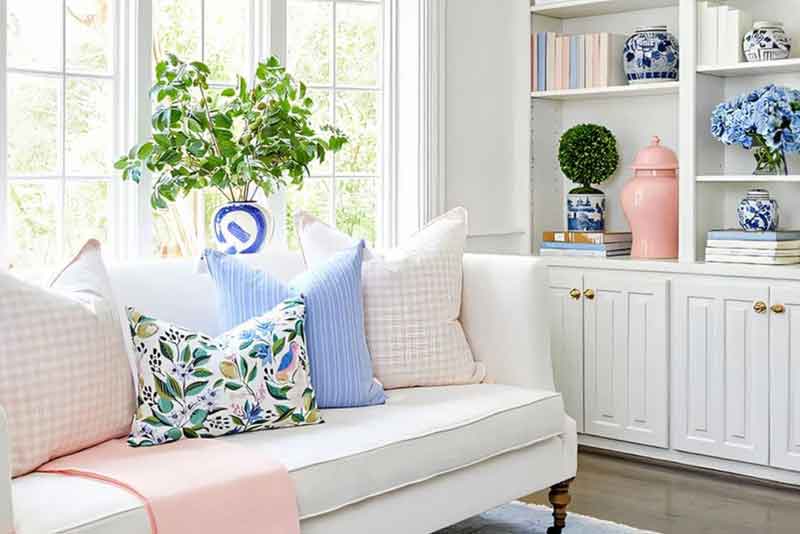
To transition home decor between seasons, most rooms need fewer changes than people expect. New furniture, a different color scheme, and another collection of accessories every three months quickly turn decorating into a storage problem rather than a refresh.
The pieces that stay are just as important as the ones that rotate. Artwork, furniture, lamps, baskets, ceramics, and other familiar objects can remain while textiles, natural materials, lighting, and smaller accents move in and out. The house changes with the time of year without looking as though it has been reset four times.
Keep a Year-Round Base Before Adding Seasonal Home Decor
Seasonal home decor is easier to manage when most of the room already works without it. Large furniture, rugs, wall art, window treatments, and the main lighting should still make sense whether it is April or October.

That foundation does not have to be beige or deliberately neutral. A navy sofa, patterned rug, dark wood table, or colorful artwork can work all year if the surrounding pieces are flexible enough to shift with warmer weather, shorter days, or the holiday season.
Imagine the room with every obvious seasonal item removed. If it still feels complete rather than unfinished, there is already a strong base to work with.
Separate Permanent Pieces From Seasonal Accents
Before changing anything, decide which objects genuinely belong in the room all year. Framed art, mirrors, lamps, trays, bowls, favorite ceramics, books, baskets, photographs, and larger houseplants often make up this permanent layer.
The seasonal accents can stay much smaller. A throw, cushion cover, branch arrangement, wreath, candle color, centerpiece, or a few mantel objects may be enough to alter the mood without changing the room itself.
Keeping that distinction clear also makes storage easier. The fewer objects that exist only for one part of the year, the less likely decorating is to become a cycle of unpacking, rearranging, and finding somewhere to put everything again.
Change Color in Small Areas Instead of Redecorating the Room
Color can shift the mood quickly, but it rarely needs to spread across every surface. Smaller accents are usually enough to change how the existing palette feels.
Spring might introduce fresh green, pale yellow, soft blue, or floral tones through flowers, cushion covers, and tabletop pieces. Summer often needs even less because stronger daylight already makes many interiors appear brighter.
Fall can bring rust, tobacco brown, burgundy, ochre, or deeper green through textiles and natural materials. Winter may suit darker neutrals, evergreen, warm metallics, and cream, especially once the room relies more heavily on evening lighting.
Start with the colors already present, then introduce an accent that genuinely works with them. A gray living room does not automatically need orange in October, and a warm traditional interior does not suddenly require icy blue because winter has arrived.
Repeating one or two accent colors in several small places generally creates a cleaner transition than introducing an entirely new palette. It also makes older accessories easier to reuse rather than replacing them with a new coordinated set.
Use Textiles to Move a Room From One Season to the Next
Textiles are among the easiest elements to rotate because they affect both color and texture without changing the main furnishings. A heavy knit throw that feels inviting in January can look unnecessarily dense by June.
Linen, cotton, and lighter woven fabrics work naturally in warmer months, while wool, velvet, boucle, and thicker weaves can bring physical warmth back during fall and winter. The smaller textile layers can create a noticeable change without requiring expensive replacements.
Change Cushion Covers Before Larger Seasonal Textiles
Cushion covers are especially practical seasonal textiles because the inserts can stay in place. Swapping only the visible fabric saves storage space and makes it easier to introduce a different color or texture for a few months.
Rugs and curtains require considerably more work, so they are better treated as year-round elements unless there is a practical reason to rotate them. Throws, cushion covers, lightweight blankets, and table linens can handle most seasonal changes while bulky pieces remain untouched.
| Area | Keep Most of the Year | Warmer Months | Cooler Months |
|---|---|---|---|
| Sofa | Main cushions | Linen or cotton covers | Wool, velvet, heavier weaves |
| Bed | Core bedding | Lightweight throw | Layered blanket or quilt |
| Dining table | Everyday runner or bare surface | Lighter textiles | Deeper colors and texture |
| Entryway | Basket or tray | Light woven accents | Heavier baskets and mats |
| Reading chair | Main cushion | Thin throw or none | Warm throw within reach |
The exact fabrics matter less than the contrast they create. Keeping the rotation selective also prevents a textile refresh from becoming another large collection that needs its own closet.
Adjust Lighting as Daylight Changes
A room that feels bright and complete in July can look flat by November even when nothing else has moved. Daylight changes dramatically through the year, so lighting deserves as much attention as cushions and decorative objects.
During spring and summer, natural light may carry the room until late in the day. In fall and winter, table lamps, floor lamps, sconces, and smaller pools of warm light become more noticeable because they are switched on earlier.
Check whether the existing lamps serve the places where people actually sit, read, eat, or walk through the room. A dark corner often benefits more from a useful lamp than from another decorative object.
Candles and small decorative lights can add atmosphere once the practical lighting is working. When brighter evenings return, removing a few of those extra glowing elements can make the room feel lighter without requiring a larger redesign.
Rotate Flowers Greenery and Natural Materials
Natural materials provide an easy way to mark the time of year without accumulating boxes of themed decorations. Branches, flowers, leaves, seed heads, pinecones, fruit, and greenery can alter the mood while the rest of the room remains familiar.
Spring might bring flowering branches or fresh foliage, while summer works naturally with leafy stems and garden flowers. Dried grasses, branches, apples, gourds, and muted foliage fit comfortably into fall, and evergreen or bare twigs can carry a room through winter.
Many of these materials disappear naturally when their moment has passed instead of becoming permanent residents of a storage closet. That makes them particularly useful when the goal is to keep the decorating collection under control.
They also prevent the seasonal reference from becoming too literal. A few branches can suggest autumn without covering every surface with pumpkins, just as evergreen can read as winter without automatically turning the room into Christmas.
Transition the Living Room Without Replacing the Main Decor
The living room offers several obvious places to make small changes: the sofa, coffee table, shelves, fireplace, and lighting. Before adding anything for the new season, remove the details that clearly belong to the previous one and look at the room in its more neutral state.
That short reset helps reveal what actually needs attention. A summer vase may simply need different stems for fall, while a winter throw may disappear completely rather than being replaced by another blanket.

On the sofa, one changed textile layer may be enough. At the coffee table, keep the books, bowl, or tray that normally belongs there and replace only the flowers, greenery, or one decorative object.
The fireplace can function as its own smaller decorating zone. If it is already the room’s focal point, a few changes to the seasonal fireplace decor may carry enough color and texture to influence the rest of the living space.
Focus Living Room Seasonal Decor on the Most Visible Surfaces
Living room seasonal decor has more impact when it appears where people naturally look first. The coffee table, mantel, sofa, and surfaces visible from the main seating area usually matter more than the top of a bookcase or a shelf in a distant corner.
Bookshelves often need very little attention. Replacing one vase, introducing a branch, or removing a distinctly out-of-season object can be enough; changing several shelves at once tends to make them look staged.
If the room already feels different after adjusting a sofa textile, one arrangement, and the lighting, involving every remaining surface adds work rather than impact. Leaving quieter areas alone also prevents the whole room from repeating the same seasonal message.
Make Smaller Seasonal Decor Changes in Bedrooms and Entryways
Bedrooms respond more to changes in comfort and routine than to themed decorating. Temperature, daylight, bedside lighting, and the amount of storage needed near the bed often matter more than introducing another collection of accessories.
As warmer weather arrives, heavier bedding can move out of immediate reach and bedside surfaces can be simplified. Better Homes & Gardens includes this kind of practical reset among its spring organizing ideas, including moving winter bedding and holiday items away from spaces used every day.
When colder months return, the useful changes happen in reverse. An extra blanket becomes accessible, bedside lighting is used earlier, and a basket or bench may take on a more practical storage role without the bedroom needing a complete visual makeover.
Entryways change according to what people are carrying through the door. Summer may call for fewer objects and more open floor space, while wet or cold weather creates a real need for mats, coat storage, umbrellas, shoes, and baskets.
The result feels more natural when function leads the decorating. The space changes because everyday habits have changed, not simply because the calendar says a new season has begun.
Store Seasonal Decor So the Next Change Is Easier
Poor storage can turn a small refresh into an afternoon of opening boxes and trying to remember what belongs where. A simple rotation system is more useful than owning a large collection.
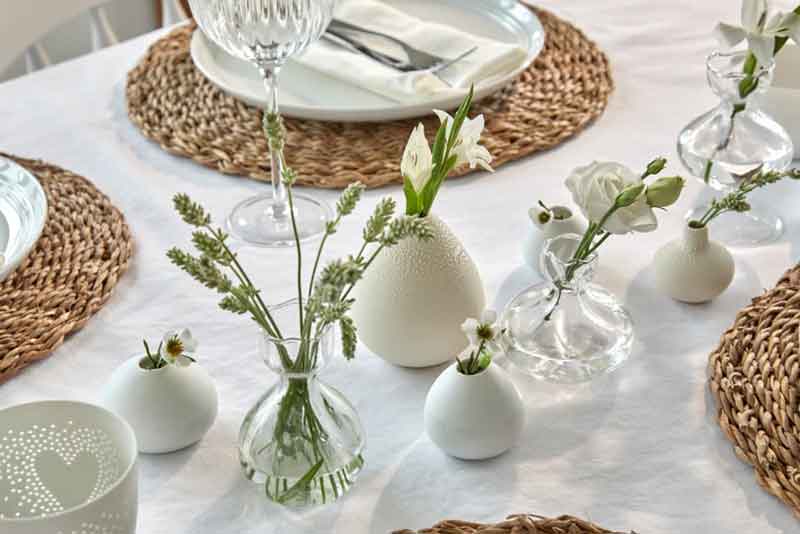
Fragile pieces, textiles, holiday-specific objects, and frequently used accents have different storage needs. Putting all of them into one large seasonal box may feel convenient in the moment but makes the next change harder.
Store Seasonal Decor by Use Not Just by Holiday
Seasonal decor storage becomes easier when containers reflect how the items are actually used. Christmas ornaments may belong together, but neutral winter textiles, candleholders, or natural decorations that stay after Christmas are more useful when they can be reached without unpacking the entire holiday collection.
The same applies to frequently rotated pieces. Cushion covers and table linens can stay together, while fragile ornaments or decorative glass need their own protected storage.
- store groups together when they are normally used together;
- label containers clearly enough to identify them without opening each one;
- keep frequently rotated textiles separate from fragile ornaments;
- decide what to keep before putting everything back into storage;
- donate or discard pieces that have remained unused for several seasons;
- keep the items changed most often easier to reach.
The collection should become easier to manage over time, not larger every year. If several containers are being stored but only one is regularly opened, the unused pieces are taking up space without contributing much to the home.
Move From Holiday Decor Back to Everyday Seasonal Decor
One of the more awkward transitions comes after a major holiday. Removing a Christmas tree, garlands, ornaments, and several weeks of festive color can make an otherwise complete room suddenly appear empty.
Replacing Christmas immediately with another theme only makes the cycle more complicated. Restore the usual artwork, trays, baskets, lamps, and other year-round pieces first, then decide which quieter winter elements still belong.
Plain greenery, candles, wood, neutral textiles, and simple branches can bridge the space between holiday decorating and the rest of winter. Explicitly festive objects can return to storage while texture and natural materials stay.
After birthdays, Halloween, or other celebrations, use the same approach: remove the event-specific pieces before deciding what the room needs next. Returning to the normal room first makes the next decorating choice much easier to judge, while keeping holiday decorations for indoors feeling intentional instead of allowing festive pieces to remain because nobody decided when the celebration had ended.
Know When a Seasonal Refresh Has Gone Too Far
Seasonal decorating becomes less useful when every transition requires shopping, several storage boxes, and a complete reset of the room. The problem usually becomes obvious before the house is completely overloaded: normal surfaces start disappearing, storage keeps growing, and each new season seems to require another purchase.
Keeping off-season belongings away from everyday storage can help control that growth. The idea behind this seasonal swap method is to rotate what is actually needed while keeping the rest out of the way, rather than allowing every season to add another permanent layer.
A room can also become too literal. When the same pumpkins, leaves, flowers, snowflakes, or holiday symbols appear on the mantel, table, shelves, cushions, and entryway at once, the decorating begins to overpower the permanent character of the home.
Not every room has to participate. The living room and entryway may carry most of the change while an office, guest room, or bedroom remains almost untouched.
The most practical way to transition home decor between seasons is to focus on what people actually notice and use: a textile, a natural element, a light source, a tabletop arrangement, or one focal area. A home can acknowledge spring, summer, fall, and winter without being redecorated four times.
When most of the room remains familiar, the smaller changes become easier to notice and easier to reverse. That is usually a better sign of successful seasonal decorating than how many boxes were opened to create it.