

Choosing curtains comes down to a few practical decisions: size, length, fabric, light control, and how the panels relate to the rest of the room. Get those right and the curtains tend to look intentional even when the design itself is simple.
Start by measuring the window before settling on a style. Then decide how much privacy and daylight you need, whether the curtains should visually blend into the room or frame the window, and how much fabric the space can comfortably carry. A bedroom facing a street has very different requirements from a bright living room or a dining area used mostly in the evening.
The best curtains are not necessarily the most expensive or decorative ones. They are the ones that hang at the right height, have enough width to fall naturally, and solve the practical problem of the room without looking like an afterthought.
What Should You Consider When Choosing Curtains?
When choosing curtains, work through function before decoration. Think about how much light enters the room, how exposed the window is from outside, whether insulation matters, and how frequently the curtains will be opened and closed.
From there, the choice becomes much easier. A sunny living room may need fabric that filters glare without making the space dark. In a bedroom, stronger light control often matters more. Dining rooms usually allow greater decorative freedom because blackout performance is rarely the priority.
It helps to consider these questions before buying:
- Do you need privacy during the day, at night, or both?
- Should the curtains reduce light or simply soften it?
- Will they be opened every day or mostly remain in place?
- Do you want the window to look taller or wider?
- Does the room need insulation from a cold or sunny window?
- Should the curtain fabric disappear into the room or become a visible design feature?
Once those answers are clear, color and pattern become finishing decisions rather than guesses.
What Curtain Size Do You Need?
The right curtain size depends on the window, the rod or track, and the amount of fullness you want when the panels are closed. Measuring only the glass is one of the easiest ways to end up with curtains that look narrow or undersized.
Measure the window first, then decide where the rod will extend beyond it. IKEA’s curtain measuring guidance recommends allowing extra width on both sides of the window so the curtains can cover it properly and open more fully. Extra space at the sides also helps expose more glass when the curtains are pulled back.
How Wide Should Curtains Be?
Curtains should generally be wider than the window or rod they cover. If the total fabric width is too close to the width of the window, the panels can look stretched flat when closed instead of falling into relaxed folds.
For a fuller appearance, the combined width of both panels is often around 1.5 to 2 times the rod width, although the exact amount depends on the heading style and how gathered you want the fabric to look. Pleated curtains may need a different calculation from eyelet, rod-pocket, or flat-panel curtains.
The visual effect matters more than chasing a perfect ratio. Minimalist linen curtains can look good with relatively restrained fullness, while a formal velvet or pleated treatment usually needs more fabric to hang convincingly.
Also consider what happens when the curtains are open. A rod that is only as wide as the window frame leaves more fabric in front of the glass. Extending it beyond the frame lets the panels sit farther to the side and can make the window itself appear larger.
How Long Should Curtains Be?
Floor-length curtains are the most versatile choice for living rooms, bedrooms, and dining rooms because they create an uninterrupted vertical line. Shorter curtains still have a place, especially where furniture, radiators, countertops, or other obstacles sit beneath the window.
Common approaches include:
- Sill length, where the fabric finishes around the window sill.
- Below-sill length, where the curtain extends slightly farther down the wall.
- Floor length, where the panel reaches the floor cleanly.
- Puddled length, where extra fabric deliberately rests on the floor.
Floor length tends to look the most natural in contemporary interiors. Puddling can be dramatic, but it needs more maintenance and is less practical in busy rooms where the curtains are opened frequently.
Should Curtains Touch the Floor?
Full-length curtains usually look best when they either touch the floor or stop very slightly above it. A noticeable gap can make panels look as though they were bought in the wrong size.
There are exceptions. Curtains in a child’s room, near a frequently cleaned floor, beside a radiator, or in a space where pets pull at fabric may benefit from a small clearance.
If you prefer the softer appearance of fabric resting on the floor, make the extra length deliberate. A few inches of carefully arranged fabric reads as a style choice; an awkward fold caused by curtains that are just a little too long often does not.
How High Should You Hang Curtains?
Hanging curtains above the window frame usually makes the window feel taller and gives the room a stronger vertical line. Mounting the rod directly against the top edge of the frame can visually compress the window, particularly when the ceiling is high enough to provide more space above it.
No single mounting height works in every room. Ceiling height, trim, crown molding, curtain heading, and available wall space all affect where the hardware should sit.
As a practical approach, position the rod noticeably above the frame while leaving enough breathing room below the ceiling. In rooms with very low ceilings, taking the curtains closer to the ceiling can make the proportions feel more generous.
Width matters at the same time. Extending the rod beyond the window lets the fabric stack back from the glass and makes the opening look broader. Together, a higher and wider installation can change the apparent proportions of a window more than a new curtain color ever could.
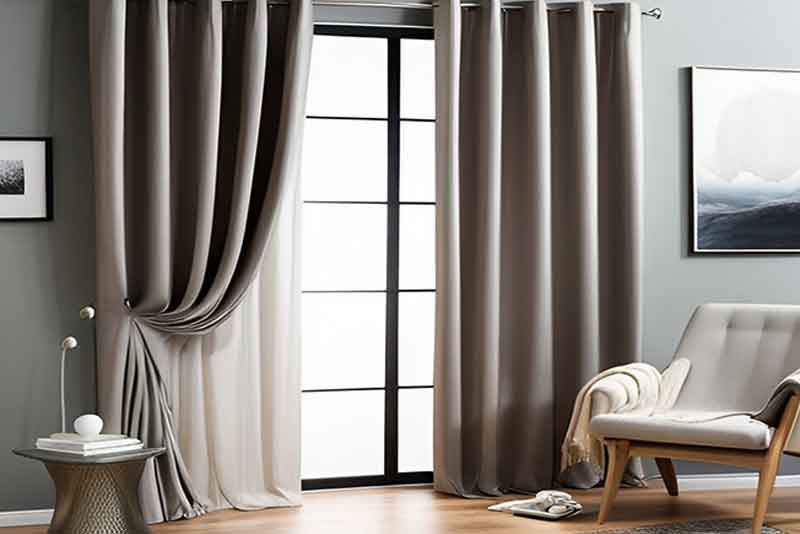
Which Curtain Fabric Should You Choose?
The best curtain fabric depends on how you want the panels to hang and what they need to do. Linen, cotton, velvet, and sheer fabrics behave very differently at the window even when their colors are similar.
Rather than choosing fabric from a small sample alone, consider its weight, opacity, texture, and movement. Hold a larger piece up to daylight when possible. Material that looks dense on a table may become surprisingly translucent at the window.
Linen Curtains
Linen has a relaxed texture that suits rooms where a perfectly formal finish would feel out of place. It allows visible movement in the fabric and works especially well with wood, stone, woven materials, and understated interiors.
Pure linen can wrinkle, which is part of its appeal for some homeowners and a drawback for others. Linen blends often provide a similar visual texture with somewhat easier maintenance.
Because lighter linen can allow considerable daylight through, lining may be worth considering where privacy is important.
Cotton Curtains
Cotton is adaptable and available in everything from light, informal weaves to heavier decorative fabrics. It can suit both patterned and solid curtains and usually feels less formal than velvet or silk.
Its versatility makes cotton useful in family rooms, bedrooms, and casual dining spaces. The exact performance depends heavily on the weave and whether the curtain is lined, so the material name alone does not tell you how much light it will block.
Velvet Curtains
Velvet adds more visual weight around a window. Its pile catches light differently as the fabric folds, which can make a simple solid color look richer than the same shade in a flat weave.
This fabric suits bedrooms, formal living rooms, dining rooms, and other spaces where a stronger window treatment makes sense. Because velvet is visually heavy, it can overpower a small room if the rest of the interior is already dark or richly furnished.
Sheer Curtains
Sheer curtains soften daylight while keeping the window visually light. They are particularly useful where you want some daytime screening without losing the feeling of natural light.
At night, however, sheers provide limited privacy once the interior becomes brighter than the outdoors. For that reason, they are often used as one layer rather than the only window covering.
Blackout vs Sheer Curtains: Which Is Better?
Blackout and sheer curtains solve almost opposite problems. For darkness and privacy, blackout fabric is the stronger choice, while sheers preserve daylight and soften the view through the window.
Bedrooms facing streetlights, early sunrise, or other sources of exterior light are obvious candidates for blackout curtains. The Sleep Foundation includes blackout curtains among the ways to reduce unwanted bedroom light, particularly when ordinary window coverings do not make the room dark enough.
Sheers make more sense where maintaining daylight matters more than darkness. Living rooms, dining rooms, and windows facing a relatively private garden often benefit from the softer quality they give direct sunlight.
Neither option has to be used alone.
Can You Layer Sheer and Blackout Curtains?
Layering sheer and blackout curtains gives you more control than relying on one fabric. During the day, the heavier curtain can stay open while the sheer layer filters light. At night, the outer curtains can close for greater privacy and darkness.
The arrangement also adds depth around the window. A simple sheer close to the glass paired with a more substantial outer panel can look finished without requiring elaborate valances or decorative accessories.
Make sure the hardware has enough clearance for both layers to move properly. Two fabrics forced onto hardware designed for one panel often become difficult to open and close.
Can Curtains Help With Heat and Cold?
Curtains can influence comfort near a window, although fabric alone should not be treated as a substitute for proper glazing, sealing, or insulation. Heavier, lined curtains can reduce the feeling of a cold window in winter, while closing suitable window coverings against strong sun can help limit unwanted heat entering a room.
The U.S. Department of Energy’s guidance on energy-efficient window coverings notes that the effectiveness of draperies depends on factors including fabric type, color, and how the covering is installed.
For a drafty room, fit matters as much as thickness. Fabric that ends well above the floor or leaves large gaps at the sides may provide less separation between the room and cold glass than a fuller, properly fitted treatment.
In a hot, sunny room, consider how the curtains will actually be used. Even a substantial fabric cannot do much to control solar heat if it remains open through the hottest part of the day.
How to Choose Curtains for a Living Room
Living room curtains usually need to balance daylight, privacy, and visual scale. Because the living room often contains some of the largest windows in the home, the curtains can become one of the dominant surfaces in the entire space.
Start with how the room is used during the day. If it relies heavily on natural light, completely opaque curtains may feel unnecessarily heavy. Sheer or light-filtering panels can soften glare without turning daytime into evening.
Rooms facing a street or neighboring property may benefit more from layering. A sheer inner curtain offers some daytime screening, while a heavier outer layer can close when stronger privacy is required.
Full-length curtains are usually the safest proportion for a living room. They make the window feel connected to the room rather than isolated in a rectangle halfway up the wall.
Large living rooms can carry more fabric and stronger textures. Velvet, heavy linen, or a broad pattern may suit the scale. In a smaller room, an enormous amount of gathered fabric can make the window feel crowded, so a cleaner treatment may work better.
When several windows share the same room, treat them as a group. Using the same hanging height and a consistent relationship to each window frame generally looks calmer than adjusting every curtain independently.
Color should respond to the whole room rather than only the sofa. A curtain can connect to a secondary tone from a rug, artwork, wall color, or timber finish without matching any one item exactly.
How to Choose Curtains for a Bedroom
In a bedroom, privacy and light control come before decoration. Fabric that looks beautiful in daylight can become frustrating if streetlights shine through it at midnight or morning sun wakes you earlier than you want.
If you need a darker room, start with blackout or well-lined curtains. Pay attention to the edges as well as the fabric itself. Light can enter around the sides, above the rod, and through the center gap even when the material is highly opaque.

If complete darkness is not important, a lighter curtain can make the room feel softer during the day. Layering a sheer panel with a room-darkening outer curtain gives more flexibility and works particularly well in bedrooms that also function as reading or working spaces.
Length can change the atmosphere considerably. Floor-length curtains usually make a bedroom feel calmer and more finished than panels that stop awkwardly beneath the sill.
Temperature is worth considering as well. A bed positioned close to an older window may feel noticeably more comfortable with a substantial lined curtain during colder months.
Bedroom color does not need to be pale. Deep blue, green, brown, or charcoal curtains can create a restful enclosed feel when balanced with lighter bedding, walls, or flooring. In an already dark room, however, lighter curtains may prevent the window wall from becoming visually heavy.
- Choose blackout or lined curtains when outside light affects sleep.
- Use sheers when daytime softness matters more than darkness.
- Layer the two when you need both daylight and nighttime privacy.
- Check side gaps if darkness is a priority.
- Favor floor-length panels when the layout allows them.
How to Choose Curtains for a Dining Room
Dining rooms usually allow more decorative freedom because the curtains are less likely to be judged mainly by sleep, glare, or daytime privacy. The right choice depends on whether the room feels formal, casual, contemporary, or connected to another living space.
In a formal dining room, fabric with more body can hold its own beside a large table, substantial lighting fixture, and upholstered chairs. Velvet, lined cotton, or textured woven fabric can create enough presence without requiring an elaborate pattern.
A casual dining space often feels better with something lighter. Linen, cotton, or a restrained stripe keeps the window relaxed and makes sense where the room is used throughout the day.
If the dining room connects directly to the living room, consider the two spaces together. The curtains do not necessarily need to be identical, but unrelated treatments visible at the same time can make an open-plan interior feel fragmented.
Practicality still matters. Curtains beside a door to a garden or balcony will be handled more frequently than panels around a rarely opened window. Delicate fabric that looks perfect in a photo may become irritating if it catches, marks, or requires constant rearranging.

Can Curtains Make a Small Room Look Bigger?
Well-positioned curtains can make a small room feel taller and less visually interrupted by emphasizing the full height of the wall rather than the dimensions of a small window.
One effective approach is to hang the rod higher than the frame and use floor-length panels. Extending it beyond the sides of the window also allows more fabric to sit off the glass when open, exposing more daylight and making the window appear broader.
Small rooms do not automatically require white curtains. A color close to the wall can reduce visual breaks, but darker curtains can still work if the room has enough light and the rest of the palette is controlled.
What tends to make a small window look smaller is an undersized treatment: a narrow rod, short curtains, and panels that cover a large portion of the glass even when open.
Use the architecture rather than fighting it. A tall narrow window may benefit from emphasizing height, while a short broad window may look better when the rod extends farther to the sides.
Should Curtains Be Solid or Patterned?
Solid curtains are easier to combine with rooms that already contain patterned rugs, wallpaper, upholstery, or prominent artwork. Patterned curtains work best when the room gives them enough visual space.
A pattern does not need to match every color around it. It usually looks more settled when at least one shade relates to something already present in the interior.
Scale is important. Tiny repeated prints may look busy across several large panels, while an oversized botanical or geometric design can overwhelm a narrow window. Look at the fabric from across the room rather than only from arm’s length.
Stripes deserve special attention because direction changes perception. Vertical stripes strengthen the sense of height, while broad horizontal elements can make a narrow window feel wider.
If you are unsure, solid fabric with visible texture is often a useful compromise. Linen, slub cotton, velvet, or a subtle weave adds interest without introducing another graphic element.
What Color Curtains Should You Choose?
Curtain color should respond to the wall, floor, furniture, daylight, and the amount of contrast you want around the window. It does not need to match the wall or sofa exactly.
For a quieter room, choose a curtain in a related tone but move slightly lighter or darker. Warm beige walls might work with oatmeal, mushroom, or natural linen. Pale gray can sit comfortably beside soft gray, charcoal, dusty blue, or muted green.
If the room needs more definition, use contrast deliberately. Navy against a warm neutral, olive beside cream, or rust against muted blue can turn the window into a stronger part of the composition.
Always look at a fabric sample in the actual room before ordering several panels. Daylight can reveal undertones that are difficult to see online or under store lighting, and the same curtain may look noticeably different in the morning and evening.
Do Curtain Accessories Really Matter?
Curtain rods, rings, tracks, tiebacks, and finials are small compared with the fabric, but they influence whether the finished treatment feels coherent.
A simple dark metal rod can sharpen a contemporary window. Brass or warm metal can connect naturally with lamps, cabinet hardware, or furniture details. Ceiling-mounted tracks almost disappear and allow the fabric to take over visually.
Tiebacks are useful when you genuinely want the curtains held away from the window. Using them only because they came with the curtains can create an unnecessarily formal effect.
Valances and pelmets have a place in traditional rooms and can conceal hardware, but they add more visual weight. In a compact or modern room, letting a clean rod or track remain visible is often enough.
A Final Check Before You Buy Curtains
Before ordering, go back to the window with a tape measure and check the numbers one more time. Confirm the rod width, planned mounting height, finished curtain length, and the combined width of the panels.
Then think through how the curtains will behave rather than only how they will photograph. Will they clear the radiator? Can they open without covering most of the glass? Will a door catch them? Is the fabric opaque enough at night? Can it be cleaned realistically in the room where it will hang?
Finally, step back and look at the room as a whole. Because curtains occupy a large vertical area, the right pair should connect the window to the rest of the interior rather than simply decorate the glass.
A successful curtain choice rarely depends on one rule. It comes from getting the scale right, choosing a fabric that suits the job, and hanging it in a way that improves the proportions of the room. Once those decisions are settled, color and pattern become much easier to judge.