
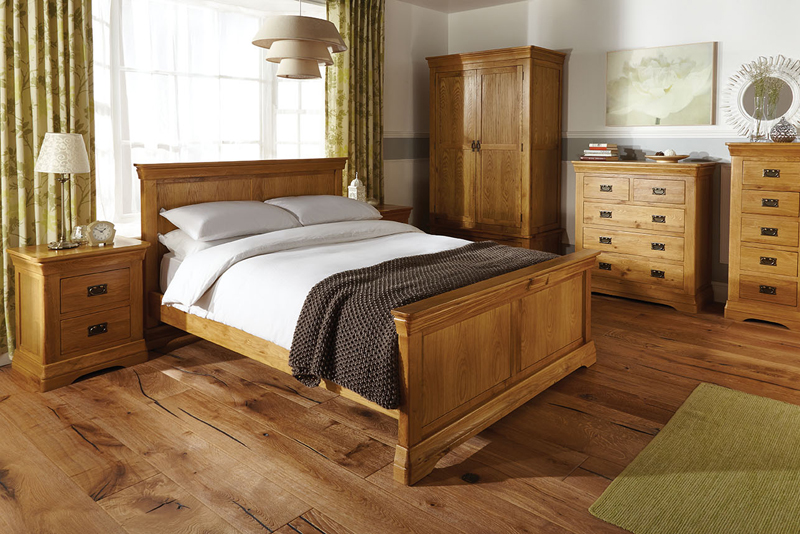
Solid wood furniture can justify a higher price, but the material label alone does not guarantee a better table, bed, dresser, or cabinet. Wood species, joinery, hardware, finish, and the way a piece accommodates seasonal movement all affect how well it will hold up. A hardwood name on a product page tells only part of that story.
Buying solid wood is less straightforward than choosing between “real wood” and everything else. A well-made veneered cabinet may outperform a poorly constructed solid wood one, while a simple pine table can be sensible even though it dents more easily than oak or maple. The useful question is where solid wood offers an advantage worth paying for.
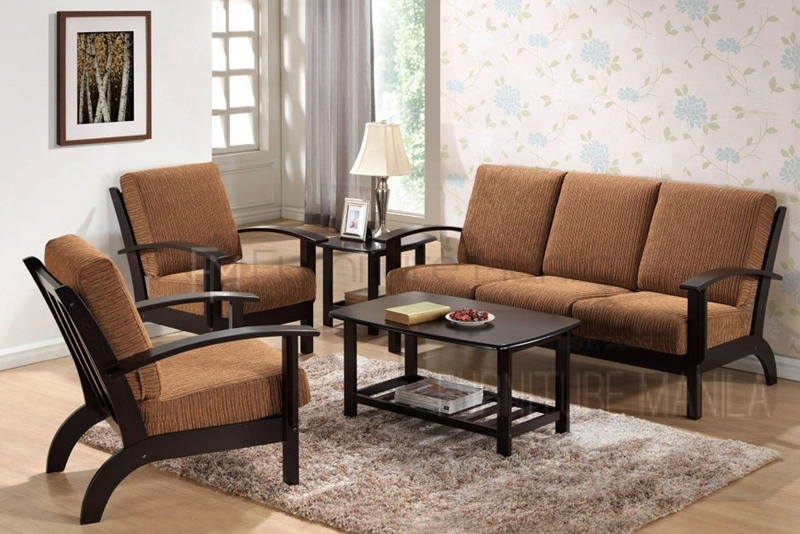
What Solid Wood Furniture Actually Means
Solid wood generally means that the relevant furniture parts are made from lumber rather than a thin wood surface applied over an engineered substrate. Real furniture often combines materials, though. A table may use a solid top and legs, while a dresser has solid frames and drawer fronts with plywood in the back or drawer bottoms.
That mix does not automatically indicate lower quality. Plywood is useful where stability matters, and a thin hidden panel gains little from being assembled from several solid boards. What matters is whether each material suits the job it is doing.
Wood veneer is a thin layer of real wood bonded to a substrate such as plywood or engineered board. MDF and particleboard, by contrast, are manufactured from wood fibers or particles formed into panels. These terms describe different constructions rather than automatic rankings from good to bad.
Product descriptions can make the distinctions surprisingly vague. If a listing says only “wood furniture,” look for a more detailed material breakdown instead of assuming that every visible and hidden component is solid lumber.
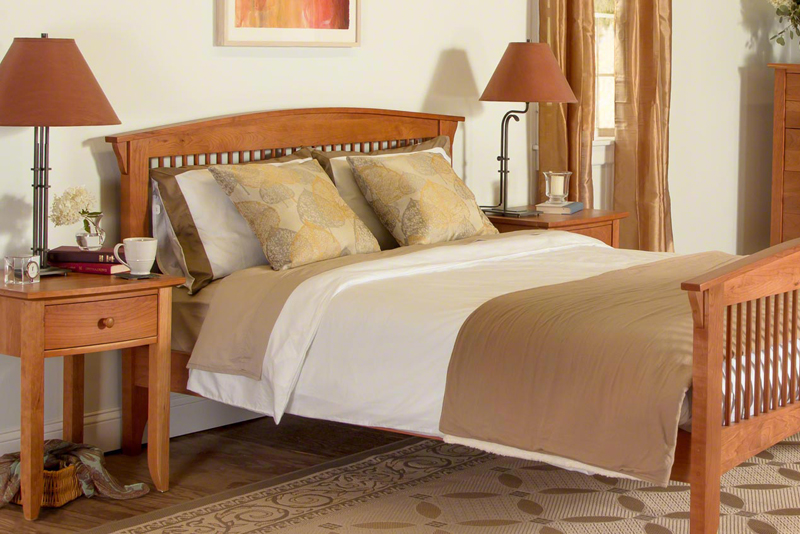
When Solid Wood Furniture Is Worth Paying More For
Solid wood earns its premium most clearly where furniture receives repeated physical use or where future repair matters. Dining tables are an obvious example: their tops collect scratches, dents, spills, heat marks, and years of contact, and a sufficiently thick solid surface leaves more options if the finish eventually needs attention.
Beds, desks, chests, and frequently used cabinets can benefit for similar reasons. Strong lumber cannot compensate for weak joints, but sound construction gives future repairs more substantial material to work with when surfaces wear or hardware eventually loosens.
There are also places where paying extra adds little. A lightly used side table or painted cabinet may perform perfectly well with a sensible combination of lumber, veneer, and plywood. Making every concealed panel solid does not automatically make the furniture more useful.
Longevity depends on usefulness as much as physical survival. A massive entertainment unit can remain structurally sound for decades and still become inconvenient because its dimensions or storage layout no longer suit the room. Adaptability, proportion, and function deserve attention alongside material.
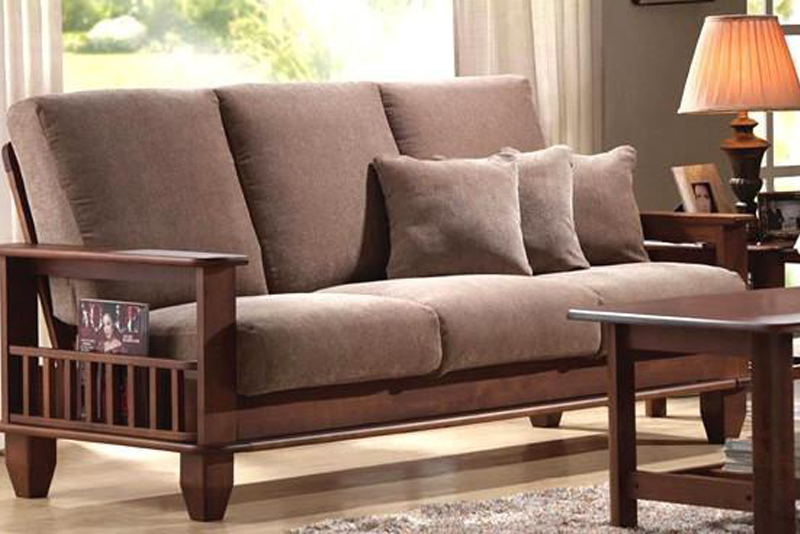
Wood Species Change More Than the Color
Species affects hardness, weight, grain, finishing, and how quickly normal wear becomes visible. Two pieces can both be accurately described as solid wood furniture and still behave quite differently after a few years of use.
| Wood | Typical Practical Character | Grain and Appearance | What to Keep in Mind |
|---|---|---|---|
| Oak | Hard and suited to frequent use | Pronounced, recognizable grain | Usually substantial and relatively heavy |
| Maple | Hard with a dense surface | Fine, more even grain | Good where a smoother appearance is preferred |
| Cherry | Moderately hard and workable | Fine grain with warm color | Color usually deepens with age and light |
| Walnut | Strong, often used for premium pieces | Darker color and expressive grain | Usually carries a price premium |
| Pine | Softer and comparatively light | Visible knots and casual character | Dents and marks more readily |
None of these woods is universally better. Pine may age attractively in a relaxed room, while its softness can become frustrating on a heavily used desktop. Oak and maple often make sense where wear resistance matters more, walnut is frequently chosen for appearance as much as strength, and cherry should be bought with the expectation that its color will evolve.
Species is still only one variable. Board selection, grain orientation, moisture content, finish, and construction continue to matter after the timber itself has been chosen.
Construction Matters More Than the Wood Label
A badly joined solid wood chair is still a badly joined chair. Expensive material becomes valuable only when the construction lets it perform properly.
Tables deserve a look underneath rather than just across the top. Check how the legs meet the apron or base, whether the joints show movement, and how a broad top has been attached. A table that already rocks on a level showroom floor offers a more useful warning than the species printed on its tag.
Drawers reveal another set of clues. They should move without excessive twisting or binding, and their fronts should sit reasonably square when closed. Drawer bottoms, runners, corner joints, and hardware attachment often say more about workmanship than carving or attractive grain on the front.
Beds deserve extra attention because side rails, center supports, slats, and connection hardware carry repeated loads. Those same structural details matter when choosing durable wooden bedroom furniture. A basic in-store inspection can still stay simple:
- push gently against tables and cabinets to check for unexpected movement;
- sit in chairs and listen for creaking around the joints;
- open every drawer and door rather than testing only one;
- inspect the underside and rear, where decorative finishing is less likely to disguise the build;
- check how legs, rails, backs, shelves, and hardware are attached;
- ask which components are actually solid wood when the description is vague.
A hard species cannot rescue undersized supports or loose joints. Thoughtful mixed-material construction may be the better purchase when it puts strength and stability where they are actually needed.
Solid Wood Moves With Humidity
Wood continues to exchange moisture with the surrounding air after it becomes furniture. As its moisture content changes, it expands and contracts primarily across the grain, while species, board orientation, dimensions, finish, and indoor conditions all influence how noticeable that movement becomes.
The USDA Forest Products Laboratory discusses this relationship in its material on moisture content and dimensional changes. Finishes can slow moisture exchange, but they do not turn a solid board into an inert material.
That is why floating panels, elongated screw holes, tabletop fasteners, and similar details can indicate thoughtful construction rather than weakness. They give broad pieces of wood somewhere to move instead of locking them rigidly against a frame.
A small seasonal gap is not automatically evidence of defective furniture. Large cracks, severe warping, failed joints, or doors that become difficult to use are different matters, while strong heat sources and large environmental swings can add further stress.
Scratches and Dents Are Both a Weakness and an Advantage
Solid wood is durable, but durability does not mean immunity. Softer species dent readily, dark finishes can reveal fine scratches, and even hard woods accumulate marks on heavily used surfaces.
The advantage is what lies beneath that damage. On a thick solid surface, a scratch or worn finish may still leave enough material for localized repair, sanding, or refinishing. That repair potential helps explain why older wood furniture can remain useful long after its original surface stops looking new.
Repairs still have limits. Deep splits, severe warping, insect damage, or failed joints can make restoration uneconomical, and aggressive refinishing is not appropriate for every older piece. With secondhand furniture, a few surface scratches often matter less than structural weakness hidden beneath an attractive finish.
Solid Wood vs Veneer Is More Complicated Than Good vs Cheap
Veneer is often treated as shorthand for inferior furniture, but the comparison is too simple. A properly constructed veneered panel can offer stability and grain possibilities that a broad solid board cannot.
Because the wood layer is thin and supported by a substrate, it avoids some of the movement associated with wide solid panels. Veneer also lets makers arrange grain deliberately, match adjacent surfaces, and use visually distinctive timber efficiently.
Its limitations appear when damage cuts through the decorative layer. Deep sanding is limited, and poorly bonded veneer may lift or chip around vulnerable edges. That makes the quality of the construction more important than the presence of veneer itself.
A dining tabletop expected to absorb decades of wear has different requirements from a broad cabinet door where stability and grain layout may matter more. The better material is the one suited to that component, not necessarily the one that sounds more expensive.
Sustainability Depends on More Than Using Real Wood
Calling solid wood automatically sustainable skips many of the factors that determine environmental impact. Forestry practices, species, manufacturing, transport, finishing, expected lifespan, repairability, and what happens to the furniture after use all matter.
Durability helps when a piece remains useful long enough to take advantage of it. Certification, transparent timber origins, reclaimed material, and credible sourcing information are more useful signals than broad claims such as natural or eco-friendly.
Furniture that uses responsibly sourced materials, lasts for years, and can be repaired fits the broader idea of sustainable wooden furniture. Sustainability is better treated as one buying criterion rather than a guaranteed advantage of solid lumber.
Check the Furniture Before You Pay for the Material
A material label should start the inspection rather than end it. Once the piece is in front of you, simple physical checks reveal whether the extra money went into useful construction or mostly into the words “solid wood.”
Start with alignment. Doors and drawers do not need microscopic gaps, but obvious twisting, a cabinet that rocks on a level floor, or a visibly warped tabletop deserves investigation. Open moving parts several times rather than testing one drawer once and assuming the rest will behave the same way.
Surface quality adds another layer of evidence. Uneven sanding, cracks near fasteners, conspicuous glue squeeze-out, or badly filled defects matter more as the price rises. Attractive grain should not distract from workmanship, and secondhand pieces deserve a slightly broader check:
- test joints for movement rather than focusing only on scratches;
- examine the underside and rear for repairs or missing parts;
- inspect veneer, where present, for lifting or bubbling;
- smell drawers and enclosed cabinets for persistent damp or musty odors;
- check whether replacement hardware has damaged the surrounding wood;
- measure the piece, including door and drawer clearance, before deciding it belongs in the room.
Buying used can make better construction affordable. Age itself proves little, though; an old piece may be excellent, ordinary, heavily altered, or simply worn out.
Caring for Solid Wood Without Overdoing It
Solid wood furniture does not need a constant cycle of oils and polishing products to remain usable. Most routine care is less glamorous: limit avoidable damage and respect the finish already on the piece.
The Canadian Conservation Institute’s recommendations for wooden furniture care emphasize stable conditions, protection from strong heat and direct sunlight, and caution with commercial polishing products. Some products can leave residues or interfere with existing finishes.
For ordinary modern furniture, dust gently, deal with spills reasonably quickly, and use trivets, pads, or coasters where heat or moisture is likely. Avoid saturating the wood during cleaning, and follow the manufacturer’s instructions when the finish type is known.
Sunlight can alter color considerably. Cherry is especially known for this, but many woods and finishes change over time, sometimes unevenly when objects stay in one place for years.
The Trade-Offs Before Choosing Solid Wood
Solid wood has disadvantages that disappear from many buying guides. It can be heavy, expensive, and responsive to environmental changes, while softer species collect dents that may disappoint buyers who expected “solid” to mean nearly indestructible.
Natural variation comes with the material too. Grain, knots, color, and board matching will not always reproduce the sample shown online or in a showroom. Some buyers value those differences, while others prefer a more uniform surface.
Weight is another practical issue rather than a badge of quality. A large oak table may feel reassuring once installed, but narrow stairs, frequent moves, flexible layouts, and small rooms can make lighter construction genuinely preferable. Paying more for solid wood makes sense only when its strengths fit the way the furniture will actually be used.
Buy the Construction, Not Just the Material Label
Solid wood furniture is most convincing when the material supports a well-designed piece instead of serving as its main sales argument. Good lumber, sound joints, suitable dimensions, repairable surfaces, and hardware capable of repeated use need to work together.
That leaves room for veneer, plywood, painted components, and other materials where they solve a genuine construction problem. It also leaves room for inexpensive softwood furniture that is thoughtfully built, while an expensive hardwood piece can still disappoint if its structure is weak.
Look first at how the furniture will be used and how it was built. Then consider whether solid wood adds something useful to that particular piece rather than treating the label as the verdict.