
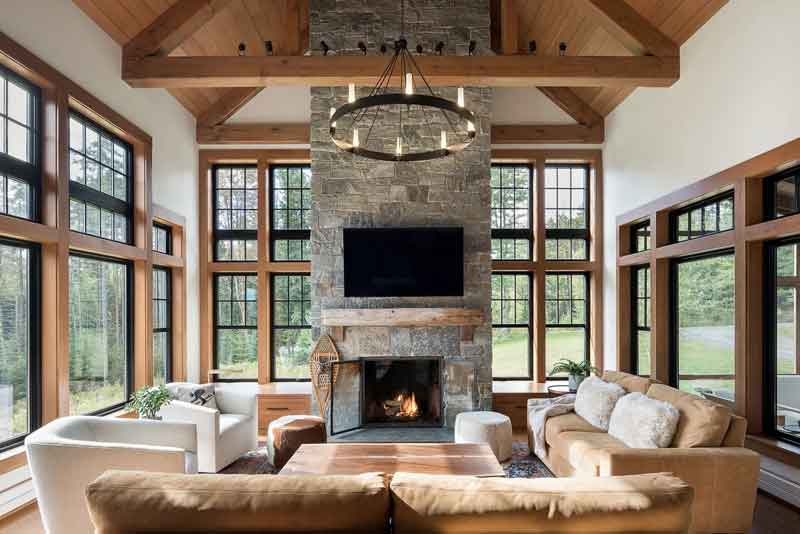
Country farmhouse furniture works best when it looks useful before it looks decorative. A sturdy dining table, comfortable chair, freestanding cabinet, or simple wooden bed can establish the style more convincingly than a room filled with objects chosen only to appear rustic.
The appeal comes from familiar furniture forms, natural materials, practical storage, and finishes that tolerate some variation rather than demanding a flawless surface. New and old pieces can coexist, as can painted wood, natural timber, upholstery, and cleaner contemporary designs.
What Defines Country Farmhouse Furniture?
Farmhouse furniture grew around practical domestic needs, which is why tables, benches, storage cabinets, beds, chairs, and work surfaces remain central to the style. Traditional farmhouse design has long favored readily available materials, comfort, and practical function over decorative formality.
That foundation matters more than any single decorative feature. A table does not need reclaimed wood, and a cabinet does not need distressed paint, to feel farmhouse because shape, material, usefulness, and proportion usually tell the story more clearly.
The broader country style furniture characteristics include natural materials, familiar proportions, painted or aged finishes, and an informal domestic character. Farmhouse takes many of those qualities and puts stronger emphasis on function.
How Farmhouse Furniture Differs From Generic Country Style
Country is the broader category. It can include cottage furniture, French-influenced pieces, painted antiques, patterned upholstery, and more decorative forms, while farmhouse tends to stay closer to straightforward pieces that feel useful and comfortable.
Compare two cabinets. A slender painted cabinet with curved legs and carving may fit country style, while a substantial sideboard with generous storage, simple doors, and an uncomplicated wooden top feels more distinctly farmhouse.
The boundary is flexible, and mixed rooms often look better than strict ones. The distinction simply keeps farmhouse from becoming a label for anything vaguely rustic.
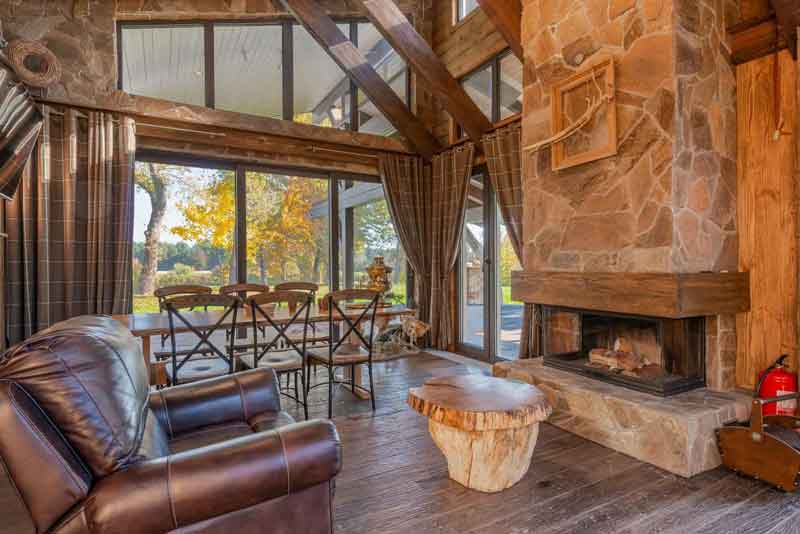
Farmhouse Dining Tables and Benches Anchor the Style
Few pieces carry the farmhouse look as effectively as a dining table. It combines visible structure, generous work surface, everyday usefulness, and enough visual presence to organize the room around it.
Rectangular wooden tables are common, but farmhouse does not require one leg design or timber species. Trestle bases, turned legs, straightforward four-leg frames, and pedestal designs can all work when the proportions suit the room.
Benches fit for the same practical reason. They add seating without introducing another bulky chair shape, and many designs slide partly beneath the table when not in use.
What Makes a Good Farmhouse Dining Table?
Start with dimensions rather than finish. The table needs enough clearance for chairs and circulation, while its width should allow comfortable place settings without making conversation awkward across the center.
Construction deserves equal attention. Check how the legs or trestles connect to the top, whether the base stays stable under sideways pressure, and whether extension hardware feels substantial if the table expands.
For a table used every day, surface character can be an advantage. Visible grain and a low-sheen finish often make small marks less distracting than they would be on a glossy, immaculate surface.
Farmhouse Hutches, Sideboards and Cabinets Add Practical Storage
Storage furniture is one of the easiest ways to make farmhouse style useful rather than decorative. Hutches, sideboards, freestanding pantry cabinets, bookcases, and chests can organize dishes, linens, books, serving pieces, or everyday clutter while adding height and material variation.
Freestanding cabinets also bring a useful break from built-ins. Painted storage works particularly well in rooms that already contain a large wooden table or timber flooring because cream, muted green, blue, or warm gray can interrupt a long run of similar brown tones.
Glass-front doors and open sections make sense when there is something worth displaying. Closed storage is usually more practical for ordinary household items, so a combination of both often works better than an entirely open hutch.
Depth matters too. A shallow sideboard can add useful storage without dominating a dining area, while a deeper cabinet earns its footprint when it holds bulky serving pieces or household supplies.
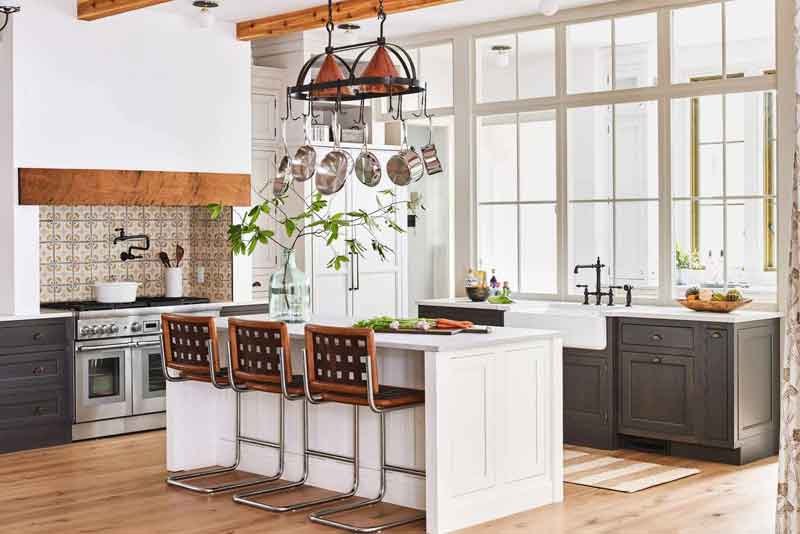
Farmhouse Living Room Furniture Should Feel Comfortable, Not Heavy
Farmhouse living rooms benefit from generous seating, but generous does not have to mean oversized. Sofas with straightforward profiles, upholstered armchairs, wooden coffee tables, occasional tables, and storage pieces can establish the style without relying on themed accessories.
Material contrast does much of the work. Upholstery softens timber, while wood gives neutral seating more visual structure, and a coffee table can lean rustic, painted, traditional, or relatively clean-lined depending on what surrounds it.
Exact furniture sets tend to flatten that variation. A sofa, coffee table, and side tables can relate through scale, undertones, or materials without matching every finish.
Do Farmhouse Sofas Need to Be Neutral?
No. Cream, oatmeal, beige, and warm gray are popular because they combine easily with wood, but muted green, blue, brown, checks, stripes, and restrained patterns also fit.
Practicality should influence the fabric more than adherence to a pale palette. In a high-use room, upholstery that hides ordinary wear and tolerates frequent cleaning may suit farmhouse living better than an impractical white sofa chosen only for appearance.
A little color can also keep the room from becoming predictable. One muted green chair beside a natural-wood table may contribute more character than another beige upholstered piece.
Farmhouse Bedroom Furniture Works Best With Simple Forms
A farmhouse bedroom can establish its character through a wooden or metal bed, practical dresser, bedside tables, and perhaps a bench or chest. Architectural beams, floral curtains, and vintage accessories are optional rather than essential.
Panel headboards, spindle designs, simple timber frames, and restrained wrought-iron forms all fit because their construction remains easy to read. Dressers and nightstands can vary the finish, so a natural wood bed may sit beside painted bedside furniture or a painted bed can work with a timber dresser.
Leave enough open space around the larger pieces. Filling every available wall with extra rustic furniture can turn a restful bedroom into a storage display.
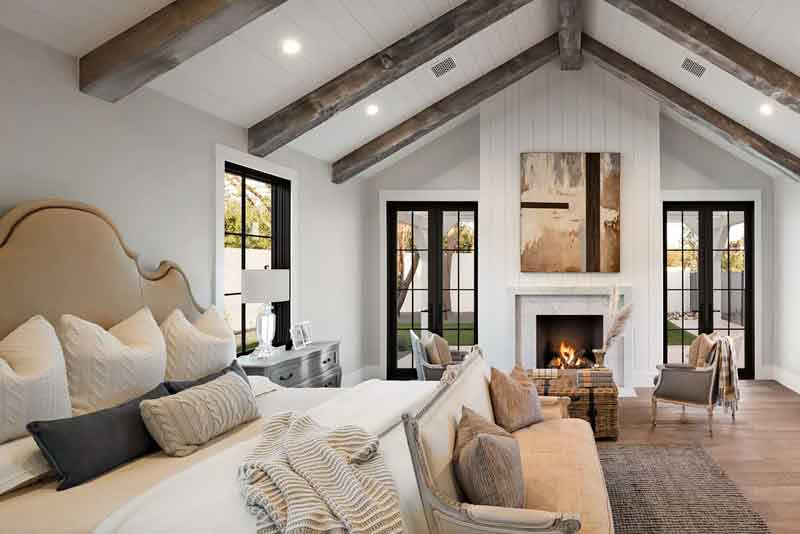
Painted Wood, Natural Timber and Reclaimed Farmhouse Furniture
Farmhouse interiors can combine several wood treatments rather than repeating one finish everywhere. Natural oak, pine, reclaimed timber, painted furniture, stained surfaces, and darker woods can coexist when some other details connect them.
Reclaimed wood brings old nail marks, tonal variation, worn edges, and other traces of previous use. It works especially well on dining tables, benches, cabinet tops, or occasional furniture where the surface remains visible.
New timber can produce a quieter result. Visible grain and a matte or low-sheen finish often provide enough warmth without trying to make a new piece look old.
Does Farmhouse Furniture Need to Look Distressed?
No. Distressing is one finish option, not a requirement, and too much artificial wear can make new furniture look themed rather than convincing.
Painted furniture with a clean finish can still feel farmhouse when the form, hardware, and surrounding materials support it. The same applies to a new natural-wood table with no manufactured scratches or worn corners.
When distressing does appear, restraint usually helps. Wear around handles, edges, and contact points makes more visual sense than identical sanding patterns repeated across every surface.
Hardware Can Take the Look From Rustic to Refined
Hardware changes the character of a cabinet or dresser without altering its basic shape. Dark iron and heavily aged metal push furniture toward rustic farmhouse, while simpler brass, bronze, or understated metal pulls create a quieter result.
Ceramic knobs suit painted cabinets and smaller storage pieces when a little traditional detail is useful. Larger furniture generally benefits from hardware scaled to the doors and drawers rather than tiny decorative fittings.
There is no need to coordinate every handle across the house. A hutch, dresser, and living room cabinet can use different hardware if their materials and level of formality still feel compatible.
How to Mix Old and New Farmhouse Furniture
Mixing generations usually produces a more convincing farmhouse room than buying a complete coordinated set. One older cabinet or table can provide enough patina for newer furniture to stay relatively clean.
Start with the pieces that have the strongest visual presence, then let smaller furniture respond without copying every detail. An aged dining table, for example, does not require distressed chairs, a distressed hutch, and distressed shelving.
Wood tones can vary as well. Similar undertones, repeated hardware finishes, upholstery colors, or compatible proportions often connect pieces even when their stains differ.
A natural table, painted cabinet, upholstered chair, and older bench can share a room because their materials and proportions create enough common ground. Two or three compatible finishes usually create more depth than repeating the same stain across every surface.
Modern Farmhouse Furniture Uses Cleaner Lines
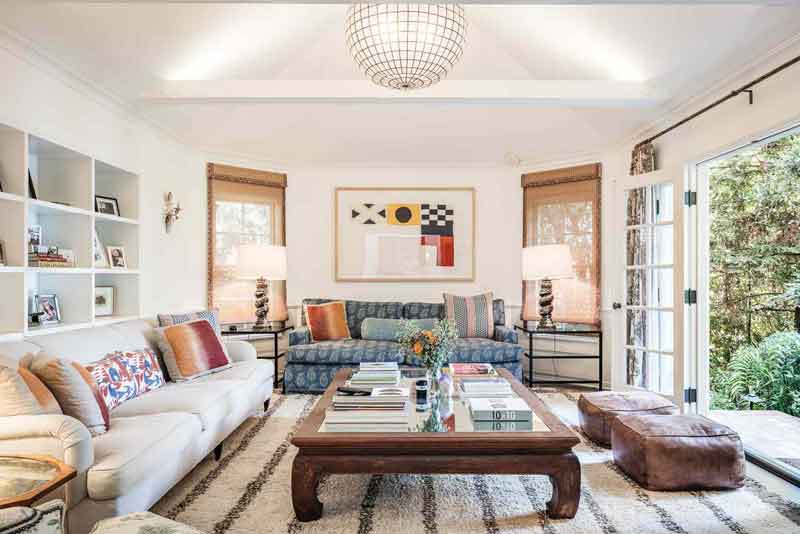
Modern farmhouse furniture keeps the traditional emphasis on wood, comfort, and utility but removes some visual weight. Cabinet profiles become cleaner, hardware simpler, upholstery less decorative, and surfaces more controlled.
In modern farmhouse style, traditional rural materials sit beside cleaner contemporary lines and more restrained finishes. Furniture shows that shift clearly through streamlined chairs, simpler cabinets, and a lighter treatment of rustic texture.
A modern farmhouse room might pair a simple wooden table with streamlined chairs or place a contemporary sofa beside a reclaimed-wood coffee table. Rustic texture becomes an accent rather than a treatment repeated across every piece.
Modern Farmhouse vs Traditional Farmhouse Furniture
The difference is mostly one of editing. Both versions use tables, benches, cabinets, upholstered seating, and natural wood, but they handle finish and detail differently.
| Feature | Traditional Farmhouse Furniture | Modern Farmhouse Furniture |
|---|---|---|
| Furniture lines | Familiar, sometimes heavier or more detailed | Cleaner and more streamlined |
| Wood | Natural, painted, reclaimed, or aged | Natural or lightly finished, often cleaner |
| Upholstery | Neutral, patterned, textured, or traditional | Usually simpler and less patterned |
| Hardware | Iron, aged brass, ceramic, traditional forms | Simpler metal finishes and cleaner shapes |
| Mixing styles | Vintage and country pieces are common | Contemporary furniture mixes more freely |
| Overall effect | Collected, practical, traditional | Practical, lighter, more edited |
Traditional farmhouse tolerates more visible age and decorative variation. Modern farmhouse usually reduces the number of rustic signals and gives individual materials more space.
Rustic Farmhouse Furniture Needs Restraint
Rustic farmhouse furniture emphasizes rougher timber, reclaimed surfaces, heavier texture, and visible age more strongly than mainstream farmhouse furniture. Those features add depth, but using them on every item quickly becomes repetitive.
One rough table can sit comfortably with smoother painted chairs, while a reclaimed cabinet can work beside a clean-lined sofa. A weathered bench may provide all the rustic texture a restrained dining area needs.
For interiors where rugged wood, patina, and natural imperfections become the dominant furniture language, rustic country furniture is a more precise direction. Farmhouse usually benefits from keeping a stronger balance between rough surfaces and straightforward everyday pieces.
Choosing the Right Scale for Smaller Rooms
Small rooms need the same farmhouse principles at a different scale. A huge table, deep sofa, and tall hutch may each look appropriate alone but become impractical when combined in limited floor space.
Choose according to circulation first. Narrower tables, benches that tuck inward, shallow cabinets, raised-leg storage, and compact armchairs preserve the character without tightening every passage.
Multifunctional pieces are particularly useful. A bench with storage, a chest used as an occasional table, or a small dresser serving as both storage and display surface can reduce the number of separate items the room needs.
Leaving some wall and floor area visible also gives natural wood more visual impact. Packing several small farmhouse pieces into the same space usually makes the room feel busier rather than more convincing.
Which Farmhouse Furniture Pieces Are Worth Buying First?
A farmhouse room does not need to arrive all at once. Starting with the furniture that performs the most important daily jobs usually produces a stronger result than buying decorative pieces first, and the highest-value starting points are usually:
- a well-proportioned dining or everyday table where the room allows one;
- comfortable seating chosen for actual daily use;
- a sideboard, hutch, dresser, or cabinet that solves a real storage problem;
- a bed frame with a simple, durable form for a farmhouse bedroom;
- one smaller piece with visible character, such as a bench, chest, or occasional table.
The order depends on the room. A dining space may need the table first, while a living room benefits more from getting seating right before choosing coffee tables or storage.
Strong joints, stable frames, useful dimensions, and surfaces suited to daily wear deserve more attention than labels such as vintage, rustic, or farmhouse. Those practical details determine whether the furniture remains useful after the initial style choice stops feeling new.
Furniture should also leave room for the household to change. Pieces that remain useful when upholstery, wall colors, or smaller decor changes are easier to keep than objects whose appeal depends on one narrow version of farmhouse style.
A practical farmhouse interior depends less on rustic decoration than on furniture people can genuinely use. Comfortable seating, solid tables, useful storage, and a measured mix of old and new create the character without turning the room into a staged farmhouse set.