
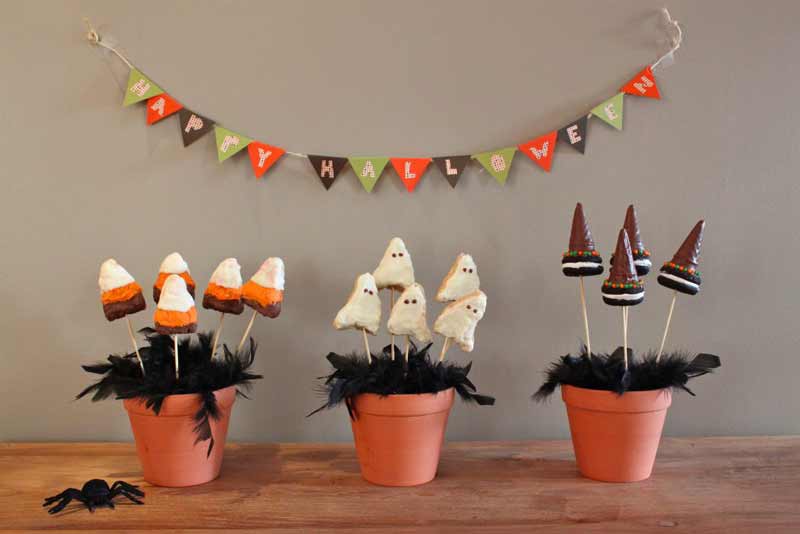
Indoor Halloween decorations can shift the mood of a familiar room with surprisingly few changes. Pumpkins, dark branches, paper bats, gauzy ghosts, and carefully placed lights are often enough to make a home feel ready for October without covering every wall in fake cobwebs.
Halloween comes with a long list of recognizable symbols, from jack-o’-lanterns and skeletons to witches, spiders, black cats, and ghosts. Using all of them at once rarely helps; choosing two or three motifs and repeating them around the house gives individual decorations more room to register.
The house still has to function underneath the seasonal layer. Doors need to open, chairs need to pull out, and nobody should have to sidestep a skeleton just to reach the sofa, so placement matters as much as the decorations themselves.
Plan Indoor Halloween Decorations Around the Rooms You Use
Before unpacking every storage box, look at where people will actually spend time. The living room, entryway, dining area, staircase, and windows usually offer more useful decorating opportunities than rooms that remain closed or rarely used.
Before choosing between all those indoor Halloween decor ideas, decide how theatrical you want the rooms to feel. Black and orange produce the familiar Halloween look, while black, cream, rust, dark green, and natural wood feel quieter; purple or deep red lighting can push either palette toward something more theatrical after dark.
One or two strong displays are usually enough to establish the theme. A mantel layered with pumpkins and branches might carry the living room, while an entry console or dining table introduces a second focal point elsewhere in the house.
| Halloween Decor Element | Where It Has the Most Impact | What It Adds to the Room | Practical Limit |
|---|---|---|---|
| Pumpkins and jack-o’-lanterns | Mantels, consoles, tables, window sills | Strong seasonal shape and color | Group a few instead of scattering them everywhere |
| Bats, ghosts and silhouettes | Windows, open walls, stairwells | Movement and recognizable Halloween shapes | Concentrate them in one area so the effect stays readable |
| Bare branches and dark foliage | Mantels, sideboards, floor or table vases | Height, texture and a slightly eerie outline | Keep dry materials away from flames and hot bulbs |
| Skeletons and larger props | Entryways, corners, staircases | Scale, humor and a stronger focal point | One large prop often has more impact than several competing ones |
| Decorative lighting | Pumpkins, windows, shelves, behind gauze | Shadows, color and atmosphere after dark | Keep cords clear of walking routes |
The table can also reveal what a display is missing. If it already has height and strong silhouettes, another large prop may contribute less than a small lighting change or a brighter focal point, which makes it easier to add selectively instead of buying more of the same.
Living Room Halloween Decor Without Turning It Into a Haunted House
Halloween decorations for living rooms are easier to balance when they follow focal points already built into the space. A fireplace, bookcase, console, large window, or coffee table provides somewhere for seasonal details to belong instead of looking randomly placed.
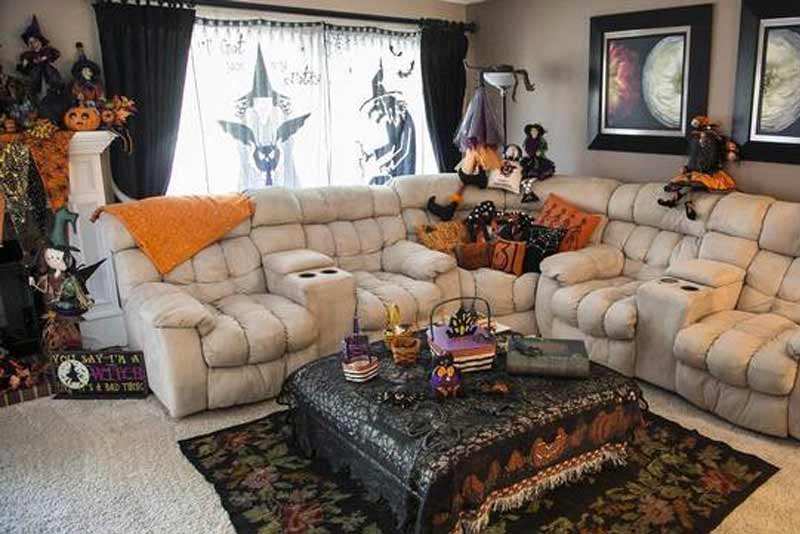
Pumpkins fit especially well here because their shape is unmistakably seasonal without committing the whole room to a theatrical theme. Traditional orange stands out immediately, while white, green, or muted pumpkins sit more comfortably with interiors where bright orange feels disconnected from the furniture and textiles.
If Halloween is part of a gathering, the same practical thinking used for indoor party decoration ideas still matters. Tables should remain usable, and one memorable focal point generally does more than a dozen small objects spread across every surface.
Halloween Mantel Decorations
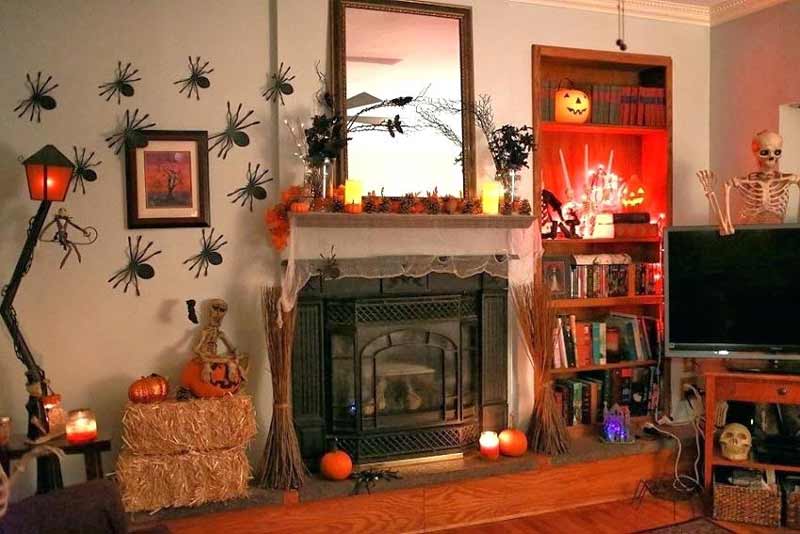
A mantel is one of the few places where Halloween decor can become fairly dense without taking over the whole room. Pieces with enough scale to be seen from across the space should come first, with smaller objects filling the gaps.
Pumpkins, bare branches, dark candlesticks, ceramic houses, ravens, skulls, or an old-looking framed print create different heights without requiring perfect symmetry. A slightly uneven arrangement often suits Halloween well because it feels less formal than identical objects lined up at both ends.
A carved jack-o’-lantern also makes sense near a fireplace or on a hearth when the fireplace is not active. Indoors, battery-operated lighting gives the face its glow without adding an open flame beside fabric, paper decorations, costumes, or dried materials.
Pumpkins, Ghosts and Bats Around Shelves and Furniture
Grouping helps familiar Halloween symbols look deliberate rather than scattered. Three pumpkins beside a bookcase may have more presence than six placed individually around the room, while a loose flight of paper bats reads more naturally than single bats spaced at identical intervals.
Ghosts need enough open space for their outline to remain visible. An open wall near a window, the end of a hallway, or a tall corner usually works better than a crowded shelf.
Playful details can stay small. Toy mice appearing from holes in a pumpkin, for example, create a clear Halloween moment without demanding a separate display, and the same idea applies to spiders or black cats tucked into a larger arrangement.

Halloween Entryway and Staircase Decorations
Halloween entryway decor gets seen immediately, which makes the area tempting to overdecorate. It is also where coats, shoes, bags, keys, deliveries, and arriving guests tend to collide, so seasonal pieces have to share the space with everyday clutter.
A console can handle a pumpkin arrangement, lantern, skull, dark vase, or bare branches. Above it, a mirror offers an easy background for bats or light webbing, while the staircase creates a long line for repeating details.
Skeletons, Webs and Hanging Decor for Entryways
Large skeletons look more intentional when they interact with the room. Sitting one on a bench, leaning it beside a console, or placing it near the bottom of a staircase gives the prop a reason to be there.
Fake webbing benefits from the opposite approach: less usually looks more convincing. Stretching it between a few stair spindles, across one corner of a mirror, or through branches in a vase suggests a web without turning every handrail into something people have to touch.
Hanging ghosts make good use of vertical space, particularly in taller entryways or beside staircases. Anything suspended near a normal walking route should stay comfortably above head height.
Halloween Table Decorations for Dinner and Parties
Halloween table decor can feel dramatic without turning dinner into a stage set. Dark linen, a few small pumpkins, black or brass candlesticks, branches, colored glassware, and one or two themed pieces establish the mood while leaving room for plates and serving dishes.
For a seated meal, lower arrangements are usually easier to live with because people can still see across the table. Taller branches, lanterns, or dramatic objects have more freedom on a sideboard or buffet.
Candy can become part of the decoration rather than remaining in branded bags. A bowl, glass jar, or simple painted container works on a side table, buffet, or entry console and adds something guests can actually use.
There is also no need for the table to introduce a completely new set of Halloween symbols. If pumpkins already dominate the room, a darker textile and candlelight may be enough; where skeletons or ghosts are doing most of the visual work, the dining area can stay simpler.
Indoor Halloween Lighting That Changes the Mood
Lighting changes Halloween decor after sunset in a way that another shelf of props cannot. Normal lamps can continue doing the practical job, while small light strings, illuminated pumpkins, colored bulbs, or hidden light behind gauze change the shadows and draw attention to selected areas.
Amber light suits pumpkins, wood, dried foliage, and traditional black-and-orange decorating. Purple or deep red feels more theatrical, while dim neutral light behind a silhouette or hanging ghost can create enough contrast without changing the color of the entire room.
Jack-o’-lanterns are an obvious place to avoid an open flame. The U.S. Consumer Product Safety Commission’s Halloween safety recommendations advise using battery-operated lights or glow sticks in decorations and keeping flames away from curtains and other combustible materials.
Decorative light strings deserve a quick inspection before they go up. Cords should also stay out of doorways and walking routes, especially once the room is deliberately darkened.
Halloween Window Decorations From Inside the House
Halloween window decor has the useful advantage of working in two directions. Bats, silhouettes, lights, or hanging shapes can contribute to the interior while also creating a visible Halloween display from outside.
That makes windows particularly valuable in apartments and homes where exterior decorating is restricted or inconvenient. The arrangement still has to respect how the window is used, especially where blinds and curtains move every day.
Halloween Bats, Silhouettes and Hanging Decorations
Paper bats remain recognizable even at a distance, so a fairly simple arrangement can work well. A loose cluster that seems to move from one side of the window toward the wall usually looks more natural than an evenly spaced border.
Silhouettes become more noticeable after dark when the room behind them is illuminated. Cats, ghosts, witches, bare trees, and simple monster shapes all work without needing much depth or additional decoration.
Hanging pieces should occupy a section of the window rather than fighting with the curtains every time they open. One larger shape or a concentrated group often has more presence than many small decorations distributed across the glass.
Indoor Halloween Decorations for Small Homes and Apartments
Small interiors expose clutter quickly, so miniature versions of every popular Halloween decoration rarely solve the problem. Fewer pieces with enough visual presence make better use of the space and are easier to pack away when October ends.
Halloween decorations for apartments work particularly well on walls, windows, shelves, and furniture that already occupies the room. These surfaces create room for bats, pumpkins, lights, and hanging ghosts without sacrificing floor area to temporary props.
A large skeleton or oversized cauldron can still work in a compact home if it becomes the obvious focal point. Trouble usually starts when several bulky decorations compete with one another and with the furniture.
Decorate Vertically Instead of Filling the Floor
Walls, stair rails, door frames, shelves, and windows allow Halloween decor to move upward instead of outward. A tall vase filled with branches and a few hanging bats can create considerable height while occupying only a small area of a console or table.
Paper decorations are particularly convenient because they store nearly flat. They can cover a relatively large visual area in October without creating another bulky box that needs cupboard space for the rest of the year.
Some empty wall and shelf space is useful rather than unfinished. Those gaps separate the stronger displays and prevent several dark shapes from merging into one busy mass.
Easy DIY Details Without Turning the Room Into a Craft Project
Handmade details are useful when they solve a decorating problem rather than simply increasing the number of objects in the room. A bare window might benefit from paper bats, while an empty corner could take a lightweight gauze ghost; neither requires the whole house to become a weekend craft project.
Simple additions that fit this broader decorating approach include:
- paper bats arranged across a wall or window;
- painted or marker-decorated pumpkins when carving is unnecessary;
- gauze ghosts placed in open corners or near windows;
- branches collected outside and displayed in a dark vase;
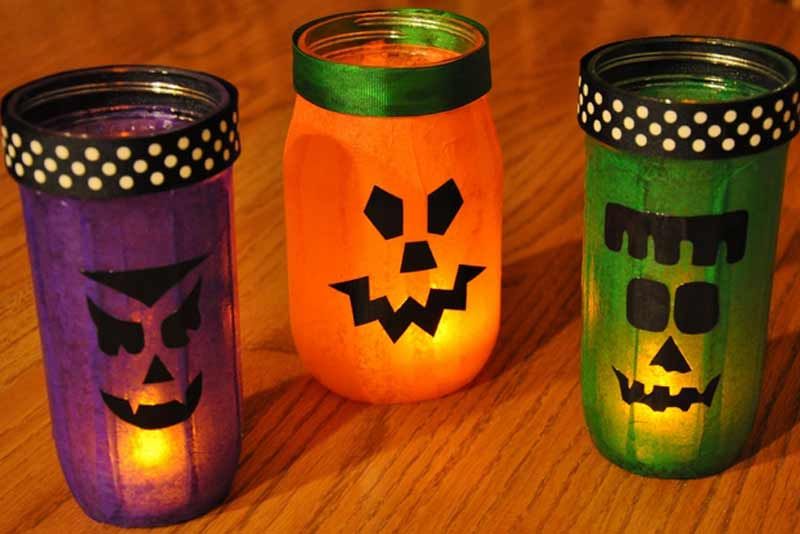
- plain jars or containers decorated for candy;
- paper pumpkins or silhouettes used on shelves and windows.
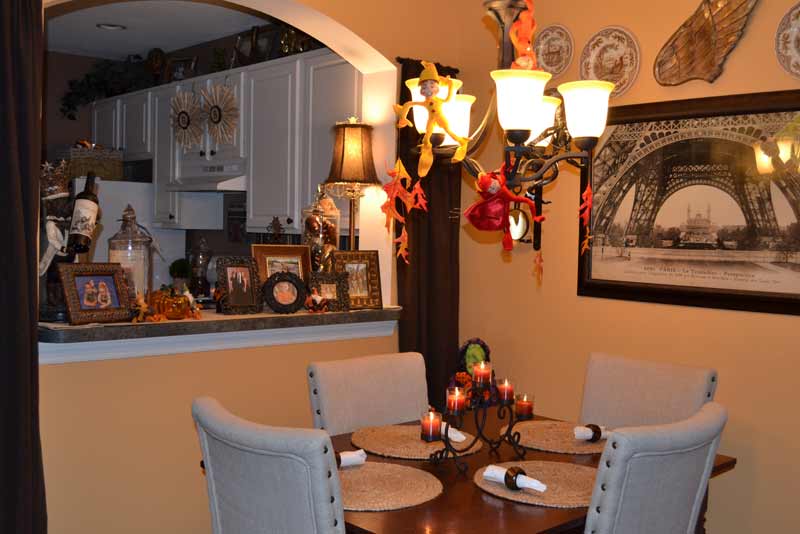
When making the decoration is the main attraction, DIY Halloween decorations for the house are better treated as their own project. Keeping detailed craft instructions separate also prevents this room-decorating article from drifting into the same intent.
Pumpkin carving needs extra consideration when children are involved. The American Red Cross’s Halloween safety tips recommend battery-operated lights or glow sticks instead of candles inside jack-o’-lanterns.
A handmade element does not need to announce itself as DIY to earn its place in the room. A cluster of well-positioned bats or one ghost hanging in an empty corner can contribute more than several crafts competing on the same shelf.
Common Indoor Halloween Decorating Mistakes
Halloween can handle more visual drama than most seasonal decorating, but a dramatic room does not have to become inconvenient. Doors, stairs, tables, and handrails should still work normally, even when the rest of the room is intentionally dark, eerie, or theatrical.
Before considering the setup finished, check for:
- decorations blocking doors, stairs, or frequently used walking routes;
- fake webbing stretched across handrails or places people need to touch;
- open flames close to paper, fabric, costumes, curtains, or dried materials;
- too many small props spread evenly across every shelf;
- extension cords running through dark areas where people walk;
- table decorations that have to be removed before anyone can eat.
Check the rooms again after sunset rather than judging everything in daylight. Shadows, colored lights, illuminated pumpkins, and dark window shapes add contrast, so a display that seemed sparse in the afternoon may already have enough visual weight at night.
Viewing the decorations from the places people actually sit also reveals problems that are easy to miss while arranging them. A prop hidden behind a chair or visible only from one corner contributes much less than something placed along a normal sightline.
Indoor Halloween decorations feel more convincing when the familiar room is still recognizable underneath them. Strong focal points, controlled lighting, a few repeated motifs, and some undecorated space usually create more atmosphere than simply increasing the number of pumpkins, ghosts, webs, and skeletons.
There is no need for every square foot to participate. Once the main displays hold together and the room feels noticeably different after dark, adding another prop rarely improves it.