
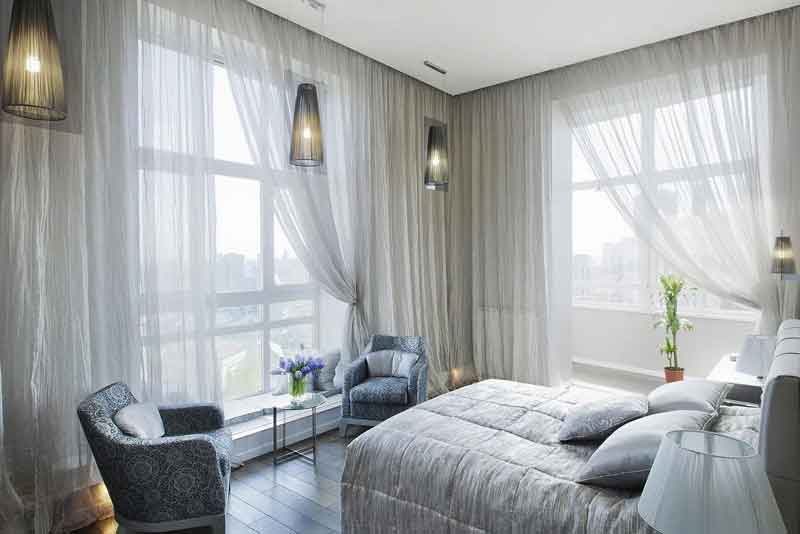
Curtains are becoming more noticeable again. After years when streamlined blinds, plain panels, and barely-there window treatments dominated many interiors, 2026 is bringing back fabric, layering, texture, and a little more personality around the window.
What is returning is not the entire formal window-dressing vocabulary of decades past. The newer look is more selective, with soft sheers paired with practical drapes, natural-looking fabrics with visible texture, richer color used with restraint, and traditional details that feel intentional rather than ornamental for their own sake.
Curtain Trends in 2026 Are Moving Beyond Bare Minimalism
The clearest change is not one specific fabric or color. Curtains themselves are being treated as part of the room again rather than as a neutral frame that should almost disappear.
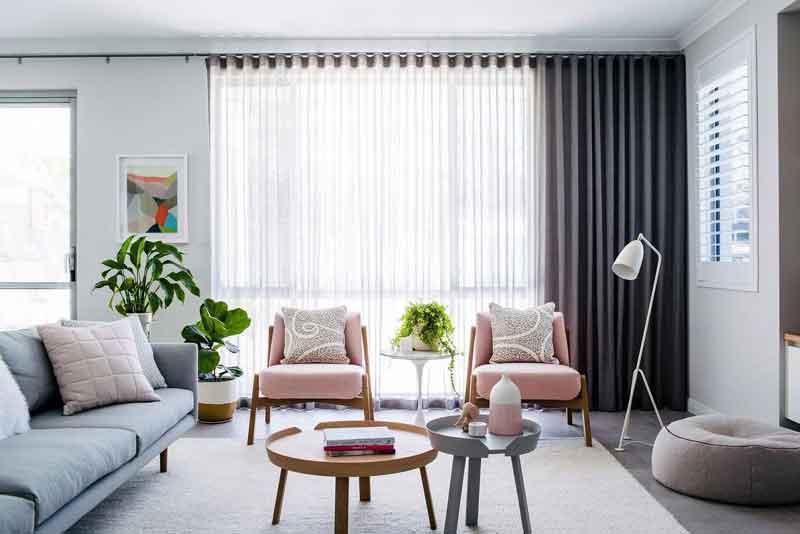
Layering is a good example. A sheer layer can soften daylight during the day, while heavier panels provide privacy or stronger light control when needed. Architectural Digest has highlighted layered drapery as a current design direction, with double treatments adding depth while also improving privacy and light control.
Older decorative ideas are returning in edited forms too. Pelmets, trims, patterned fabrics, and coordinated textiles no longer automatically read as dated when the rest of the room gives them enough breathing space.
Layered Curtains Are Replacing the One-Panel Solution
One of the strongest curtain trends of 2026 is the move toward two-stage window treatments. Instead of asking one fabric to provide privacy, softness, daytime light, and darkness at night, designers are increasingly separating those jobs.
A sheer or semi-sheer layer closest to the window can filter daylight without making the room feel closed. A second curtain can then add color, pattern, insulation, or stronger privacy when it is drawn.
The appearance of the window changes as well. Two fabrics create greater depth than a single flat panel, particularly when one material is light and translucent while the other has more weight or texture.
This works best when the layers have a reason to coexist. Simply doubling fabric for volume can make a small window feel crowded, while a sheer-plus-drape combination solves two practical needs and creates the visual effect at the same time.
Layering becomes especially useful in bedrooms, media rooms, and street-facing spaces where daylight and nighttime privacy require different treatments. A sheer can remain closed through much of the day, while a heavier or blackout curtain only needs to come across the window when stronger coverage matters.
The two layers do not need to match exactly. A textured warm-white sheer behind a deeper solid curtain often creates more depth than two fabrics in nearly identical tones, while keeping the treatment visually connected.
Sheer Curtains Are Becoming More Textural
Sheers have not disappeared during the last few design cycles, but the interesting part in 2026 is how they are being used. The current direction favors fabrics with visible weave, irregular yarns, subtle stripes, or enough texture to respond to changing light.
Pure white voile is no longer the only obvious interpretation. Warm off-white, flax, cream, muted natural tones, and linen-like textures allow a sheer curtain to become part of the material palette of the room without demanding much attention.
Café Curtains Work Best When the Room Gives Them a Job
Café curtains are another recurring part of the softer window-treatment direction. They make particular sense in kitchens, breakfast areas, bathrooms, and street-facing rooms where the lower part of a window needs privacy but the upper portion can remain open to daylight.
Their return does not mean every living-room window needs to be cut visually in half. The appeal comes from matching a very specific form to a very specific privacy problem.
A lightweight café curtain can also introduce pattern or texture in a smaller dose than full-height drapery. That makes it useful in rooms where a large printed curtain would carry too much visual weight.
Linen Curtains and Natural-Looking Fabrics Still Have Staying Power
Linen remains relevant in 2026, but the reason is broader than a generic sustainability claim. Its irregular texture, relaxed drape, and interaction with daylight suit the move away from perfectly smooth, highly polished interiors.
Cotton, linen blends, and other woven materials can create a similar effect depending on the weight and construction. The common visual thread is a surface that looks tactile rather than synthetic and completely uniform.
Natural appearance should not be confused with a requirement to use an untreated natural fiber in every room. A practical blend may hang better, wrinkle less, or offer more effective light control while still delivering the softer woven look people associate with linen.
Material that looks good but performs poorly for the room usually becomes frustrating long before its color or texture feels dated. That is why the current preference for natural-looking fabric is more useful as a visual direction than as a strict rule about fiber content.
Linen-Look Curtains Can Be More Practical Than Pure Linen
Pure linen has a distinctive texture, but its relaxed wrinkles and natural variation are not ideal for every interior. Linen blends can retain much of the woven character while offering easier maintenance, more predictable drape, or better dimensional stability.
The label matters less than the result at the window. A convincing linen-look fabric that hangs well and suits the room’s privacy needs can be a better long-term choice than a fashionable material selected mainly because of its fiber composition.
Fuller Curtains Are Making Windows Feel More Finished
Another shift is toward curtains with enough fabric to form visible folds when closed. Panels that barely stretch across the window can look thin even when the fabric itself is attractive.
The 2026 preference for layering and softer drapery naturally favors a fuller appearance. More fabric allows texture, folds, and movement to become visible rather than turning the curtain into a nearly flat sheet.
That does not mean every curtain should puddle dramatically across the floor or contain an extreme amount of material. Fullness is primarily about giving the drape enough body to look intentional at the scale of the window.
If the practical decisions about dimensions, room type, fabric weight, or curtain length become more important than the trend itself, getting curtain length, fabric and proportion right deserves more attention than copying a particular 2026 look. A fashionable treatment still looks wrong when its scale or drape does not suit the window.
Warm Neutral Curtain Colors Are Moving Beyond Plain Beige
Neutral curtains remain common, but neutral no longer has to mean flat gray or anonymous beige. Warmer shades such as oatmeal, flax, mushroom, taupe, soft clay, and muted brown can create more separation from a white wall without becoming the main color statement in the room.
Muted greens also fit easily into the current preference for earthy interiors. The most successful versions tend to feel softened rather than aggressively saturated, allowing the fabric texture and folds to remain visible.
For stronger color, richer reds, burgundy tones, deep greens, and similarly grounded shades can work particularly well when the room already contains related tones. They feel more convincing when the color has somewhere else to echo instead of appearing only at the window.
Curtain color now tends to work as part of the room’s palette rather than as a separate decorating decision. Choosing a fashionable shade in isolation is less useful than understanding how curtain color responds to the wall behind it and to the furniture, flooring, and daylight around it.
Which Curtain Colors Feel Current in 2026?
Warm neutrals are the easiest direction to use because they add depth without locking a room into a strong color scheme. Oatmeal, mushroom, flax, clay, muted olive, and softened brown all work with the broader move toward warmer and more tactile interiors.
Deeper shades are not disappearing, though. Burgundy, forest green, rusty red, and other grounded colors can give curtains more visual authority when the rest of the room already contains enough restraint to support them.
Curtain Patterns Are Back, but They Do Not Have to Shout
The old version of this page treated floral curtains as a standalone 2024 comeback. In 2026, the broader movement is toward pattern and personality rather than one mandatory motif.
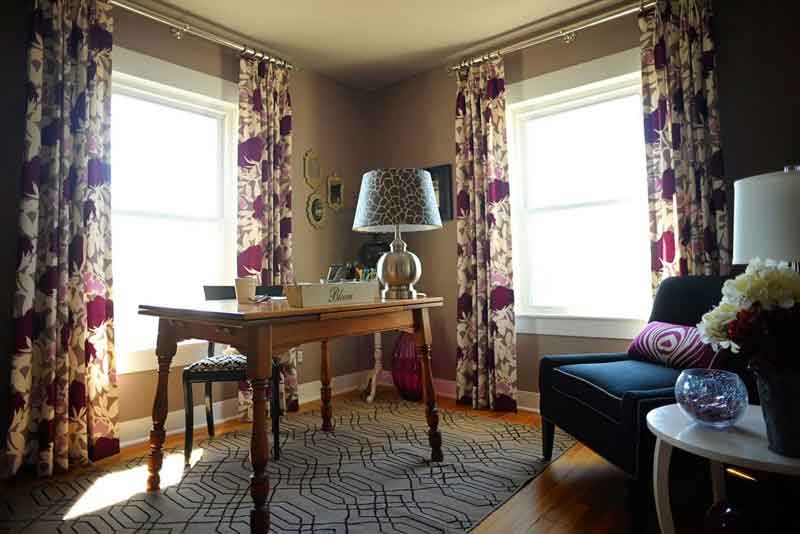
Stripes remain easy to use because they provide structure without filling the window with a complicated image. Small florals, checks, restrained botanicals, and heritage-influenced patterns can also work when they connect with something elsewhere in the room.
Pattern does not need to cover every textile. A printed curtain can sit beside largely solid upholstery, or a quieter curtain can support a more decorative wallpaper.
Pattern can return without spreading across every textile in the room. A printed curtain often needs quieter neighbors more than it needs another matching motif.
Matching Curtains With Other Fabrics Is No Longer Automatically Dated
One of the more interesting reversals from the old article concerns matching. The 2024 text argued that coordinated curtains and furnishings were on their way out, but current interiors have become more comfortable with deliberate repetition.
In 2026, the same or related fabric may appear on curtains and a headboard, cushion, lampshade, or another upholstered detail. The effect can feel cohesive rather than overly matched when there is enough variation elsewhere in the room.
Literal repetition works particularly well when the fabric itself has character. A stripe or botanical repeated once across the room can establish a visual relationship without turning everything into a matching set.
Coordination works better than duplication. A room where every textile uses the same fabric still risks feeling staged, while one repeated material can make otherwise separate elements feel connected.
Pelmets and Decorative Curtain Details Are Returning Carefully
Pelmets are among the more surprising curtain trends of 2026. Once dismissed as too traditional or fussy, they are returning as a way to frame a window, conceal hardware, and add another piece of fabric or shape near the ceiling.
The newer versions do not need swags, multiple tails, and layers of elaborate trimming. A tailored or softly gathered pelmet can work as a cleaner architectural element, particularly in bedrooms and traditional or transitional rooms.
The return is not limited to one isolated decorative detail. Homes & Gardens includes layered treatments, coordinated curtains, sheers, and pelmets among its key curtain directions for 2026, reflecting a wider move away from bare minimalism.
A small amount of trim along the leading edge of a curtain can be enough. Decorative details lose their effect when every edge receives one, so the newer approach is more about selective emphasis than rebuilding an elaborate formal window treatment.
Curtain Hardware Does Not Need to Steal the Window
There is no single 2026 hardware finish that every room needs. Matte black and warm metal finishes remain useful, but choosing hardware purely because one finish appears on a trend list is an increasingly weak way to design a window.
In quiet rooms, a slim rod close to the wall color can almost disappear. In a more decorative interior, visible rings, finials, or a stronger metal finish may become part of the composition.
Scale matters more than novelty. An oversized rod on a modest window can make the treatment look top-heavy, while hardware that is too slight may appear accidental beneath generous drapery.
What Curtain Styles Are Starting to Feel Dated in 2026?
The answer is less about banning specific curtain categories and more about proportion and execution. Grommets, plain panels, florals, and heavy fabrics are not automatically outdated simply because another style is receiving more editorial attention.
A few treatments do tend to make a room feel older when nothing else in the interior supports them:
- panels that are visibly too narrow for the window;
- curtains stopping awkwardly above the floor without a practical reason;
- shiny synthetic-looking fabrics used to imitate luxury;
- elaborate window sets where valances, swags, tiebacks, and curtains all compete at once;
- strongly coordinated curtain-and-furniture sets with no visual break;
- very heavy treatments on windows where daylight is already limited.
Context matters more than the label. A dramatic floral curtain can look current in a room built around pattern and traditional detail, while a supposedly modern neutral panel can still look wrong if it is undersized and poorly hung.
Poor Proportion Dates Curtains Faster Than the Fabric
Curtains often look dated because of how they fit the window rather than because the fabric belongs to a particular decade. Panels with too little fullness, an awkward stopping point, or hardware that feels undersized can make even a current fabric look unresolved.
The reverse is also true. A traditional stripe, floral, velvet, or simple solid panel can still feel convincing when its length, fullness, hardware, and relationship to the room are handled well.
Which Curtain Trends Are Likely to Last Beyond 2026?
Some current ideas have more staying power because they solve practical problems rather than existing only for visual novelty. Layering, proper fullness, and tactile fabrics can remain useful even after the surrounding design vocabulary changes.
| 2026 curtain direction | Why it works | Likely staying power |
|---|---|---|
| Layered sheers and drapes | Separates daylight, privacy and blackout functions | High |
| Linen and woven texture | Adds material interest without depending on bold color | High |
| Fuller curtain panels | Improves proportion and drape | High |
| Warm neutral colors | Easy to combine with changing furniture and decor | High |
| Café curtains | Solves partial-privacy problems in specific rooms | Medium to high |
| Coordinated fabrics | Creates cohesion when used selectively | Medium |
| Pelmets and decorative trims | Adds character but depends strongly on room style | Medium |
A layered treatment or well-proportioned linen panel can survive several decorating cycles because its appeal comes from function, texture, and scale. Those qualities remain useful even when the language used to describe the trend changes.
A highly distinctive trim or elaborate pelmet may still be worth choosing, but it should belong to the room rather than serving as proof that the owner followed the 2026 trend list. A strong treatment usually has a reason to be there beyond its publication date.
A Good Curtain Should Outlast the Trend Cycle
The most useful curtain trends of 2026 are not really about replacing last year’s fabric with this year’s fabric. They reflect a broader change toward rooms that feel softer, more layered, more tactile, and less afraid of decoration.
That leaves plenty of room for individual choices. A simple linen panel, layered sheers, a patterned curtain, or even a tailored pelmet can all feel current when the treatment fits the proportions and character of the room.
The trend worth keeping is the one that still solves the window’s practical needs after its moment in the design press has passed. Curtains occupy too much visual space, and usually cost too much to replace, to work well as disposable fashion.