
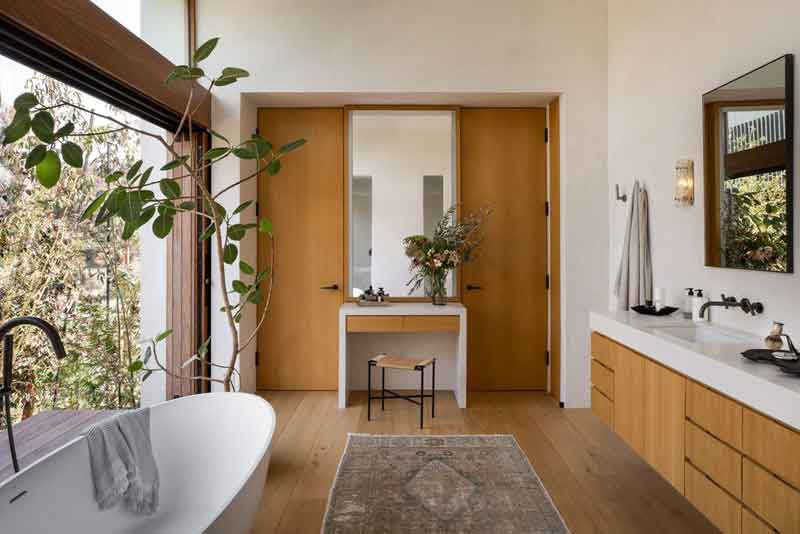
A modern bathroom does not have to be white, nearly empty, or built around the latest faucet finish. The room usually feels more current when the vanity, storage, lighting, fixtures, and surrounding materials look as though they were planned together.
The vanity is a useful place to begin because so many other decisions depend on it. Its size affects circulation, its drawers determine where daily products go, and its width influences the mirror and lighting above it. Getting that part right can do more for the room than adding another fashionable surface.
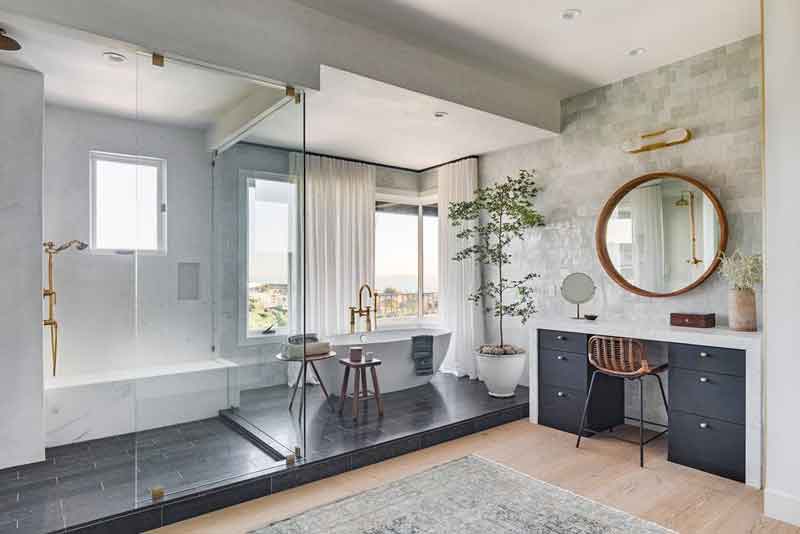
Modern Bathroom Vanity Ideas Start With the Available Space
A vanity that looks elegant in a showroom can become awkward once it sits between a doorway, toilet, shower enclosure, and narrow walkway. Width is only part of the measurement; depth and clearance for drawers or cabinet doors matter just as much.
Measure the usable wall and the space in front of it before choosing the cabinet. Leaving a little room beside a vanity may be worthwhile if it prevents a drawer from hitting a door casing or gives someone enough space to move comfortably past another fixture.
Simple cabinet fronts, restrained hardware, and well-planned storage often contribute to a modern appearance. None of those details requires the vanity itself to be stark or completely minimalist.
Floating or Freestanding Vanity for a Modern Bathroom?
A floating vanity exposes more flooring and makes a large cabinet look visually lighter. That can be useful in compact rooms, although the wall construction, plumbing, and weight of the vanity and countertop all need to suit this type of installation.
Freestanding vanities remain a practical option where more enclosed storage is useful or existing plumbing makes wall mounting unnecessarily complicated. Clean proportions and restrained detailing can make them look just as current.
The better choice is the one that fits the room without creating installation or storage compromises. Floating cabinetry is a design option, not a requirement for a modern bathroom.
Single and Double Bathroom Vanities Solve Different Problems
Two sinks are helpful when two people genuinely need water at the same time. They also consume counter and cabinet space, so installing a second basin can create a new problem while solving another one.
A wide single vanity may provide more useful drawers, uninterrupted countertop, and a larger mirror. That trade can be worthwhile when storage and grooming space cause more friction than access to the faucet.
In a household where several people use the room, routines matter more than the visual symmetry of two sinks. Our family bathroom ideas look more closely at shared vanities, personal storage, towel zones, and the practical conflicts that appear in busy bathrooms.
How Much Counter Space Does a Bathroom Vanity Need?
The answer depends on what actually happens at the sink. Someone who stores most products in drawers can work with less exposed surface than someone who uses several grooming tools and toiletries every morning.
A basin that dominates a modest vanity can leave almost nowhere for a toothbrush, soap dispenser, or grooming product. In that situation, a slightly smaller sink may improve everyday use more than a larger statement basin.
Countertop clutter also changes the way streamlined cabinetry looks. Clean cabinet fronts have much less visual impact when the entire surface above them has become permanent storage.
Vanity Storage That Keeps a Modern Bathroom Organized
Large cabinets are not automatically efficient. Small toiletries can disappear behind each other in deep compartments, while shallow drawers and dividers often make daily items easier to see and reach.
Vanity drawers, mirrored cabinets, recessed niches, tall cabinets, and shallow wall storage each solve a different problem. Combining two or three of them usually works better than asking open shelving to hold everything.
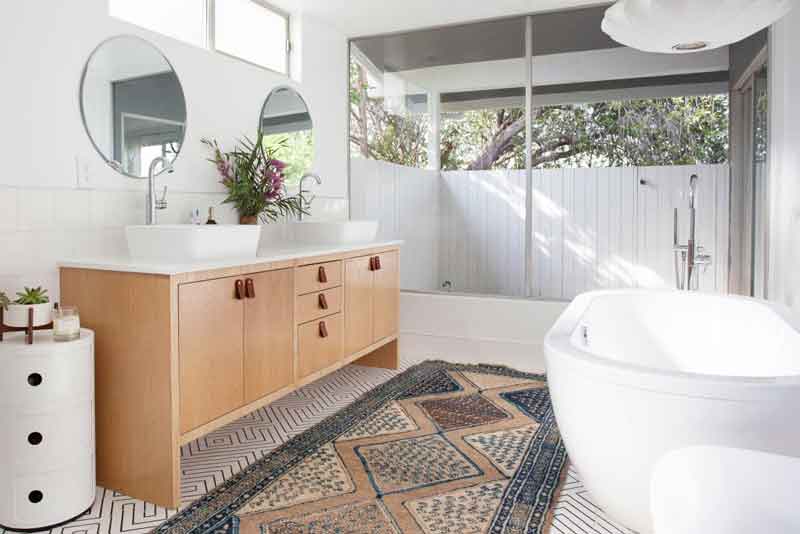
Open shelves still have a place when their purpose is clear. A small group of towels or frequently used containers can look intentional, whereas rows of backup toiletries quickly turn an architectural feature into overflow storage.
A practical mix usually keeps everyday objects close at hand and moves bulk supplies out of the most visible areas. That gives the room a cleaner appearance without requiring the occupants to own fewer things.
Can a Mirrored Cabinet Replace Extra Bathroom Storage?
A recessed or shallow mirrored cabinet can handle two jobs above the vanity when the wall construction allows it. Small skincare products, medicines, or grooming items stay close to the sink while the front remains a full working mirror.
Surface-mounted versions can be useful too, but their depth needs to be considered from the side. A cabinet that projects heavily over a shallow vanity can make the sink area feel tighter than the floor plan suggests.
Mirror size and lighting still need to work with the vanity below. Gaining storage is less useful if the resulting mirror becomes awkwardly narrow or forces the lighting into a poor position.
Vanity Lighting for a Modern Bathroom Should Work at the Mirror
A bathroom can be bright overall and still have poor light at the sink. Ceiling fixtures illuminate the room, but light coming mainly from above can leave shadows across the face during shaving, makeup, skincare, or other close work.
A useful vanity-lighting plan treats the mirror as a task area. This Houzz guide to bathroom vanity lighting discusses combining general and task lighting and explains why fixtures beside or around the mirror can provide more useful facial illumination than relying on overhead light alone.
Sconces beside the mirror, a well-designed illuminated mirror, or a combination of mirror-level and overhead fixtures can all work. Available wall space, mirror width, electrical locations, and the amount of daylight in the room will affect which arrangement makes sense.
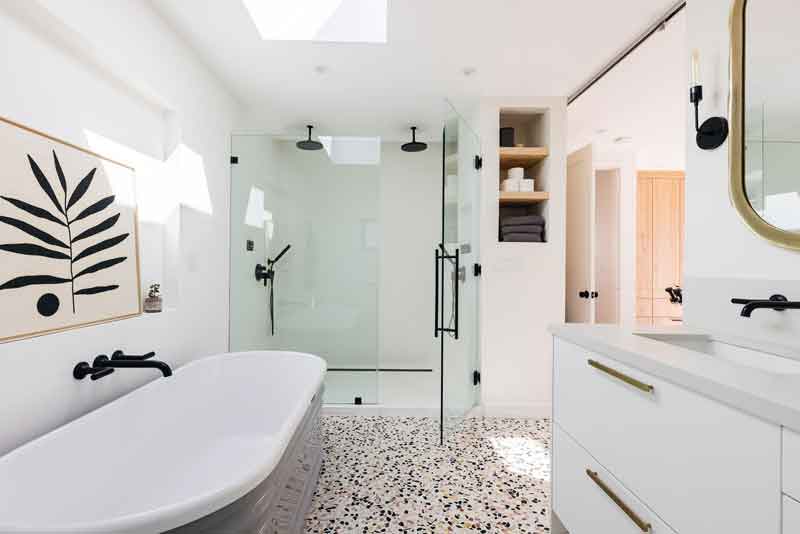
Lighting elsewhere should be planned separately. A shower, enclosed toilet area, or long bathroom may need another source rather than depending on whatever light reaches it from the vanity.
Are Backlit Mirrors Enough for Bathroom Vanity Lighting?
A glowing edge behind a mirror can make a bathroom look polished, but the visual effect does not tell you how much useful light reaches the face. Some backlit designs mainly illuminate the wall and work better as ambient light.
Models that direct light forward can perform differently, so the specification and actual light distribution matter more than the presence of an LED strip. Where grooming light is insufficient, another fixture can fill the gap without giving up the backlit look.
Dimming is useful when the same fixtures serve different parts of the day. Full output works for detailed morning routines, while a lower level is more comfortable when bright task lighting is unnecessary.
Bathroom Materials Need Contrast Without Becoming Busy
An entirely pale bathroom can look clean but surprisingly flat when the tile, countertop, cabinetry, and walls all have similar color and texture. A modest amount of contrast gives individual surfaces a clearer role.
Wood-toned cabinetry against stone-look tile is one option. Dark hardware against a lighter vanity, or a textured shower wall beside simpler surrounding surfaces, can create a similar separation without filling the room with competing patterns.
Large-format surfaces often produce a quieter background because there are fewer visible joints. Small tile can still work well in a niche, backsplash, floor, or contained feature where the change of scale looks deliberate.
Maintenance belongs in the decision too. A material that behaves well on a dry wall may be inconvenient on a frequently wet floor, while heavy texture can collect more residue than its sample reveals.
Modern Bathroom Color Ideas Go Beyond White and Gray
White, gray, and black remain useful building blocks, but they are not a prescribed modern palette. Warm neutrals, muted greens, brown, clay tones, and natural wood can all sit comfortably beside clean cabinetry and simple fixtures.
Limiting the number of permanent finishes often matters more than choosing a specific color family. When tile, cabinetry, countertop, and hardware each introduce a separate strong idea, a small bathroom can become visually fragmented.
Dark cabinetry is particularly easy to use as an anchor because the vanity occupies a defined area. Against a lighter wall or floor, it can add depth without making the whole room dark.
For an existing bathroom that needs a lighter update rather than a fixture-level redesign, these bathroom decorating ideas focus more on mirrors, accessories, color, and other changes that do not require rebuilding the room.
Bathroom Faucet Ideas Should Go Beyond the Finish
Chrome, brushed nickel, matte black, brass tones, and other finishes can all belong in a modern bathroom. Faucet height, projection, maintenance, basin compatibility, and water performance are more consequential than choosing whichever metal happens to be fashionable.
A tall faucet can suit a vessel basin but feel oversized beside a shallow sink. Wall-mounted faucets clear the countertop, although they make plumbing placement a more permanent part of the design.
Water use is another specification worth checking during replacement. The EPA WaterSense bathroom faucet program covers labeled bathroom sink faucets and accessories that meet water-efficiency and performance criteria, allowing efficiency to be considered alongside style and fit.
Metal finish still contributes to the room, but it does not need to make every decision. A well-proportioned faucet that suits the sink will usually age better than an awkward model chosen mainly because its finish was trending.
Mixing Bathroom Hardware Finishes Without Visual Clutter
Simple cabinetry makes handles, faucets, shower fittings, and mirror frames more noticeable. The scale and repetition of those details can therefore influence the room more than their individual price or complexity.
Integrated pulls and finger grooves create very quiet cabinet fronts, but conventional knobs and handles work equally well when their proportions suit the drawers and doors. Oversized hardware can dominate a compact vanity, while tiny pulls may look lost across a wide drawer front.
Can You Mix Metal Finishes in a Modern Bathroom?
Yes, but a mixed-metal bathroom benefits from repetition. A secondary finish that appears only once can look accidental, while repeating it on two or more related details makes the contrast easier to read.
There is no need to make the faucet, shower fittings, cabinet pulls, mirror frame, and lighting identical. Two finishes are often easier to control than introducing a different metal at every fixture.
The surrounding materials also influence the result. Warm wood, cool stone, dark cabinetry, and painted surfaces can change how strongly brass, chrome, black, or nickel stands out.
A Modern Bathroom Can Have More Personality Than Minimalism Allows
Modern and minimalist are related ideas, but they are not synonyms. Patterned tile, warm wood, artwork, color, visible texture, and decorative lighting can all work in a contemporary room.
Problems appear when too many elements compete for the same level of attention. A sculptural vanity, heavily patterned floor, dramatic shower tile, unusual mirror, statement lighting, and several metal finishes may each be attractive separately but become difficult to read together.
Deciding what should lead makes the rest easier. A distinctive vanity can sit against a quieter backsplash, while an expressive floor may work better with simpler cabinetry and hardware.
The room does not need decoration removed from every surface. It needs enough quieter material around the strongest features for those features to remain visible.
Small Modern Bathroom Ideas Depend on Proportion
Compact bathrooms often suit streamlined cabinetry and integrated storage because fewer projections can make circulation easier. The advantage disappears when every available wall receives another shelf, cabinet, or space-saving fixture.
A compact vanity with genuinely useful drawers may serve the room better than a wider cabinet that pinches the route to the shower. Wall-mounted storage can free floor area, but excessive depth at shoulder or head height makes a narrow room feel crowded in a different way.
Mirrors are particularly useful because they already perform a necessary function. Increasing mirror area can often add more visual openness than surrounding a small vanity with several decorative objects.
Floor continuity helps too. Seeing the flooring continue beneath a floating vanity changes how much of the room remains visually exposed even though its dimensions have not changed.
What Size Vanity Works in a Small Modern Bathroom?
There is no single ideal width because door swings, toilet clearance, shower access, plumbing, and storage needs vary from room to room. Start with the space needed to move comfortably and work backward to the maximum cabinet size.
Depth deserves just as much attention as width. Shaving several inches from the vanity depth can sometimes improve circulation more than choosing a noticeably narrower cabinet.
A smaller vanity is only useful if its storage still works. Drawers designed around the plumbing can make a compact cabinet more practical than a larger box with poorly organized interior space.
Modern Bathroom Design Mistakes Often Start Before Installation
Many bathroom problems begin when products are chosen individually. A vanity may fit the wall but conflict with a door, a mirror may suit the vanity but leave nowhere for sconces, or a faucet may look good until its proportions are compared with the basin.
Several issues are worth checking before anything is ordered:
- choosing vanity width while ignoring depth and drawer clearance;
- installing two sinks when storage is the bigger need;
- relying on decorative backlighting as the only mirror light;
- covering every available wall with open storage;
- choosing faucet height without considering the basin;
- combining several unrelated tile patterns in a compact room;
- mixing multiple metal finishes without repeating any of them;
- selecting demanding materials for heavily used wet areas;
- treating white and gray as requirements for modern design.
A floor plan, elevations, and actual product dimensions catch many of these conflicts before installation. Fixing them on paper is usually easier than redesigning around plumbing, tile, or cabinetry already in place.
Modern Bathroom Ideas Work Better When the Decisions Connect
The most convincing modern bathrooms rarely depend on one obviously fashionable feature. A floating vanity earns its place when the exposed floor improves proportion, drawers are valuable when they keep daily products close without covering the countertop, and good vanity lighting makes the mirror genuinely useful.
Materials and hardware will change with design cycles, but the practical relationships between them change much more slowly. A bathroom with comfortable clearances, useful storage, effective light, and fixtures that fit one another has far less reason to feel outdated when the next finish or tile trend arrives.