
A family bathroom has a different job from a bathroom designed mainly for one or two adults. Toothbrushes multiply, towels need obvious homes, the floor gets wet more often, and the busiest part of the day can bring several people to the same sink within minutes.
Good family bathroom ideas therefore start with how the room is used rather than with a particular decorating style. Storage, circulation, easy cleaning, ventilation, and a layout that works for different ages usually make a bigger everyday difference than another decorative feature.
Before changing fixtures or finishes, notice where people actually get in each other’s way. In many shared bathrooms, the problem is not a lack of square footage but several routines competing for the same small area.
The sink is an obvious example. One person may be brushing teeth while another needs the mirror, a third is looking for a hairbrush, and someone has left a wet towel where it blocks a drawer.
It helps to think about the room in activity zones rather than as a collection of fixtures:
- washing and toothbrushing around the sink;
- bathing or showering;
- toilet use;
- towels and changing;
- daily toiletries;
- less frequently used supplies.
Even modest separation between those jobs can make the room easier to share. A hook positioned away from the vanity or a medicine cabinet that does not block another person’s drawer may remove more daily friction than a larger renovation.
Double Vanity Ideas That Preserve Bathroom Storage
Double vanities are often presented as the automatic answer for a family bathroom, but two basins consume counter and cabinet space. A long single-sink vanity can sometimes work better when several people need storage or mirror space more often than they need running water at exactly the same time.
Two sinks make sense when morning routines repeatedly overlap and the room is wide enough to give both users comfortable elbow room. They are less convincing when squeezing in the second basin leaves almost nowhere for drawers, toiletries, or useful counter space.
Is One Sink or Two Better for a Family Bathroom?
In a smaller shared bathroom, one sink paired with a wider mirror and well-organized storage may be the more efficient compromise. The aim is not to maximize the number of fixtures but to reduce the places where routines collide.
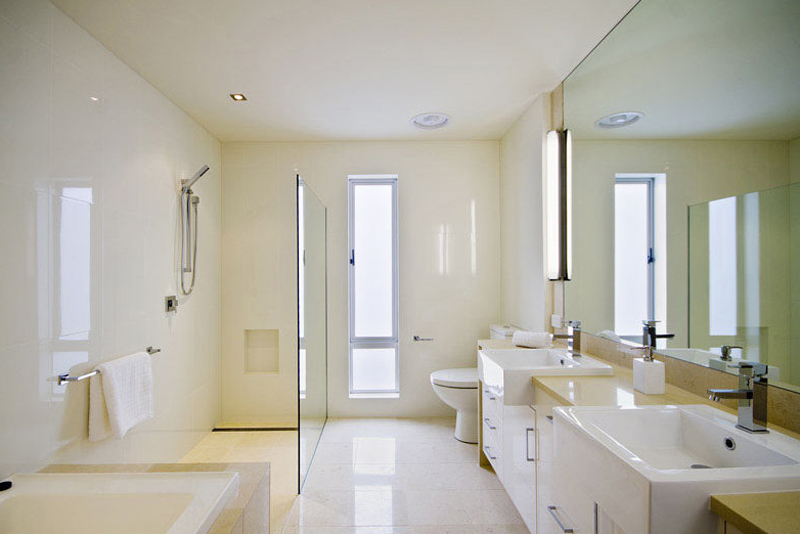
A vanity can also carry much of the room’s visual character. If that becomes the main design decision rather than a space-planning problem, these creative bathroom styles provide a better starting point for choosing the overall look.
Storage starts failing when one large cabinet is expected to hold everything. It may offer plenty of volume on paper while the counter remains crowded because the things used every morning are buried behind spare paper products, bulk toiletries, hair tools, and cleaning supplies.
Drawers, shallow organizers, wall cabinets, baskets, and shelves do different jobs. Items used every day are usually easier to manage when they occupy the most accessible storage instead of disappearing behind supplies opened once every few weeks.
Dividing some storage by person rather than by product can also help. A drawer, bin, basket, or shelf for each family member reduces the recurring search for toothbrushes, combs, skincare products, and small grooming items.
Shared supplies can occupy another zone. Spare towels, backup soap, paper products, and unopened toiletries rarely need the same prime space as things used every morning.
Child-Friendly Bathroom Storage Needs a Separate Safety Zone
Storage that works for adults should not automatically be accessible to young children. Medicines, cleaning products, sharp grooming tools, and other potentially dangerous items belong in secured storage rather than at the back of a low drawer.
Safe everyday belongings can take the opposite approach. A low towel hook, reachable toothbrush cup, or small drawer makes it easier for a child to manage simple routines without constantly relying on storage designed around adult height.
This arrangement can change as children grow. Removable organizers and reassigned drawers are easier to adapt than permanent cabinetry designed too specifically around one stage of childhood.
A styled bathroom photograph may show one neatly folded towel, while a family bathroom has to cope with several damp ones at once. That difference changes what useful towel storage looks like.
Are Hooks or Towel Bars Better for a Family Bathroom?
Hooks can be more practical than bars when children use the room because they require less careful folding. Individual hooks also make it easier to tell whose towel is whose, especially when positions, small labels, or colors differ.
Wall space behind a door can work, but only when the door still opens properly and the towels are not compressed into a damp bundle. Solving the hanging problem without giving fabric enough room to dry simply creates another maintenance issue.
Clean spare towels should have their own place away from the ones currently in use. Otherwise an open shelf or basket can quickly become an uncertain mix of fresh linen and yesterday’s bath towels.
Bathroom Ventilation and Moisture Control for Daily Use
Several showers or baths in quick succession can leave a shared bathroom humid for much of the morning or evening. Moisture control therefore deserves the same planning attention as storage, lighting, and finishes.
Does a Family Bathroom Need an Exhaust Fan?
The U.S. Environmental Protection Agency advises checking that bathroom exhaust fans actually move enough air and that they vent directly outdoors rather than into an attic or another enclosed part of the house. Its bathroom-remodel guidance also stresses ventilation as an important way to remove moisture that can contribute to mold and mildew.
A window can help when weather and privacy make opening it practical, but it does not have to carry the whole ventilation strategy. Mechanical exhaust becomes particularly useful when outdoor humidity, cold weather, security, or the bathroom layout makes regular window ventilation inconvenient.
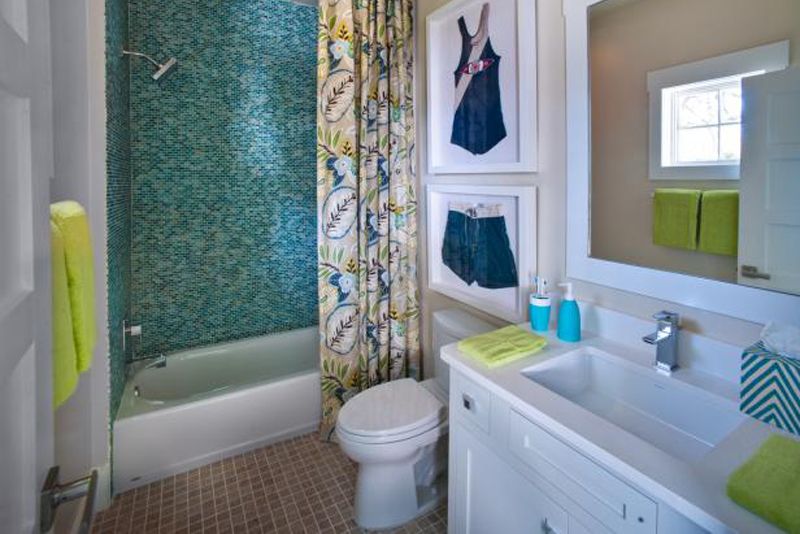
Noise deserves some attention too. A powerful fan that people avoid switching on because it is unpleasantly loud is less useful in everyday life than a properly installed system that becomes a normal part of the shower routine.
Easy-Clean Bathroom Materials for Busy Households
Shared bathrooms collect splashes, fingerprints, toothpaste, damp clothing, and misplaced toiletries faster than lightly used guest bathrooms. Finishes that require delicate maintenance can turn that ordinary wear into unnecessary work.
Around the vanity, uncomplicated surfaces with easy access for wiping are usually easier to live with. Cabinet finishes also need to tolerate repeated contact with damp hands, while flooring should make sense in a room where water occasionally travels farther than expected.
That does not require covering everything with one hard, waterproof material. Wood tones, painted cabinetry, suitable wallpaper, textiles, and decorative finishes can still be part of the room when their location and likely moisture exposure have been considered.
Grout changes the maintenance equation as well. Covering the same surface with many tiny tiles creates substantially more grout line than using larger formats, so the visual choice also affects how much detailed cleaning the room may demand.
Family Bathroom Flooring for Wet, High-Traffic Areas
Water beside the tub or shower is predictable, especially when younger children use the room. Flooring should therefore be judged as an everyday walking surface rather than only as part of the color scheme.
Very polished finishes can feel less reassuring under wet feet, while deeply textured surfaces may become irritating to clean. Material, surface finish, grout joints, room size, and the habits of the people using the bathroom all influence the practical balance.
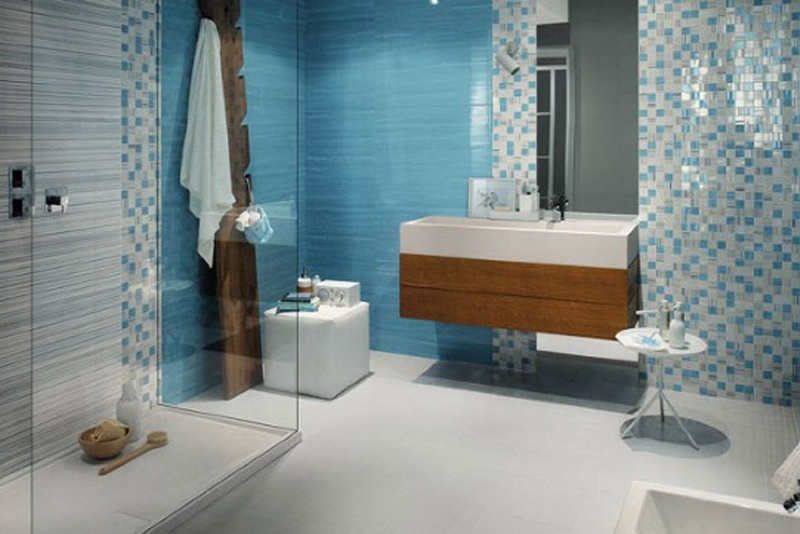
Bath mats help at predictable splash points, but they need a way to dry between uses. A mat that stays damp against the floor for most of the day is not much of a moisture-management solution, even if it looks perfect with the towels.
Small cleanup jobs should be easy to handle. Keeping a towel or squeegee within reach and giving wet textiles an obvious destination makes it more likely that water gets dealt with before it spreads around the room.
Child-Friendly Bathroom Safety Changes With Age
The bathroom has to work through several stages of childhood rather than for one fixed age. A stool that helps a young child reach the sink may disappear later, while privacy, electrical use, grooming tools, and additional storage become more important.
The U.S. Consumer Product Safety Commission recommends safety latches or locks on bathroom cabinets and drawers containing medicines, cleaners, and other hazards. Its childproofing guidance also stresses close supervision during bathing and measures to reduce hot-water scalding risks.
Age-specific adaptations do not all need to become permanent parts of the bathroom. A stable step stool, removable organizer, or adjustable storage arrangement can disappear when it is no longer useful without leaving the whole room designed around a toddler.
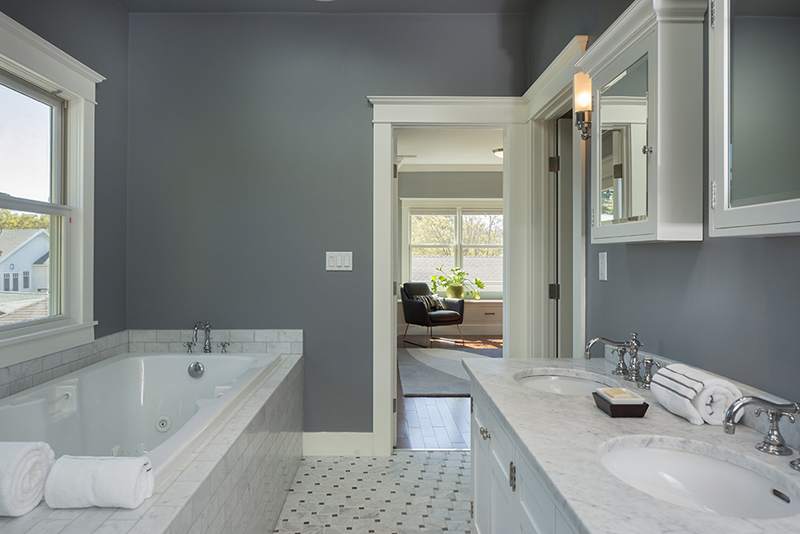
That flexibility matters during a renovation. Durable choices can serve the room for years, while smaller accessories take care of needs that may last only through one stage of childhood.
Family Bathroom Color Ideas That Won’t Date Quickly
A bathroom used by children does not need to default to bright red, blue, yellow, or green. Darker shades are not automatically unsuitable either, so there is little reason to build the palette around rigid rules about what a family bathroom should look like.
Color can do practical work on a smaller scale. Different towel shades, toothbrush cups, storage bins, or subtle labels can help identify personal items without turning the whole room into a children’s space.
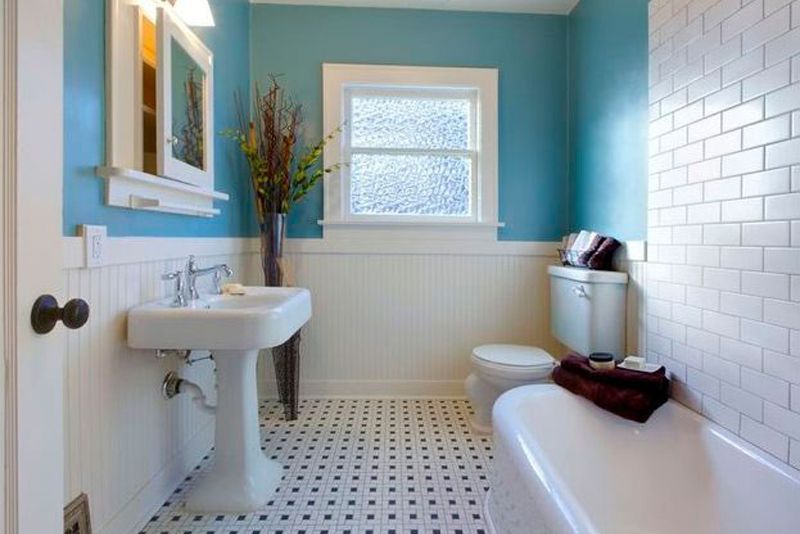
For permanent finishes, a palette that can mature with the household usually gives more flexibility. Light colors may suit some compact rooms, while darker tile or cabinetry can provide depth when the lighting and surrounding materials support them.
Accessories are much easier to replace than tile, cabinetry, or countertops. That makes them a safer place for colors strongly associated with a child’s current preferences.
Bathroom Lighting for Morning and Night Routines
One ceiling fixture can illuminate the room while still doing a poor job around the mirror. Toothbrushing, shaving, skincare, cleaning, bathing, and nighttime visits do not all need exactly the same kind of light.
Vanity lighting should make faces easy to see without forcing someone to stand directly beneath a harsh overhead source. General illumination still matters for the rest of the room, while a darker shower or bath area may need additional attention depending on the layout.
Nighttime brings a different requirement. A lower-level or dimmable light can be more comfortable during a late visit than switching on the brightest fixture in the room.
Decorative lighting can still contribute character once those practical jobs are covered. Asking one attractive fixture to handle every task usually produces more compromise than atmosphere.
Small Family Bathroom Ideas That Reduce Traffic Conflicts
A compact bathroom cannot always gain another cabinet or fixture, so removing obstructions may be more valuable than adding storage. Narrow organizers, recessed cabinets where construction permits them, wall hooks, and well-planned drawers can use available space without narrowing the main path through the room.
Door movement is easy to miss on a floor plan. The room door, cabinet doors, shower enclosure, and drawers may each have enough clearance individually but start colliding when two people use the room at once.

Vertical storage deserves the same scrutiny. A deep cabinet above the toilet or beside the vanity may add useful capacity, but its position can also make a small bathroom feel tighter if it intrudes where people regularly stand, bend, or turn.
Unused space is not necessarily wasted space. A little breathing room beside frequently used fixtures can contribute more to a shared bathroom than filling every available section of wall.
Small Bathroom Storage Can Extend Beyond the Bathroom
Bulk paper products, extra towels, unopened toiletries, and cleaning refills do not always need to live in the bathroom. A nearby linen closet or another household storage area may be a better place for things that are only occasionally needed.
Moving those supplies out can free valuable drawers and cabinets for items used every morning. It can also reduce the tendency for open shelves and counters to become overflow storage.
Once those surfaces are under control, small bathroom decorating ideas have more room to make a visual difference instead of adding another layer to an already crowded room.
Efficiency does not mean making the whole bathroom anonymous. Individual drawers, towel hooks, cups, baskets, or shelves give family members a modest area they can recognize as their own.
Those needs can shift considerably over time. A teenager may accumulate more grooming products and toiletries than a younger child, while bath toys and low storage that once seemed essential gradually become irrelevant.
Permanent surfaces do not need to follow every change. Tile, cabinetry, lighting, and major fixtures can provide a stable background while smaller storage assignments and personal items evolve with the people using the room.
That balance also makes future adjustments less disruptive. Reassigning a drawer or hook is simpler than replacing finishes because the bathroom was designed too closely around one age or routine.
Family Bathroom Design Mistakes That Create More Work
Some ideas look efficient when the bathroom is empty but become frustrating when several people use it every day. The problem is often not the individual feature but what had to be sacrificed to fit it in.
Common examples include:
- installing two sinks while leaving almost no counter or drawer space;
- filling open shelves with decorative objects while everyday supplies have nowhere convenient to go;
- choosing demanding finishes for the wettest and busiest areas;
- relying on one small towel bar for several users;
- keeping hazardous products in low, unsecured storage when young children use the room;
- adding deep cabinets that interfere with circulation;
- assuming that a window makes effective moisture control unnecessary;
- choosing permanent finishes around a very young child’s current taste;
- filling every empty wall simply because more storage seems automatically better.
More equipment does not always make a bathroom more functional. Features earn their space when they shorten routines, reduce clutter, improve safety, or make maintenance easier.
Practical Family Bathroom Ideas That Still Work Years Later
The most successful shared bathrooms are not necessarily the largest or most expensive. They make ordinary routines easier by giving wet towels, toothbrushes, toiletries, cleaning supplies, and different users sensible places to go.
Some compromises are worth making for that convenience. One generous sink may serve a household better than two cramped basins, closed storage can outperform a wall of decorative shelves, and an easy-to-maintain finish may remain satisfying longer than one chosen mainly for photographs.
As family routines change, accessories and storage assignments can change with them. Good circulation, durable surfaces, effective ventilation, useful lighting, and flexible storage give the permanent parts of the room a much better chance of working years after the renovation is finished.