
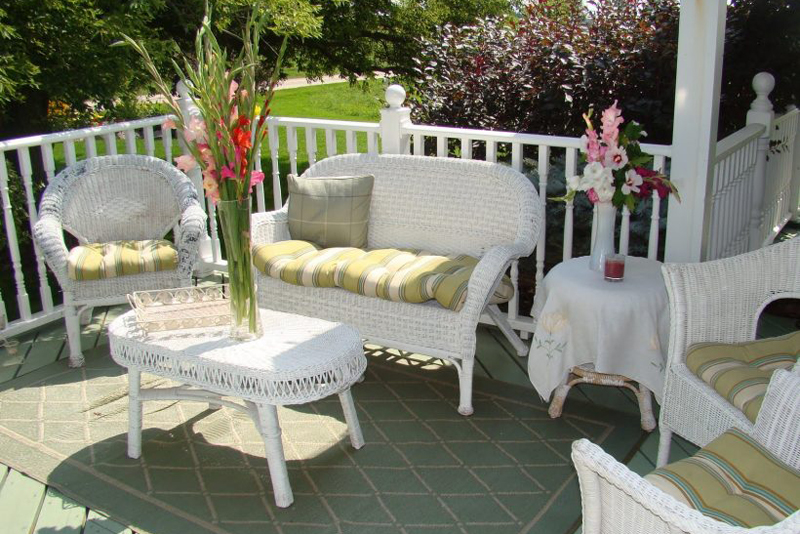
Plastic outdoor furniture covers a much wider range of products than the familiar lightweight patio chair suggests. A molded polypropylene chair, a heavy HDPE Adirondack chair, and synthetic resin wicker may all contain plastic, yet their construction, weight, maintenance needs, and outdoor behavior can differ considerably.
Some pieces work best when you stack and move them every evening. Others are deliberately heavy enough to remain in place for most of the season. Those differences are more useful when choosing furniture than whether the surface happens to imitate wood or rattan.
Know What Kind of Plastic Furniture You Are Buying
The word “plastic” describes a broad material category rather than a single type of patio furniture. Manufacturers use different polymers, profiles, frames, additives, and construction methods, so two products carrying the same broad label may have little in common beyond the presence of a polymer.
Three categories cover much of what shoppers are likely to encounter:
| Type | Typical Construction | Weight | Main Advantage | What to Check |
|---|---|---|---|---|
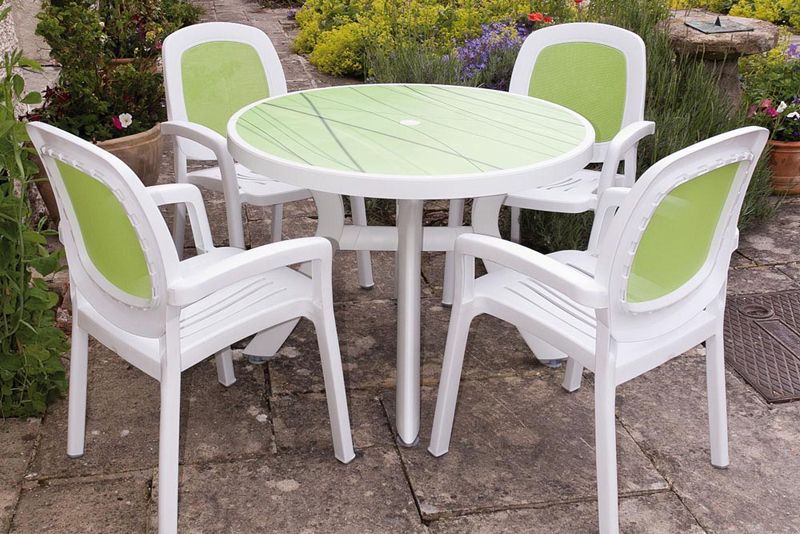
| Molded plastic / polypropylene | molded shells or components | usually light | affordable and easy to move | flex, reinforcement and outdoor rating |
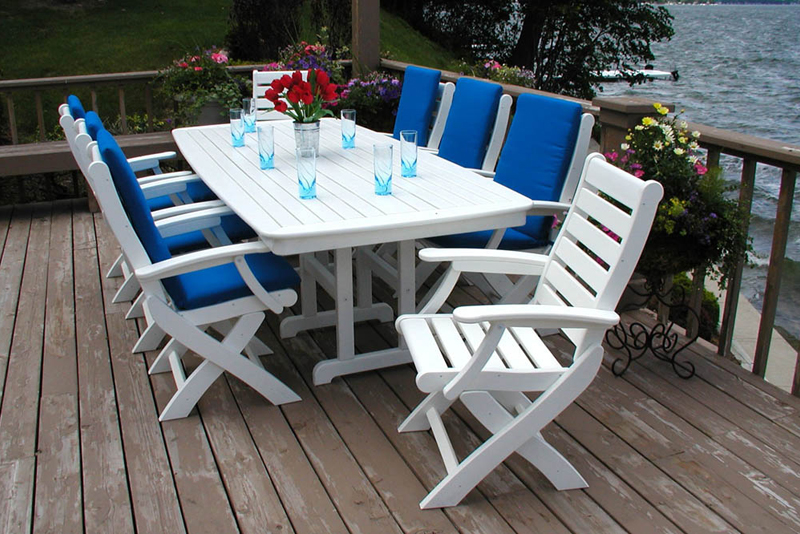
| HDPE / poly lumber | boards, profiles, or molded components | often heavier | substantial construction and low routine maintenance | section thickness, hardware and outdoor-use specifications |
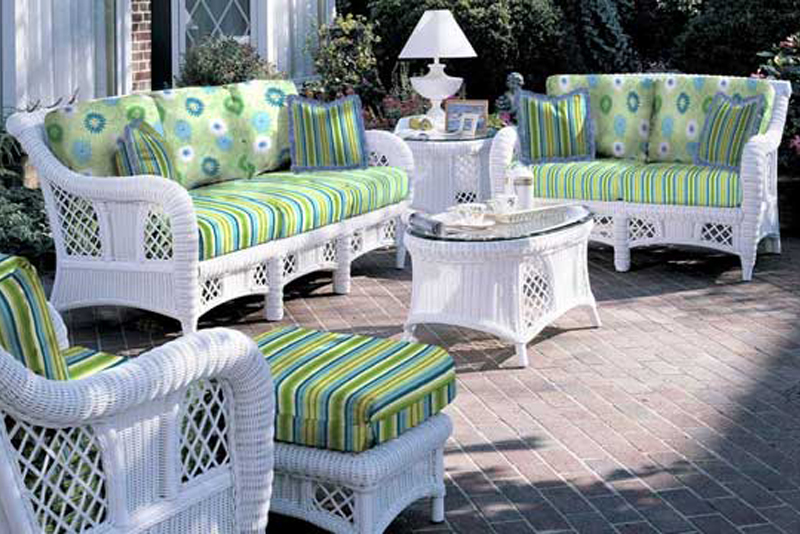
| Synthetic resin wicker | woven synthetic strands over a separate frame | varies with frame | woven appearance without natural rattan care | weave condition and underlying frame |
The categories are not perfectly tidy. Retailers sometimes use “resin” loosely in product descriptions, while products they market as poly lumber can differ in their exact formulation and recycled content.
If plastic is only one option you are considering, the broader comparison belongs with the best materials for patio furniture. Once the choice has narrowed to plastic, construction and intended use become more informative than the general material label.
When Lightweight Polypropylene Outdoor Furniture Makes Sense
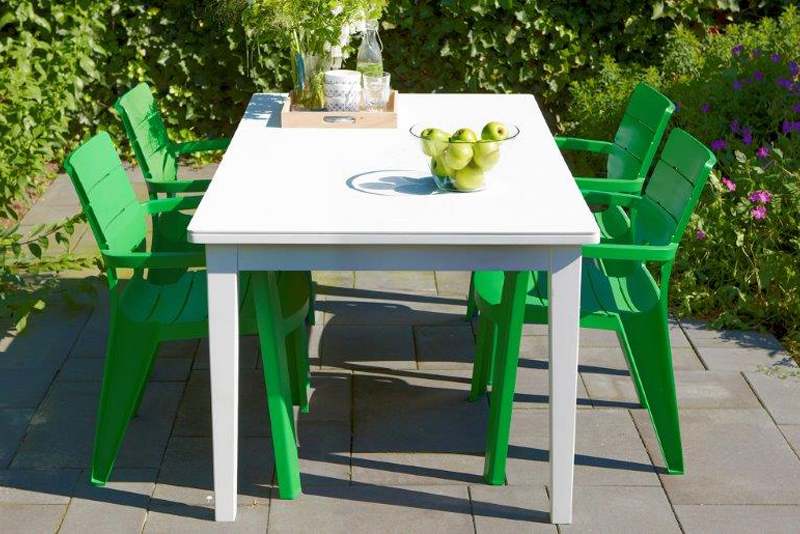
Lightweight polypropylene outdoor furniture is not automatically a budget compromise. For a balcony, small patio, occasional dining area, or space that changes use frequently, furniture you can lift and stack without much effort has an obvious advantage.
Seasonal storage can be simpler too. Four stackable chairs may occupy less shed or garage space than bulky lounge seating, while a compact plastic table can move out of the way when the patio is needed for something else.
The compromise is often stability rather than usefulness. Very light chairs can move in strong wind, and thin seats or backs may flex more than expected. Check the feet, leg connections, underside reinforcement, and whether the seat flexes evenly under pressure.
Surface finish changes how wear appears over time. Glossy plastic can show scratches readily, whereas textured surfaces may disguise small marks but trap dirt in recessed areas. For this type of furniture, easy handling is part of the appeal rather than a weakness that needs to be designed away.

HDPE and Poly Lumber Outdoor Furniture Solve a Different Problem
HDPE and poly lumber outdoor furniture often uses substantial sections joined with metal hardware. The finished chair, bench, or table can therefore be far heavier and more rigid than a molded polypropylene piece.
That weight may be welcome on an exposed patio where lightweight chairs regularly shift in windy weather. The same chair becomes much less convenient if it has to be carried down stairs, moved for every cleaning session, or stored after each use.
Manufacturers widely use HDPE outdoors, but environmental exposure still affects the polymer. NIST accelerated-weathering research on HDPE photodegradation measured changes in mechanical, chemical, and structural properties across controlled UV intensities and temperatures. Those laboratory findings do not provide a simple lifespan for patio furniture because formulation, pigments, stabilizers, section thickness, and real-world exposure vary among finished products.
Material name alone therefore says relatively little about the finished furniture. Look at how the design supports each section, what hardware holds the parts together, whether the manufacturer explicitly specifies outdoor use, and what the warranty covers.
Resin Wicker Is Not the Same as a Plastic Chair
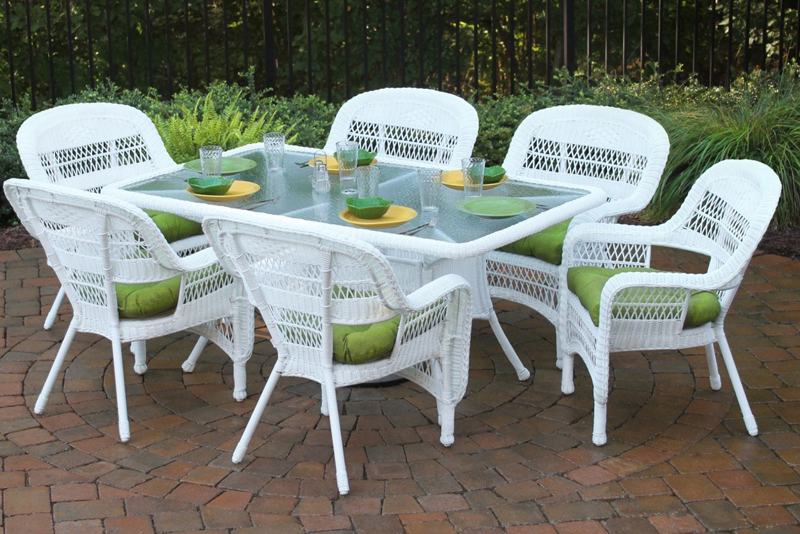
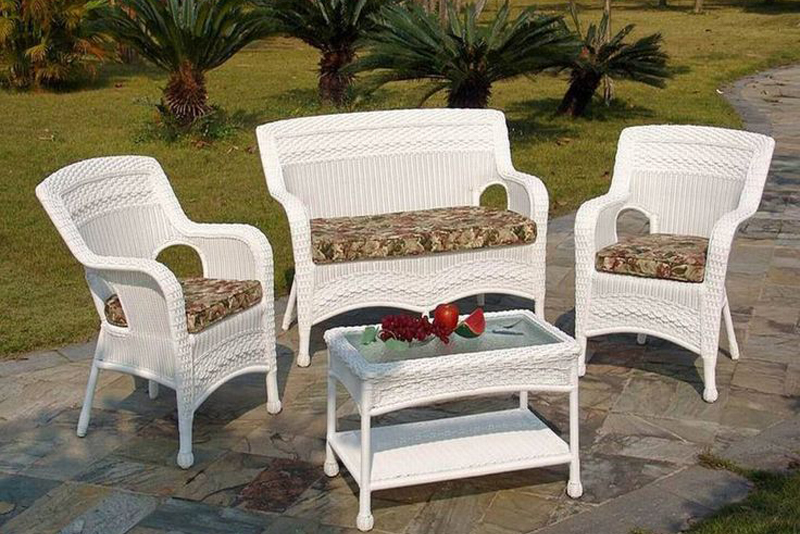
Retailers often group synthetic wicker with plastic or resin patio furniture because the woven strands commonly use polymer-based materials. The weave, however, is only the visible outer layer; a separate frame usually carries most of the structural load.
That frame deserves close attention. Wicker may look intact while joints, legs, or concealed sections underneath show looseness, corrosion, or distortion. In other cases, the frame remains sound long after the weave has begun to show cosmetic wear.
Corners, seat edges, and places where the weave changes direction tend to deserve the closest inspection because they receive more stress. A small scuff in the middle of a panel is less concerning than stretched or broken strands around a heavily loaded edge.
Weight also depends heavily on the frame underneath the weave. Resin wicker over a light metal frame behaves nothing like a thick poly-lumber chair even when a retailer groups both under the same broad category.
What Sun, Heat and Cold Actually Do to Plastic Furniture
Saying that plastic furniture simply “fades in sunlight” leaves out much of what determines outdoor aging. UV exposure can contribute to polymer degradation, but how quickly and visibly a finished product changes depends on factors such as the polymer formulation, pigments, stabilizers, surface finish, temperature, and amount of exposure.
Heat also creates everyday problems that have nothing to do with structural failure. Dark surfaces may become uncomfortable to touch in strong sun, while temperature changes can cause components to expand and contract.
Cold is equally difficult to reduce to one rule. Some furniture can remain outside through seasonal temperature swings, while other pieces may benefit from protection when moisture collects around joints, hardware, or concealed spaces.
Protection can therefore have value even when indoor storage is unnecessary. A covered location may reduce dirt, direct exposure, and moisture around hardware without requiring the furniture to disappear into a shed for half the year.
How to Spot Better-Built Plastic Outdoor Furniture
Price is a weak shortcut for judging quality because manufacturers build inexpensive molded seating and substantial poly-lumber furniture in completely different ways. A few minutes spent looking underneath and applying light pressure can reveal more than the finish or a long list of marketing claims.
Press gently on the seat, back, armrests, and tabletop. Some flex is normal in molded furniture; uneven twisting concentrated around one joint is more concerning. Check long spans on tables and benches from below to see how the structure supports them.
A few details deserve particular attention:
- legs should contact the floor evenly without rocking;
- high-stress areas should not show cracks or whitening around fasteners;
- hardware should sit firmly and be suitable for outdoor use;
- hollow sections should allow water to escape where drainage is needed;
- stackable chairs should meet at intended contact points rather than scrape randomly;
- reclining and folding mechanisms should move without excessive play;
- product information should give specific outdoor-use and care information rather than rely only on broad labels such as “resin” or “all-weather”;
- replaceable hardware or individual components can make later repairs much easier.
Absolute rigidity is not the goal. A molded chair may flex intentionally, while a thick poly-lumber bench may barely move at all. The useful question is whether the construction behaves consistently rather than showing one weak joint or unsupported section.
Weight Can Be an Advantage or a Problem
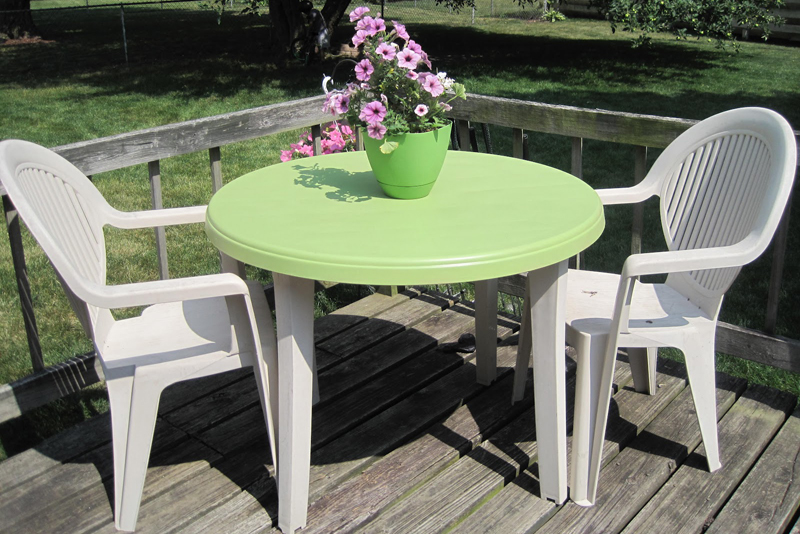
Calling plastic garden furniture lightweight works for some products and badly misrepresents others. Molded polypropylene chairs can be easy to carry with one hand, while substantial HDPE seating may require considerably more effort.
The practical issue is how often the furniture has to move and where it has to go. A lightweight set is convenient for frequent rearranging or seasonal storage, while a heavier piece can be useful where wind is a recurring problem. A chair that seems manageable on a showroom floor may feel very different when it has to cross gravel or stairs several times a year.
Tables deserve the same thought before delivery. Extra weight can improve stability but becomes less welcome when the patio needs cleaning, maintenance, or seasonal reconfiguration.
Cleaning Plastic Patio Furniture Without Damaging the Surface
Plastic patio furniture is usually straightforward to clean, but low maintenance does not mean every method is equally suitable. Dirt tends to collect around textured areas, fasteners, joints, and the undersides of armrests long before the broad seat or tabletop looks particularly dirty.
Mild soap, water, and a soft cloth or brush are a sensible starting point for many products when the care instructions allow them. Abrasive pads can alter a finish, while stronger cleaning chemicals may affect pigments, labels, hardware, woven sections, or other materials used throughout the piece.
Do not treat pressure washing as a universal cleaning method either. Unless the product’s care instructions permit it, there is little reason to begin with a narrow high-pressure jet around woven material, joints, textured surfaces, or areas that already show damage.
Treat cushions separately from the furniture frame. A chair capable of sitting in the rain does not make its foam, fabric, zippers, and ties equally tolerant of prolonged moisture.
Does Plastic Furniture Need Winter Storage?
Winter storage is partly a material question and partly a logistics question. A stackable molded chair, a large HDPE bench, and resin wicker over a metal frame can all face the same winter while making very different storage decisions sensible.
Large pieces made for year-round outdoor use may require more moving effort than the extra protection justifies. By contrast, you can stack lightweight chairs in a dry space with little effort, keeping them cleaner while also protecting them from wind and unnecessary exposure.
Local conditions matter too. Snow accumulation, ice, trapped moisture, strong winds, and exposure of metal hardware may all influence whether storage or additional protection is worthwhile.
There is therefore little reason to adopt a universal “everything indoors” or “everything stays outside” rule. The design of the furniture, the exposure of the site, product care instructions, and the effort required to move it should all be part of the decision.
What Recycled Plastic Outdoor Furniture Claims Actually Tell You
Recycled plastic outdoor furniture can incorporate recovered material into a new product, but environmental terms that appear together on packaging do not mean the same thing. A recycled-content product contains material that manufacturers recovered from a recycling stream or manufacturing waste. A recyclable product, by contrast, may enter a collection and processing system that turns the material into new products after use.
The EPA’s explanation of recycling basics and recycled materials also notes that local recycling programs do not collect every recyclable material. Furniture complicates the issue further because one item may combine polymers, pigments, screws, inserts, and other components.
A recycled-content percentage therefore tells you something useful but limited. It does not establish how long the chair will last, whether owners can replace damaged parts, or what recycling options will actually exist for the finished product years later.
When environmental considerations affect the purchase, more specific information is useful: the type and proportion of recycled material, availability of replacement parts, expected service life, and any real take-back program. Keeping a suitable piece in use for many seasons also matters, regardless of how prominently the packaging presents its recycled content.
Choose by Use, Not by the Word Plastic
Plastic outdoor furniture covers too many constructions for a single pros-and-cons list to be especially helpful. A lightweight molded chair can be the sensible choice where furniture moves often, while a heavier HDPE chair may suit permanent seating on an exposed patio better.
Look beyond the material label to the parts that determine daily use: joints, reinforcement, hardware, drainage, flex, frame design, weight, and maintenance requirements. These details say more about whether a piece suits a particular space than the word “plastic” on its own.
A good choice does not have to be the heaviest, most expensive, or most elaborate option. The right choice is the one whose construction, weight, and maintenance demands match where it will sit and how often it will be moved, cleaned, or stored.