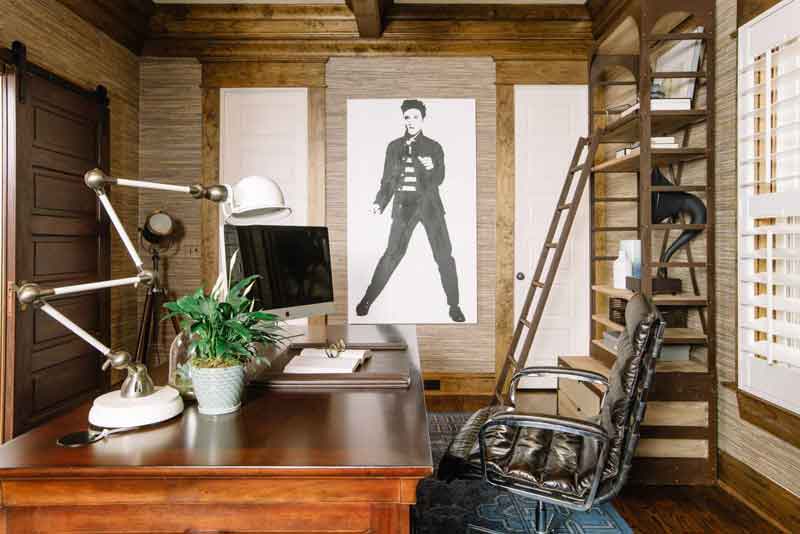
Retro office design works best when a room borrows from the past without trying to reproduce it exactly. A walnut desk, an amber glass lamp, a patterned rug, or a muted olive wall can establish the mood long before a typewriter or rotary phone enters the picture. The strongest rooms usually stop before every object starts explaining the theme.
That restraint matters because “retro” covers several decades with different furniture, colors, materials, and attitudes. A workspace influenced by the 1950s will not read the same way as one leaning toward the 1970s, yet neither needs to become historically accurate. The goal is to make the reference clear while leaving room for modern technology, comfortable seating, storage, and daily work.
Decide Which Retro Era You Actually Mean
Retro is often used as a catch-all label, but choosing a loose period makes later decisions easier. You do not need to recreate a particular year; it is enough to know which visual language provides the strongest reference.
| Era | Typical Colors | Furniture and Materials | Design Character |
|---|---|---|---|
| 1950s | cream, soft green, muted yellow, pale blue | compact desks, tapered legs, lighter woods, metal accents | lighter, structured and relatively restrained |
| 1960s | walnut, teak, orange, stronger greens and blues | sculptural furniture, graphic forms, molded materials | bolder and more expressive |
| 1970s | rust, olive, mustard, brown, cream | darker woods, chrome, smoked glass, heavier textiles | warmer, earthier and more substantial |
These are broad associations rather than strict rules, and the decades overlap considerably. The move toward new materials, abstract forms, and less formal furnishings across design from 1950 to 1975 helps explain why nearby periods can mix comfortably. A teak desk, a later task lamp, and a contemporary rug can work together when their proportions and materials relate.
Use One Era as the Reference, Not a Costume
A useful retro office rarely needs period-correct everything. Two or three recognizable signals are usually enough, whether that means a mid-century desk with warm walnut and an angular lamp or an olive wall beside chrome shelving and rust-colored upholstery.
Literal props deserve more caution because retro office decor becomes theatrical quickly when several accessories announce the same era. Old telephones, radios, typewriters, clocks, and advertising signs can add personality, but a working desk should not become a display case. If an object takes space needed for a notebook or monitor, nostalgia alone is a weak reason to keep it there.
Use Retro Office Colors Before Adding More Decor
Color can establish the period without requiring a room full of vintage objects. It also gives furniture collected from different dates and sources something in common.
Warm white, cream, muted olive, mustard, tobacco brown, rust, ochre, deep blue, and dusty orange can all support the look. Using several together is not automatically more convincing. Two or three recurring colors usually create a stronger foundation than a palette assembled from every recognizable period shade.
Walnut and darker teak already contribute considerable warmth, so rooms containing both often benefit from quieter walls or lighter textiles. Black or chrome can interrupt an earthy palette while also connecting monitors, lamps, shelving, and contemporary hardware to older materials.
Walls and Floors Can Carry More Retro Character Than Furniture
The largest surfaces often establish the room more efficiently than another piece of furniture. A plain contemporary desk may begin to feel appropriate once it sits against the right wall, rug, and lighting.
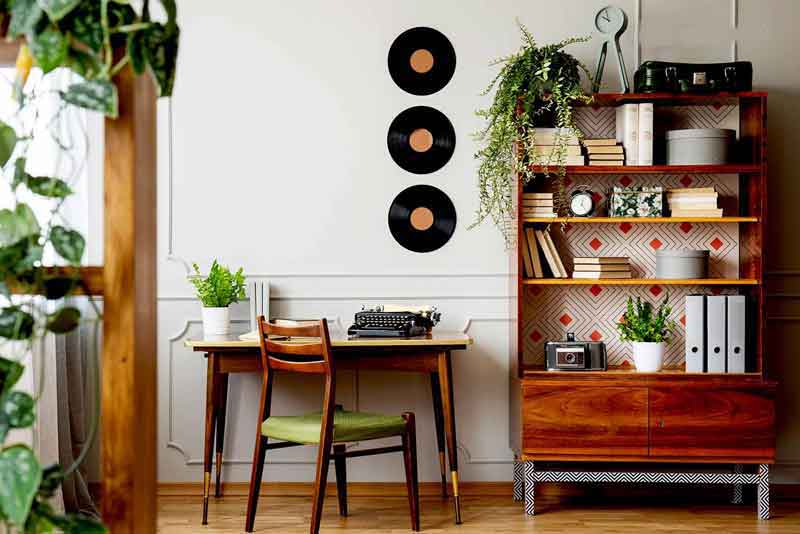
Geometric wallpaper works best when confined to one surface. Small-scale patterns are easier to live with in compact offices, while larger graphics need enough viewing distance to avoid becoming visual noise behind a screen. Paint offers a quieter route: warm off-white paired with olive, ochre, or deep blue can introduce enough period reference for the furniture to stay restrained.
Existing wood flooring already pairs easily with retro pieces, while a rug can add pattern without permanently changing the room. Contemporary flooring does not need to be disguised either; eliminating every modern surface often creates more effort than the design gains.
Choose One Vintage Office Furniture Anchor
Vintage office furniture can set the tone without filling every furniture category. The most useful anchor is usually the piece that already has a practical reason to occupy substantial visual space.
When the Desk Carries the Retro Look
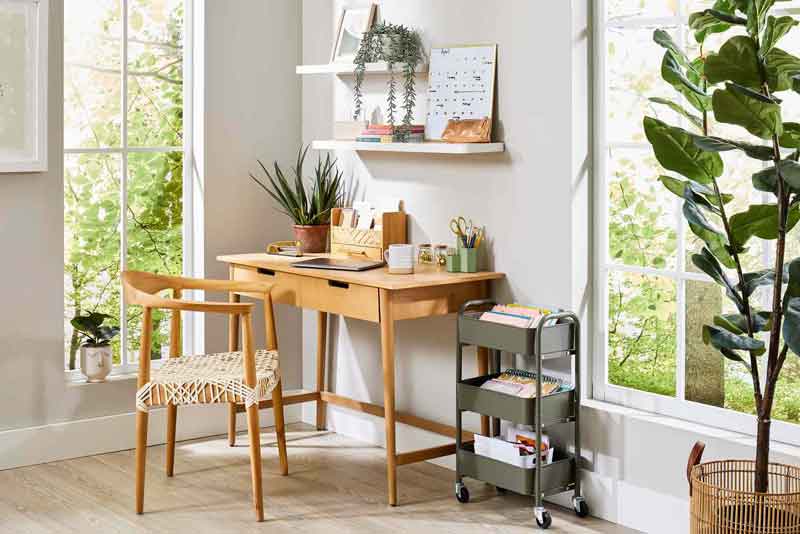
A desk is the obvious candidate because it sits at the center of daily use. Mid-century desks with raised legs work particularly well in smaller offices because visible floor underneath makes them appear lighter than similarly sized blocky furniture.
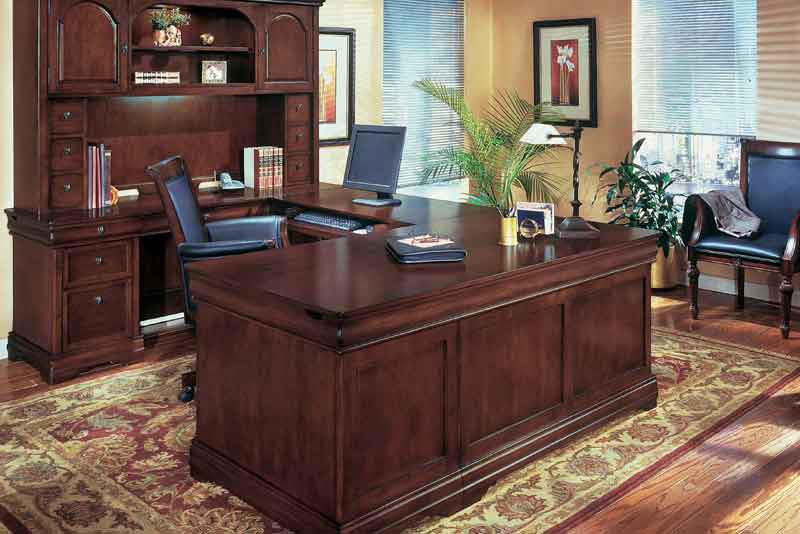
Large executive desks are different. Deep tops and pedestal bases can compromise circulation, chair movement, or storage access in a compact room, so the floor plan deserves as much attention as the finish.
With an older wood desk, age alone says little about quality. Joints, repairs, veneer condition, drawer construction, and stability still matter, much as they do when evaluating solid wood furniture. Other pieces do not need to match exactly; loosely repeating a tone, shape, or metal detail is usually enough.
When Storage Does the Visual Work
A credenza or cabinet can carry the historical reference while the working desk remains contemporary. That is useful when an older desk is too shallow for a monitor, too delicate for equipment, or awkward for current work.
A long wood credenza earns its space through storage, printer placement, or supplies rather than decor alone. In a smaller office, one compact cabinet or shelving unit may provide enough age and texture to stop the room feeling generic.
This approach also avoids turning the room into a catalogue of vintage furniture types. A desk, chair, filing cabinet, credenza, and bookcase may each be attractive, but one older piece with a clear purpose often has more impact.
Make Modern Technology Fit a Retro Home Office
A modern computer does not undermine a retro home office. Visual clutter around it is usually the larger problem: loose power strips, charging cables, adapters, hubs, and a printer placed wherever space happened to be free.
Current monitors and laptops can sit comfortably with older furniture when their placement looks considered. Under-desk cable trays, compact docks, monitor arms, and restrained cable routing reduce noise, while repeating one technology color elsewhere helps the setup feel connected.
Older desks still need to pass a practical test. Shallow tops, narrow knee openings, fragile drawers, and no sensible cable route can become irritating every day regardless of how good the desk looks in a photograph.
Retro Lighting Still Has to Work as Lighting
A sculptural lamp can add a strong period reference without taking over the room. It becomes less appealing when the shade directs light away from the work surface or creates glare across a monitor.
Task lighting needs to suit the work being done. Adjustable desk and wall lamps are often more useful than fixed decorative fixtures when the same surface alternates between computer work, reading, writing, or drawing. For screen-heavy work, workstation lighting and glare matter as much as the fixture’s shape.
Ambient lighting has more freedom to carry the style. Globe pendants, opal glass, chrome floor lamps, pleated shades, and warm table lamps can provide atmosphere without interfering with daily tasks. Genuine older fixtures may need rewiring or inspection, so reproduction lighting can be a sensible choice when the form matters more than owning an original.
Small Retro Offices Need Less, Not Smaller Versions of Everything
A compact office can become crowded even when every item is small. A desk, filing cabinet, bookcase, side chair, floor lamp, artwork, and decorative telephone still consume both physical and visual space when assembled in one room.
Storage should follow what actually needs storing. A largely digital workflow may not justify a filing cabinet, while a rarely used printer does not deserve the room’s best surface. A closed cabinet that handles several jobs can be more useful than three smaller pieces with narrow functions.
Vertical shelving can free floor space, provided it is not treated as another display zone. Visible floor around the desk and some unoccupied wall usually make a small workspace feel calmer.
Pattern Works Better Beside Quiet Surfaces
Geometric wallpaper, checkered rugs, abstract art, upholstery, and striped textiles can all support retro office design. They become harder to combine when several large surfaces demand attention at once.
One stronger pattern is usually enough. A geometric rug can sit below plain walls, while graphic wallpaper tends to benefit from quieter flooring and simple upholstery. If both walls and floor already contain pattern, accessories rarely need another motif.
Texture can replace pattern entirely. Wool, leather, woven fabric, wood grain, brushed metal, and ribbed glass create variation without adding more graphics, especially when the furniture already has expressive grain or shape.
Mixing periods becomes awkward when the room divides visually into an “old” side and a “new” side. The solution is not necessarily more vintage furniture; a few repeated details can cross that boundary quietly.
A contemporary black shelf can relate to an older desk when black also appears in its hardware or lamp. A new upholstered chair can connect to walnut furniture through a rug color, while slim metal legs on modern storage may echo an older chair.
Shape works just as well as color or material. Rounded lighting can soften a rectangular monitor and desk, while a simple modern cabinet may sit comfortably beside older pieces because both share lighter proportions. There is no useful percentage of vintage versus contemporary furniture.
Comfort Should Not Be Sacrificed for a Vintage Chair
Desk chairs are where appearance and present-day work habits most often conflict. A chair designed decades ago may look ideal behind an older desk and still be unsuitable for several hours of computer work.
Seat height, back support, arm position, cushioning, and the relationship between chair and desktop deserve more attention than the period silhouette. Some older chairs can be reupholstered or adjusted, while a modern ergonomic chair can disappear into the room when its scale and color suit the surroundings.
Another option is to separate the roles. Keep the vintage chair for occasional seating while the main task chair remains contemporary, preserving the period reference without making comfort a daily compromise.
What Makes a Retro Office Look Forced
Retro rooms usually become awkward through accumulation rather than one obviously wrong choice. A few details can be memorable, while repeated period signals begin competing for attention. The effect becomes especially noticeable when furniture, patterns, decorative technology, and accessories all communicate the same idea:
- filling shelves and desktops with decorative vintage technology;
- combining several decades without a shared palette or material;
- choosing a period chair despite poor support or incorrect desk height;
- using strong geometric patterns on several large surfaces;
- adding artificial distressing to otherwise clean furniture;
- buying matching “retro” sets instead of allowing some variation;
- keeping unusable furniture simply because it suits the theme.
None of those choices is automatically a mistake. One bold pattern, an old telephone, or a substantial walnut cabinet can work precisely because quieter surroundings give it room to register. Problems usually appear when several objects repeat the same message.
Keep the Era in the Background
A successful retro office should still make sense after the laptop, paperwork, coffee cup, and charging cable appear. A scheme that only works after every contemporary object has been removed for a photograph is not solving the needs of a working room.
Let color, material, lighting, and one or two strong pieces carry most of the historical reference. Contemporary storage, technology, and ergonomic equipment can remain visible when their proportions and placement belong to the same composition.
The room does not need to prove which decade inspired it. If it feels distinctive, comfortable, and easy to work in, the retro influence is already doing enough.