
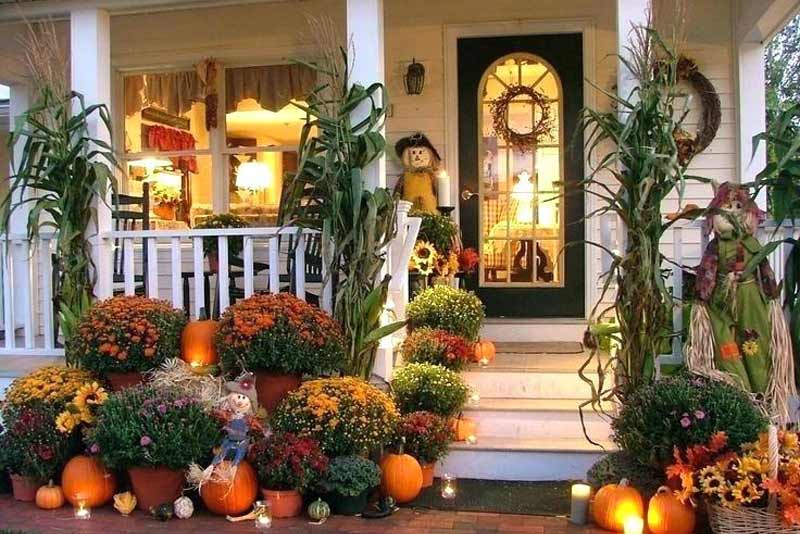
Outdoor Halloween decorations feel more convincing when they use what is already around the house. Porch steps, railings, shrubs, trees, and the walkway can all become part of the display instead of serving only as a background.
That existing structure matters more outdoors than it does inside. A small decoration that looks detailed from a few feet away can disappear completely from the street, while one oversized skeleton or a group of illuminated pumpkins may be visible before anyone reaches the driveway.
Halloween also gives the yard permission to look stranger than usual. Ghosts can hang between branches, pumpkins can gather beneath shrubs, and a quiet garden bed can become part of the scene after sunset. The trick is deciding which parts of the property should carry the drama and which should stay open, visible, and easy to walk through.
Plan Outdoor Halloween Decorations From the Street Inward
Before choosing between outdoor Halloween decor ideas, walk toward the house from the sidewalk or driveway and notice what catches your eye first. The front door, a porch railing, a prominent tree, the end of a garden bed, or a shrub beside the walkway may already provide the best place for a larger display.
Decorating from this viewpoint prevents a common problem with outdoor displays. Many small objects may look interesting while standing beside them, but from twenty or thirty feet away they turn into visual clutter. Larger shapes, repeated colors, and clear silhouettes hold together much better at a distance.
Choose two or three areas to carry most of the display. Pumpkins and lanterns might establish the front porch, a skeleton could occupy one section of the lawn, and a few ghosts or lights could extend the scene into nearby planting. The rest of the yard can remain relatively quiet, while orange pumpkins, pale ghosts, black silhouettes, muted gourds, and warm lights repeat enough color to connect the separate areas.
Front Porch Halloween Decorations That Work From the Street
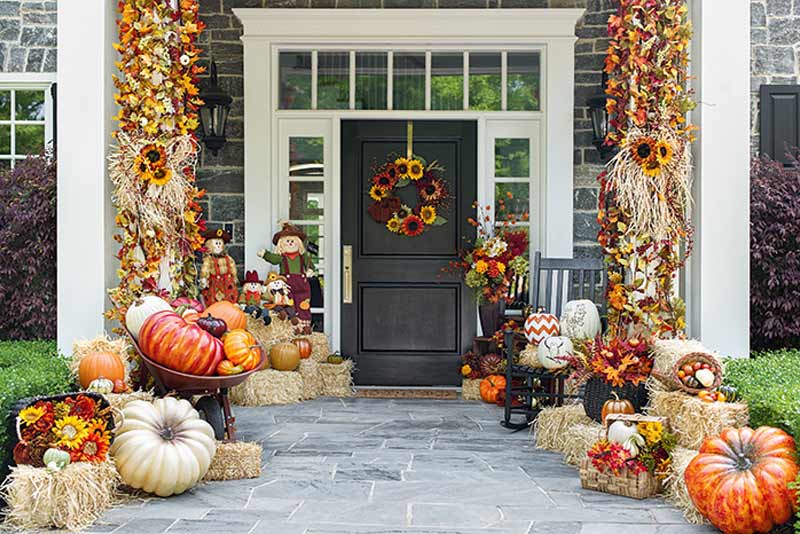
Front porch Halloween decorations have an advantage over most yard decor because visitors eventually see them at close range. The porch can therefore mix larger shapes that read from the street with smaller details around the door, steps, or seating area.
Good Halloween porch decor starts with whatever already frames the entrance. Railings can carry lightweight garlands, a bench can support a skeleton or group of pumpkins, and planters can become part of the display rather than being moved simply to make room for seasonal pieces.
If the Halloween theme continues indoors, the transition does not need to be abrupt. A few repeated colors or motifs can connect the porch with indoor Halloween decorations without duplicating the same arrangement on both sides of the door.
Halloween Door Decorations With Pumpkins and Wreaths
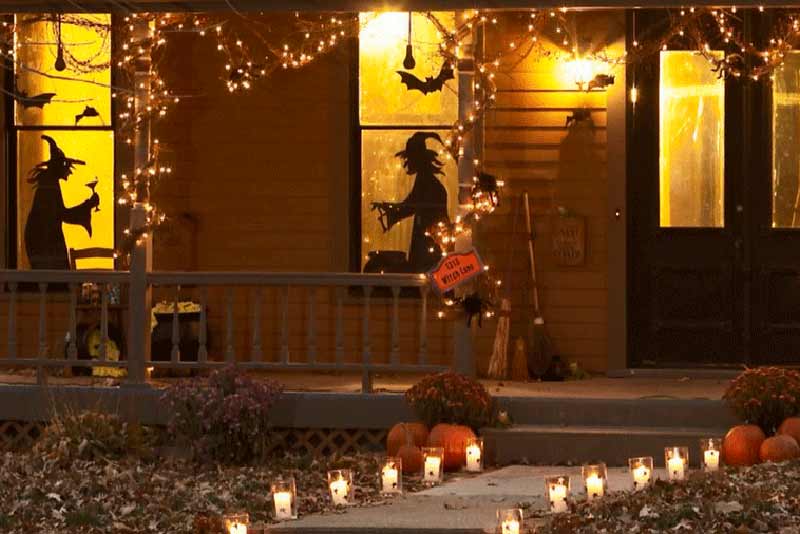
Pumpkins remain one of the easiest outdoor elements to arrange because they naturally belong on steps, beside planters, and around doorways. A group with different sizes usually looks stronger than identical pumpkins lined up at equal intervals.
Carved jack-o’-lanterns add more character after dark, but uncarved pumpkins are useful too. They can fill out a display, introduce different colors, and usually last longer than carved ones. White, green, striped, and muted orange pumpkins can also soften a porch that would otherwise become overwhelmingly black and bright orange.
A wreath can handle much of the vertical space on the door. Black branches, dried foliage, dark ribbon, faux ravens, or a few small pumpkins are enough to push an ordinary wreath toward Halloween without covering the entrance in several competing decorations.
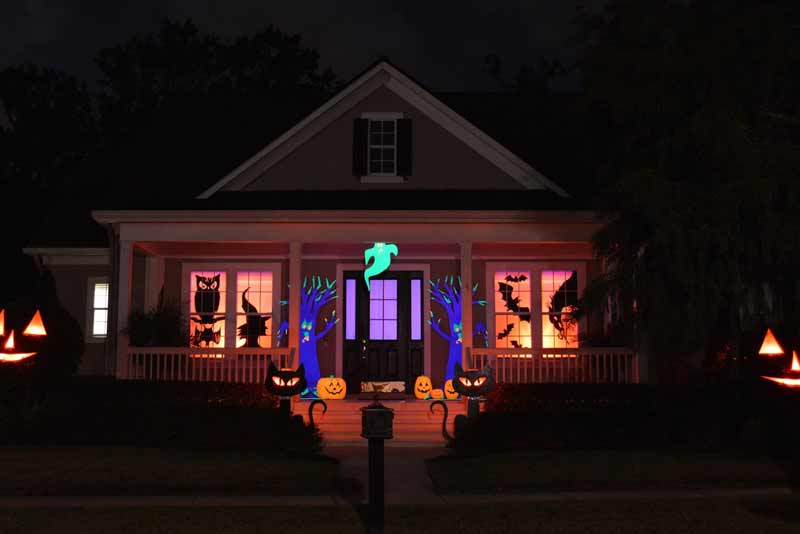
Halloween Yard Decorations With Ghosts Skeletons and Gravestones
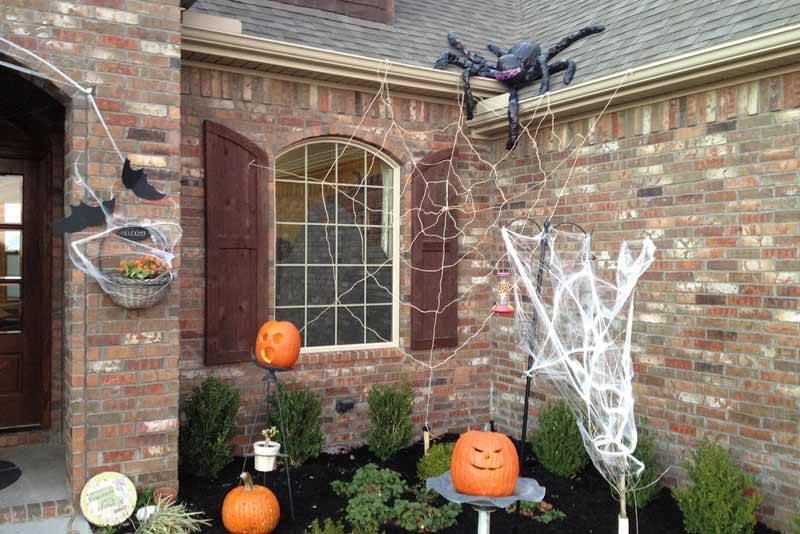
Front yard Halloween decorations need to be large enough to read from the street. Full-size skeletons, standing ghosts, gravestones, larger pumpkins, and branch-based displays usually do this better than dozens of small novelty pieces.
The lawn does not need to become one continuous scene. Leaving open ground between groups makes each arrangement easier to read and keeps the property from looking as though the decorations simply spilled out of storage.
Large Halloween Yard Props That Read From the Street
Grouping gives large props more presence. Three gravestones placed in one part of the lawn create a recognizable scene, while the same three scattered across a wide yard can look accidental. A skeleton beside them introduces another level of height without requiring more objects.
Ghosts create a different effect because fabric or lightweight material can move in the wind. Hanging them beneath a tree or from a sturdy overhead structure adds activity to the display without filling more ground space.
Crows, brooms, lanterns, and smaller figures work better as supporting details. They become noticeable as visitors approach the house, while the larger silhouettes continue to carry the scene from farther away.
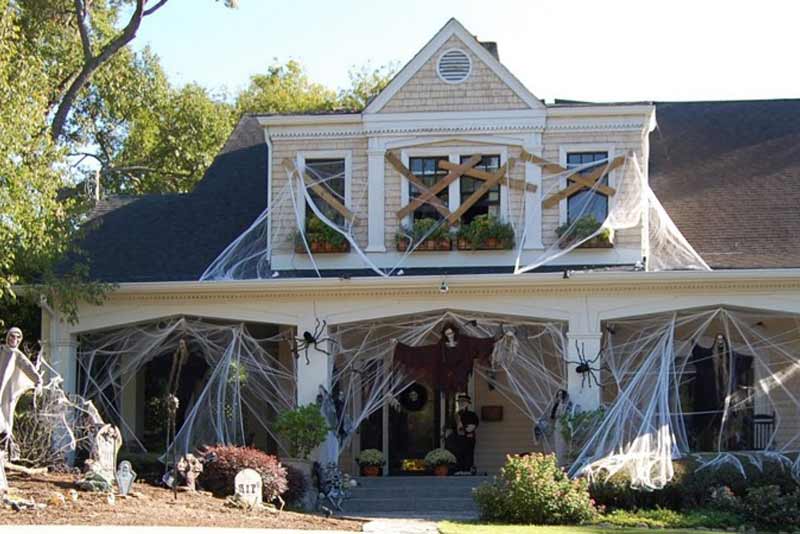
Halloween Decorations Around Shrubs and Garden Plants
For Halloween landscaping, the plants already in the yard can do much of the visual work. Dense evergreens provide a dark background, ornamental grasses create movement, bare branches add sharp silhouettes, and garden beds offer natural places for pumpkins or low lights.
Halloween garden decorations generally work better around established plants than directly on top of them. A pale ghost placed in front of dark foliage remains visible, while pumpkins at the edge of a bed stand out without disappearing beneath branches.
Lightweight bats, spiders, or small hanging pieces can work near shrubs, but attachment matters. Decorations that pull, twist, or compress branches can leave the plant looking worse after Halloween than before it.
Using Juniper Shrubs as a Halloween Backdrop
Juniper shrubs are particularly useful because their evergreen foliage creates a dense, textured background at a time when many other garden plants are already fading. Orange pumpkins, pale fabric ghosts, bone-colored skeleton props, and low warm lighting all show up clearly against that darker green.
Small juniper shrubs suit low displays beside pathways or the front edge of a garden bed. A few pumpkins can sit in front of the foliage while a low lantern or spotlight gives the group enough contrast to remain visible after sunset.
Larger juniper bushes are better treated as background rather than covered in decorations. One ghost, a restrained web effect, or a carefully positioned light often has more impact than several props tangled through the branches.
Junipers remain useful long after the Halloween props are packed away. Good garden design with juniper shrubs already relies on evergreen structure, contrast, and year-round foliage, and those same qualities make the plants effective behind seasonal decorations.
Halloween Walkway and Path Decorations
A walkway naturally controls the order in which visitors see the display. Instead of spreading decorations randomly across the yard, details can appear gradually as people move toward the porch.
Pumpkins, lanterns, low silhouettes, and small groups of props work well along the sides. Alternating them rather than placing identical pieces at equal distances prevents the path from looking rigid or overly staged.
Useful walkway ideas include:
- pumpkins grouped beside wider sections of the path;
- low battery lanterns that make edges easier to see;
- skeleton hands or small gravestones placed outside the walking surface;
- one larger figure near a bend or change in level;
- subtle lighting aimed toward a nearby shrub, tree, or prop;
- directional signs positioned where they do not narrow the route.
The center of the walkway should remain open and easy to see. Halloween atmosphere belongs beside the path rather than where guests have to step over it.
The U.S. Consumer Product Safety Commission’s Halloween safety recommendations include keeping paths, steps, and porches clear of obstacles and checking decorative lights for damaged wiring or connections.
Outdoor Halloween Lighting for Trees Shrubs and Paths
Outdoor Halloween lighting is less about making the entire property bright than deciding what deserves to be seen. A tree trunk, ghost, group of pumpkins, or textured shrub can become much more dramatic with one carefully positioned light.
Low uplighting creates strong shadows on branches and foliage. Warm amber reinforces pumpkins and autumn colors, while purple or cool white can make ghosts, gravestones, and pale props stand out. Several strong colors competing in one small area usually create more visual noise than atmosphere.
Trees and shrubs also provide opportunities to distribute light vertically, but cords should not be pinched or fastened in ways that could damage their insulation. Products used outside should be rated for outdoor conditions, especially where moisture is likely.
The Electrical Safety Foundation International’s outdoor decoration safety tips recommend inspecting lights and extension cords before use and securing outdoor decorations against wind. Those precautions matter when electrical connections, wet surfaces, plants, and moving decorations share the same space.
Weather-Resistant Halloween Decorations
Weatherproof Halloween decorations depend on materials and attachment methods that can handle wind and rain. Lightweight ghosts, paper decorations, foam gravestones, inflatables, and plastic figures all behave differently once the weather turns.
Paper and untreated cardboard belong in sheltered areas such as covered porches. Fabric ghosts can handle more exposure if the material dries easily, while lightweight foam and plastic pieces need stable bases so they do not migrate across the lawn.
Pumpkins are naturally suited to outdoor displays, although constant contact with wet soil can shorten how long they look fresh. A step, paver, board, or another firm surface also makes them less likely to tip into nearby planting.
How to Secure Halloween Decorations for Wind and Rain
Tall props should be stable before darkness makes it harder to notice that they have shifted. Ground stakes, weighted bases, suitable ties, or moving particularly vulnerable pieces closer to a sheltered porch can make more sense than trying to anchor everything in the same way.
Before bad weather arrives, check:
- tall props for stable bases or ground anchors;
- hanging decorations for secure attachment;
- fabric pieces that could become waterlogged;
- extension-cord connections exposed to moisture;
- inflatable decorations that may catch strong wind;
- lightweight pieces near roads, sidewalks, or neighboring properties.
Weather resistance does not mean every decoration has to stay outside through every storm. Some pieces are more practical when they can be moved under cover quickly and returned once conditions improve.
Halloween Decorating Ideas for Small Front Yards
A small yard can create a strong Halloween display because everything is already concentrated within a shorter viewing distance. The challenge is resisting the urge to use every remaining patch of lawn.
In a compact yard, concentrate most of the decoration near the porch, walkway, or one established shrub instead of distributing small pieces across every available area. A skeleton beside existing foliage, a porch-and-steps arrangement, or a group of pumpkins near the approach can carry the theme without making the space feel cramped.
Vertical space matters here just as much as ground area. A door wreath, hanging ghost, tree-mounted silhouette, or upward-pointed light adds height without taking more of the lawn away from the normal approach to the house.
Existing landscaping becomes especially useful when space is tight. A mature shrub can provide enough background for an entire Halloween arrangement, avoiding the need for another large freestanding structure simply to create height.
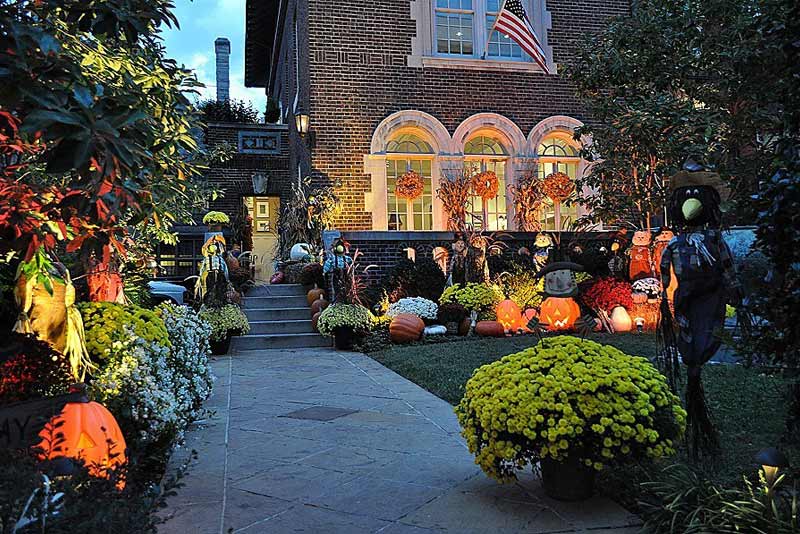
Common Outdoor Halloween Decorating Mistakes
Outdoor decorating has a different set of failure points from indoor Halloween decor. Distance, weather, darkness, plants, and public-facing walkways all affect how the display works once it leaves the porch.
Before calling the yard finished, check for:
- too many small decorations that disappear when viewed from the street;
- props hidden completely behind shrubs or ornamental grasses;
- webbing or ties pulling on live branches;
- lightweight pieces left unsecured in exposed areas;
- indoor-rated electrical decorations used outside;
- cords crossing paths, steps, or other walking routes;
- lights aimed directly into windows or toward neighboring homes;
- pumpkins, gravestones, or lanterns narrowing the route to the front door.
It is worth checking everything once during the day and again after dark. Daylight reveals whether the display works with the landscaping, while nighttime shows which props disappear, which lights overpower everything around them, and where a walking route has become harder to read.
Outdoor Halloween decorations do not need to turn the entire property into a haunted attraction. A strong porch, one readable yard scene, carefully lit landscaping, and a few details along the approach can create plenty of atmosphere while leaving the garden recognizable underneath.
Trees provide height, paths control how the display is seen, and evergreen shrubs give pale props and pumpkins a naturally dark background. Once those features are working with the decorations, adding more pieces often contributes less than adjusting placement or lighting.