
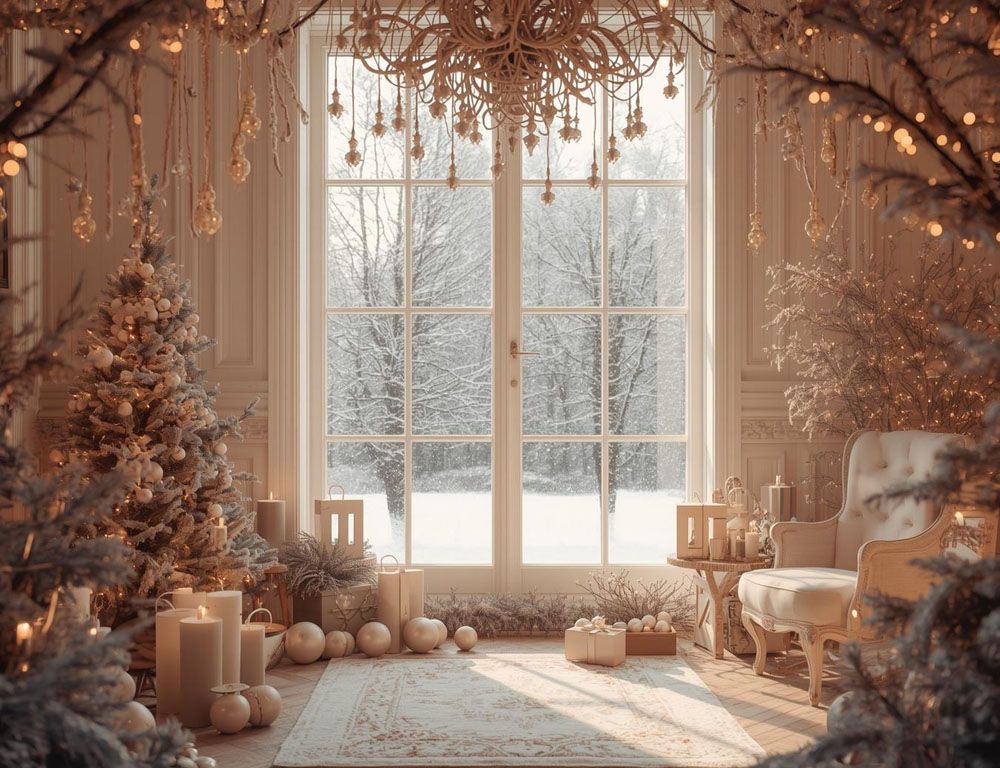
Winter decorations for indoors do not have to look like Christmas decorations that stayed up too long. Once the tree, ornaments, and unmistakably festive pieces are gone, a room can still feel right for January and February through warmer lighting, heavier textures, greenery, wood, and a few objects that suit the colder months.
The easiest place to start is with what changes naturally in winter. Evenings get darker earlier, floors feel colder, and sofas and beds become more important parts of daily life, so decor that responds to those changes usually feels more convincing than adding snowflakes or seasonal signs to every available surface.
A winter room also benefits from restraint. One wool throw, a deeper-toned cushion, a vase of bare branches, or a cluster of candles can shift the mood without making the house look temporarily themed.
Build Winter Home Decor Around Warmth Rather Than Holiday Symbols
Christmas decorating relies heavily on recognizable symbols, while winter home decor works better when the seasonal feeling comes from material, light, color, and texture. That distinction makes it easier to keep rooms seasonal after the holidays are over.
Neutral candles, plain greenery, textured throws, baskets, and wooden accents can carry seasonal home decor from late fall into winter, so the room does not need to be rebuilt for every change in the calendar. A wooden bowl of pinecones does not suddenly feel outdated after Christmas, and neither do simple evergreen branches or warm lamps.
Think about winter decor in layers rather than as a collection of individual objects. Start with elements that affect comfort, such as lighting and textiles, then add natural materials and a smaller number of decorative pieces.
| Winter Element | What It Changes | Good Places to Use It |
|---|---|---|
| Warm lamps | Softens darker evenings | Living room, bedroom, entryway |
| Throws and cushions | Adds texture and physical warmth | Sofa, reading chair, bed |
| Evergreen branches | Brings seasonal color without looking overtly festive | Mantel, table, console |
| Pinecones and bare branches | Adds natural winter texture | Bowls, vases, shelves |
| Candles and lanterns | Creates low-level evening light | Mantel, table, sideboard |
| Wood and woven pieces | Keeps cool palettes from feeling flat | Most rooms |
Not every room needs all six elements. Repeating two or three is usually enough to make separate spaces feel connected without creating another decorating checklist.
Cozy Winter Living Room Decor With Texture and Light
The living room usually carries more winter decor than the rest of the house because people spend more time there during colder evenings. It also offers plenty of useful surfaces without requiring seasonal objects to take over the room.
Start with the places people actually touch. A throw over the arm of a sofa, a textured cushion on a chair, or a rug under a seating area changes the experience of the room more than another ornament placed on a shelf.
Layer Throws Cushions and Rugs Without Overfilling the Room
Winter textiles look more relaxed when they vary slightly instead of matching perfectly. Wool beside linen, a knitted throw against smooth upholstery, or a deeper-pile rug under simple furniture gives the room more depth.
There is no need to replace every cushion cover at once. One or two heavier fabrics in brown, cream, charcoal, forest green, rust, or muted blue can make an existing sofa feel noticeably more seasonal.
Rugs deserve extra attention in rooms with hardwood, stone, or tile floors. Besides adding warmth underfoot, they visually anchor furniture and make a seating area feel less exposed during winter.
Use Warm Lighting Where You Actually Sit
Overhead lighting rarely creates the most comfortable winter atmosphere by itself. Floor lamps, table lamps, wall lights, and smaller pools of indirect light tend to work better once daylight disappears.
Place light near the sofa, reading chair, dining table, or wherever people actually spend the evening. A lamp beside a chair has a practical reason to be there, which helps the room feel lived in rather than staged for the season.
Candles can add another layer, but they do not need to appear on every surface. If real flames are part of the arrangement, the U.S. Fire Administration’s candle fire safety advice recommends keeping candles away from combustible materials and considering flameless alternatives, which is especially relevant around throws, dried greenery, and other winter textures.
Winter Bedroom Decor That Makes the Room Feel Warmer
Bedrooms respond especially well to seasonal changes because so much of the room is already made from textiles. Bedding, curtains, rugs, blankets, and upholstered furniture provide enough surface area to alter the mood without adding many decorative objects.
A winter bedroom does not need an entirely new bedding set. A heavier throw across the foot of the bed, warmer pillow covers, or a textured blanket folded over a chair can provide enough seasonal change on their own.
Curtains can make a surprisingly large visual difference as well. Fuller or heavier fabric softens windows that can otherwise look stark in winter, while fabric also balances the harder surfaces of a wooden bed frame, dresser, or nightstand.
Bedside lighting should feel comfortable rather than theatrical. A warm lamp or shaded sconce generally suits January and February better than strings of decorative lights that still read as leftover Christmas decor.
Indoor Winter Decorations With Branches Greenery and Natural Materials
Natural materials give indoor winter decorations seasonal character without tying them to a particular holiday. Evergreen branches, pinecones, dried grasses, seed heads, bare twigs, and simple wooden objects all work well once Christmas has passed.
A tall vase of branches can fill vertical space that might otherwise collect several smaller accessories. Pinecones can sit in a bowl or tray, while a short piece of greenery can soften a mantel or console and still feel appropriate well into winter.
Dried citrus works too, particularly when it is used sparingly. A few slices mixed with branches or placed in a shallow bowl feel wintry, while a large garland loaded with citrus, ribbon, bells, and ornaments quickly shifts back toward holiday decorating.
Natural pieces also introduce irregular shapes into rooms dominated by straight furniture and rectangular shelves. Leaving at least some branches, cones, and greenery untreated tends to look more versatile than covering everything in glitter, artificial snow, or metallic paint.
Winter Decorating Ideas for Mantels Tables and Entryways
Mantels, tables, and entryways are easy places to introduce winter decor without changing the whole room. Because they already attract attention, a few deliberate changes usually have more impact than scattering seasonal objects throughout the house.
A mantel can be reduced to greenery, pottery, a few candles, and perhaps one taller branch arrangement. Once stockings, ornaments, figurines, and bright holiday colors disappear, much of what remains can stay comfortably through winter.
Dining and coffee tables benefit from low arrangements that do not interfere with normal use. A wooden tray with candles and pinecones, a ceramic bowl, or a small vase of greenery is easier to live with than a centerpiece that has to be moved every time the table is needed.
An entryway can be even simpler because functional winter items already belong there. A lamp, basket for scarves, sturdy mat, and one seasonal branch or plain wreath can provide enough change without narrowing the space.
The same principle works in kitchens. Wood boards, mugs, ceramics, tea towels, and one compact arrangement can suggest the season without turning another countertop into a display zone.
Winter Decorations for Small Apartments
Winter decorations for small apartments work best when fewer items perform more than one job. Blankets add color and texture while still being used, wall-mounted pieces leave floor space open, and lamps contribute to both comfort and atmosphere.
In a small apartment, simple winter decorations work best when they are useful too. Curtains are a practical example: the U.S. Department of Energy recommends opening south-facing curtains during winter days and closing them at night to make use of sunlight during the day and reduce the chill from cold windows after dark.
For a small apartment, concentrate on a few moves:
- use walls, windows, and shelves before adding floor-standing decor;
- choose textiles that are functional as well as decorative;
- keep one or two surfaces relatively empty;
- repeat a limited palette instead of introducing many seasonal colors;
- use one larger branch, vase, or arrangement instead of several tiny objects;
- avoid decor that has to be moved every time the table, desk, or kitchen counter is used.
In a small apartment, the location of each piece matters more because there are fewer places for the eye to rest. A crowded shelf can make the entire room feel busier, even when the rest of the decor is fairly restrained.
One branch in a tall vase or a single group of candles may create enough contrast to shift the season. The smaller the room, the more visible each additional object becomes.
Choose a Winter Color Palette That Can Stay Until Spring
A winter palette does not have to mean white, silver, and icy blue. Those colors can work, but they represent only one interpretation of winter and can easily become more thematic than the rest of the room.
Cream, warm brown, muted green, charcoal, beige, and natural wood produce a softer palette that transitions easily toward early spring. Deep blue, burgundy, rust, and black work well in smaller amounts when the room needs more contrast.
Start with the colors already in the room. A home with pale oak furniture and light walls may benefit from darker textiles and greenery, while a room with dark wood and heavy upholstery can usually take more cream, soft gray, or lighter natural materials.
Metallic finishes are easier to use as accents than as a full color scheme. A brass candleholder, silver tray, or small bronze object can catch the lower winter light without making the room feel prepared for New Year’s Eve.
With patterns, one strong accent is usually enough. Plaid can add a rustic note, but one throw beside solid cushions has much more flexibility than repeating the pattern across curtains, pillows, table linens, and accessories.
Cheap Winter Decorating Ideas Using What You Already Own
Seasonal decorating gets expensive when every change starts with a shopping trip. Winter is particularly suited to reuse because many of its strongest materials are already common household objects.
Look first at blankets, pillow covers, baskets, books, wooden trays, ceramics, jars, candles, and vases already in the room. Rearranging them by material or color can create a seasonal grouping using things that already have a place in the house.
Branches, pinecones, dried grasses, and other natural materials can fill places that need more height or texture. A plain glass vase feels completely different once it holds several sculptural bare branches.
A spare table runner, neutral linen, or fabric already used elsewhere in the house can introduce texture without creating another seasonal purchase. Jars and bowls can hold pinecones or small natural arrangements if they are not already needed for something else.
The aim is not to turn every household object into winter decor. Reusing a few suitable pieces simply makes it easier to spend money where a new item genuinely improves the room.
If one purchase is needed, choose something that remains useful after winter. A lamp, wool throw, better cushion cover, basket, or rug generally has more long-term value than another sign or figurine printed with a seasonal phrase.
How to Transition From Christmas to Winter Decor
Post-Christmas winter decor becomes much easier once the pieces that belong specifically to Christmas are separated from those that simply suit cold weather. Removing ornaments, stockings, Santa figures, Christmas signs, and strongly red-and-green combinations usually reveals how much of the remaining room can already work for January.
Evergreen branches, plain wreaths, neutral candles, warm lights, wooden objects, blankets, pinecones, and understated metallic accents can often stay. They still respond to the season without making the house look as though Christmas morning is about to happen again.
If the room remains too festive, simplify instead of replacing everything. Remove half the mantel arrangement, reduce the number of lights, or swap a bright ribbon for a natural branch, quieter textile, or plain ceramic piece.
If dinners or gatherings are still ahead, a few holiday decorations for indoors can remain around the dining area or entryway while the living spaces begin shifting toward quieter winter pieces. The two moods do not have to change on the same afternoon, especially when different parts of the house are still being used differently.
Pieces built around texture, greenery, wood, lighting, and natural color are easier to keep once the obvious holiday decorations come down.
When Winter Decor Starts Making the Room Feel Cluttered
Winter decorating can become visually heavy faster than summer decor because it often combines thicker fabrics, darker colors, candles, branches, baskets, and layered surfaces. That richness is useful until every shelf, table, and chair starts carrying something seasonal.
If pinecones have reached the mantel, dining table, kitchen counter, entryway console, and coffee table, that idea has probably travelled far enough. Repetition can make a room feel busier even when each individual arrangement looks fine on its own.
Useful space is an even better test. A dining table that cannot comfortably hold dinner, a chair buried under decorative blankets, or an entryway narrowed by baskets and floor decor is working harder for the season than for the people living there.
Artificial snow, seasonal signs, clusters of tiny figurines, and too many separate light sources can also push a room toward themed-display territory. Removing one entire category often improves the room more than rearranging all of it again.
Warm lighting, useful textiles, natural materials, and a few seasonal details usually do most of the work indoors during winter. Once those elements are in place, more objects do not necessarily make the room feel warmer.
When the room already feels softer and more comfortable in the evening, an empty shelf does not need to become another winter project. Leaving some space alone is often what makes the pieces you kept look deliberate.