
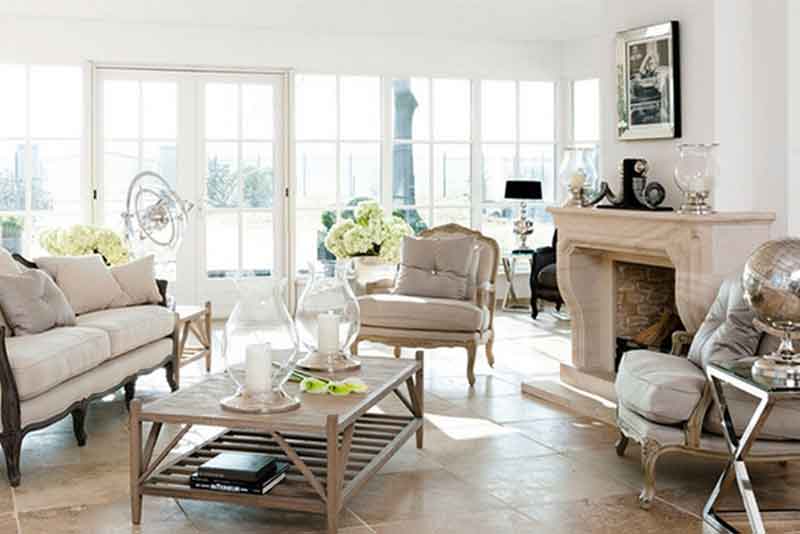
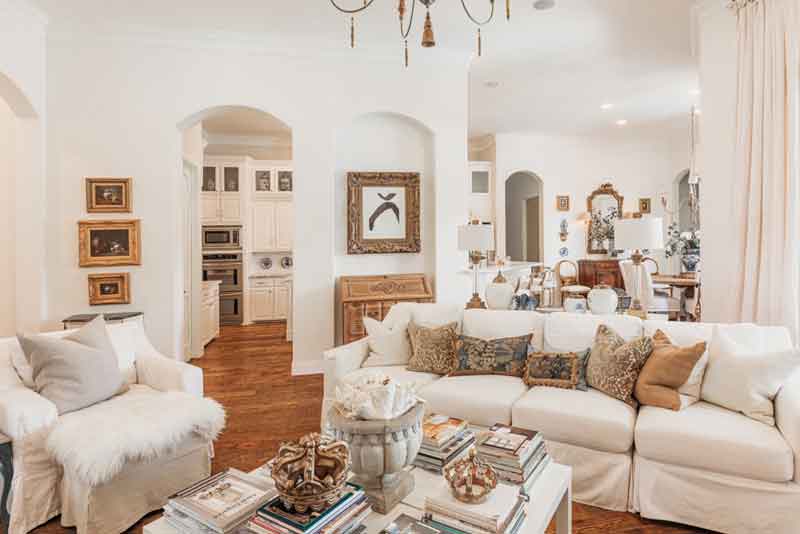
French country furniture works best when a room looks assembled over time rather than purchased as one coordinated collection. A substantial wood table can sit beside painted chairs, an upholstered armchair can share space with a simpler sofa, and an older chest can add more character than a full suite finished in the same cream paint.
The style depends on contrast. Rustic wood keeps graceful curves from feeling too formal, while upholstery and painted finishes soften furniture that might otherwise look heavy. The aim is not to reproduce a French farmhouse literally, but to combine useful pieces that share enough character to belong together.
What Makes Furniture Read as French Country
French country furniture is easier to recognize by the relationship between shape, material, and finish than by any single decorative feature. Graceful lines tend to sit beside practical construction, while natural wood, paint, and upholstery keep the result from becoming either too formal or purely rustic.
Painted furniture often appears in cream, muted gray, dusty blue, soft green, or other subdued colors. Natural wood introduces grain and warmth, while linen, cotton, checks, stripes, and restrained florals can soften more substantial pieces.
Broader country style furniture characteristics include sturdy construction, practical forms, visible texture, and materials that do not need to look pristine. French country adds a more graceful layer through proportion, curves, upholstery, and selectively decorative details.
| Element | French Country Approach | What Can Make It Feel Forced |
|---|---|---|
| Shape | Curves mixed with substantial practical forms | Ornate detailing on every piece |
| Wood | Natural grain beside painted furniture | One identical wood finish throughout |
| Paint | Muted or softly aged colors | Heavy artificial distressing |
| Upholstery | Linen, cotton, subtle florals or stripes | Several competing traditional patterns |
| Hardware | Simple traditional or aged-looking metal | Decorative hardware added only for effect |
| Room mix | Painted, natural, old and newer pieces | A complete coordinated suite |
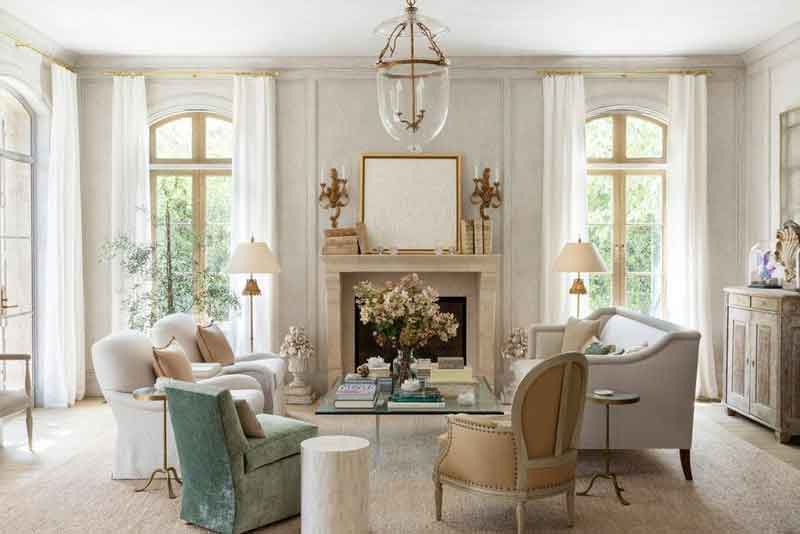
French Country and French Provincial Are Related, Not Identical
French country and French Provincial often overlap in decorating discussions, but treating them as exact synonyms can make furniture selection more confusing than it needs to be. The difference is less about drawing a rigid historical boundary and more about understanding how refined or rustic a piece feels in a room.
French Provincial furniture generally leans more refined. Curved legs, shaped backs, paneled casework, and decorative carving may appear without the furniture becoming especially formal or delicate. The same mix of rustic materials and more refined forms appears in Architectural Digest’s overview of French country decor, where vintage furniture, softer finishes, and natural materials share the same rooms.
French country is broader. It can absorb Provincial-inspired pieces while leaving room for simpler farm tables, painted cabinets, woven seating, plain benches, and newer furniture that shares compatible proportions or materials.
The distinction matters most when choosing pieces rather than labeling them. One elegant chair, cabinet, or chest can introduce a French note without requiring every item in the room to repeat the same details.
Choose Shapes Before Chasing a Distressed Finish
A convincing French country room starts with furniture shape, not sandpaper marks. A plain cabinet with aggressive artificial wear can still look generic, while a relatively clean piece with the right proportions may fit naturally.
Dining chairs show this clearly. A gently curved back, turned or tapered legs, and a shaped seat can introduce French character before paint or upholstery enters the picture. Cabinets and armoires may use paneled doors, molded edges, or restrained carving rather than completely flat fronts.
Dining tables usually benefit from more weight. A substantial top and sturdy base can anchor the room while lighter chairs provide contrast. Look at the underlying form before the finish:
- curved or tapered legs rather than carving everywhere;
- shaped aprons beneath tables and consoles;
- rounded or upholstered chair backs;
- paneled doors on cabinets and armoires;
- substantial tables paired with lighter surrounding furniture;
- details that would still work without decorative paint effects.
An ordinary vintage chest with good proportions can therefore fit better than a newly manufactured “French country” cabinet covered with decorative wear. Ignore the paint for a moment and ask whether the furniture itself still makes sense.
Natural and painted finishes do not need to compete. A wood dining table can work with painted chairs, and a pale sideboard can sit beside an unpainted cabinet without making the room feel disconnected.
Warm wood provides depth, especially when grain and small variations remain visible. Painted pieces can keep that warmth from becoming heavy. Cream, muted gray, dusty blue, soft green, and restrained off-white work particularly well on chairs, cabinets, nightstands, and smaller accent furniture.
Exact matching matters less than how the tones behave together. Warm timber, aged brass, ivory paint, and faded blue may have little in common on a paint chart, yet they can sit comfortably in the same room.
Distressed Should Not Mean Deliberately Damaged
Some wear can add character, but distressing becomes distracting when every edge appears to have been sanded in exactly the same way. Real use tends to affect handles, corners, drawer fronts, chair arms, and other contact points unevenly.
A lightly aged painted finish often looks better beside cleaner furniture. The contrast makes the worn piece believable. When every chair, cabinet, and table has identical chipped edges, dark glaze, and exposed underlayers, the effect starts to resemble a manufacturing formula.
Construction and proportion should come before manufactured patina. A well-shaped cabinet with a straightforward painted finish has room to age naturally; a weak piece does not become more convincing because someone has added fake wear.
Upholstery Can Shift the Whole Room
Fabric can move the same furniture frame toward formal, rustic, romantic, or contemporary territory. That makes upholstery one of the easiest ways to adjust the character of a room without replacing the furniture itself.
Linen and cotton work naturally with wood and painted finishes. Small checks, narrow stripes, faded florals, and occasional toile can introduce pattern without turning every upholstered surface into a period reference.
Toile is especially easy to overdo. One chair, bench cushion, or small accent can establish the idea. Repeating the same scenic print across curtains, cushions, chairs, and bedding makes the pattern more memorable than the furniture.
Slipcovers can work too, provided the furniture underneath has enough structure. A relaxed linen cover should soften the piece, not bury its shape beneath excess fabric.
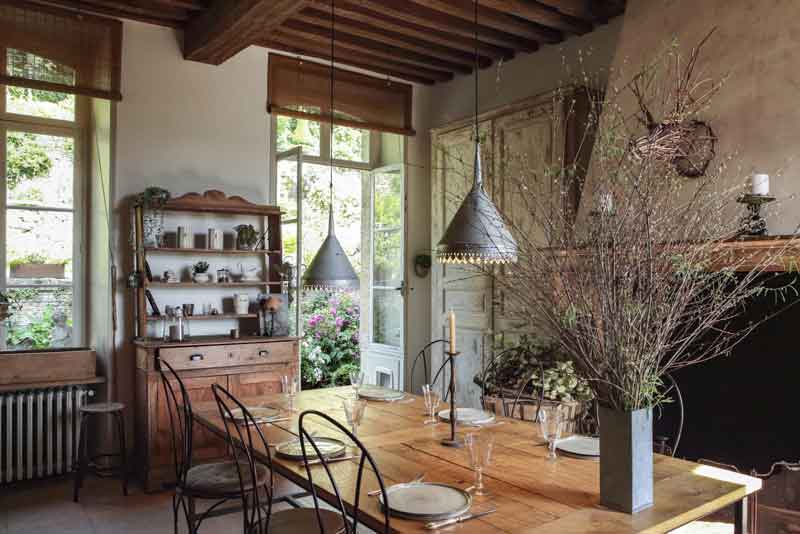
Build a French Country Dining Room Around One Strong Piece
The dining room is an easy place to use French country furniture because the table naturally establishes the center of the arrangement. A substantial wood table can work with painted chairs, upholstered end chairs, or a bench on one side.
A sideboard can bring in another finish without making the room feel fragmented, particularly when its scale relates to the table rather than copying it. This differs from a more straightforward country farmhouse furniture approach, where practical construction and rustic simplicity may take the lead.
The same sturdy table can move in a more French direction when paired with shaped chair backs, softer upholstery, or a cabinet with finer detailing. A ready-made suite may be convenient, but it removes much of the variation that gives this style its character.
Table, chairs, and storage pieces do not need the same finish or even the same age. They need compatible scale and enough breathing room to be noticed individually.
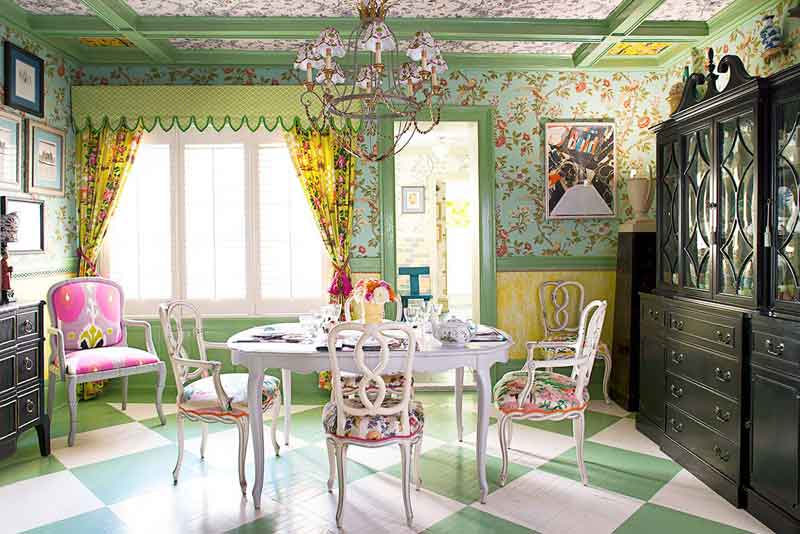
Use French Country Furniture in the Living Room Without Filling Every Corner
A living room does not need a French-style version of every furniture category. One or two pieces can establish the character while the rest of the room remains quieter.
An upholstered accent chair can introduce curves and fabric without taking over the space. A painted console, older chest, or paneled cabinet can do something similar on another wall. If those pieces already carry decorative detail, the coffee table is often better kept plain.
Scale deserves more attention than labels. A small, delicate chair can disappear beside an oversized sectional, while a deep armoire may dominate a compact room even when its finish looks perfect in isolation.
Leave space around the stronger pieces rather than filling every gap with another traditional object. French country furniture has more presence when the eye is not being asked to decode the same style reference in every corner.
Bedrooms Need Fewer French Details Than You Think
A bedroom can pick up French country character from one dominant piece and a few quieter supporting choices. A shaped headboard, painted chest, upholstered bench, or traditional bedside table may be enough.
Nightstands do not need to match each other or the bed. One painted piece and one small wood table can work if their heights and proportions feel balanced from either side of the mattress.
A shaped mirror can add another traditional note without using floor space. Plain bedding, natural fabrics, and simpler storage then keep the room from drifting toward a more heavily romantic or shabby-chic look.
Bedrooms are especially easy to overwork because small decorative additions accumulate quickly. Once the bed, chest, and perhaps a mirror establish the direction, adding more distressed furniture and floral accessories rarely makes the style clearer.
Mix Old and New Instead of Recreating a Period Room
French country furniture is easier to live with when the room is not expected to look historically complete. Vintage and antique pieces bring irregularity and genuine age, while newer furniture may offer better storage, dimensions, or comfort.
A vintage table can work perfectly well with newer chairs, just as an older console can sit beside a modern sofa or contemporary lamp. The contrast prevents the room from looking like a reproduction interior assembled from one catalogue.
It can also make genuinely old surfaces more noticeable. Patina loses some of its effect when everything nearby has been deliberately aged. Cleaner walls, straightforward upholstery, and newer lighting provide a calmer background for an old cabinet, table, or chair.
There is also less need for stereotypically “French” accessories when the furniture already establishes the direction. Fleur-de-lis ornaments, rooster figures, decorative French typography, and vintage-style signs should not have to explain what the room is trying to be.
Check Construction Before Buying for the Finish
Vintage appearance can hide very ordinary furniture problems. A beautifully painted chest is not a bargain if its drawers barely move, and an elegant dining chair stops being useful when its joints shift every time someone sits down.
Before buying an older or distressed piece, check the parts that determine whether it can handle everyday use. Cosmetic wear is often manageable, but structural trouble deserves much more attention.
- rock chairs gently to test loose joints;
- open every drawer and door;
- look underneath tables and cabinets for repairs or structural damage;
- inspect veneer for lifting, bubbling, or missing sections;
- check hardware rather than judging it by appearance alone;
- smell enclosed cabinets and drawers for persistent damp or musty odors;
- separate cosmetic wear from cracks, rot, instability, or other structural problems.
A finish is usually easier to address than a damaged frame. Older surfaces also deserve some restraint before refinishing begins. The Canadian Conservation Institute’s advice on caring for wooden furniture notes that original finishes can carry historical and aesthetic value, so stripping an old piece should not be the automatic response to scratches or age.
What Makes French Country Furniture Look Too Themed
French country starts to feel theatrical when every object tries to announce the style. Curved furniture, painted finishes, aged wood, florals, toile, ironwork, and traditional motifs can all work, but they do not need equal emphasis.
A room full of cream-painted furniture can feel more manufactured than relaxed, while aggressive distressing across several pieces makes the treatment predictable. Pattern creates the same problem: toile on one chair may be distinctive, but repeating it on curtains, cushions, chairs, and bedding gives the print too much responsibility.
Literal motifs deserve even more restraint. Fleur-de-lis symbols, rooster decorations, French typography, and vintage-style signs are optional accessories, not requirements. Let one element be decorative while another stays plain. Shaped dining chairs can sit with a simpler table; a carved cabinet needs no equally elaborate neighbor; a heavily worn chest benefits from cleaner furniture beside it. The room does not have to repeat itself to stay coherent.
Let the Room Look Collected Over Time
French country furniture feels most convincing when no single piece has to prove what style the room is. The strongest rooms leave enough contrast for older wood, painted finishes, upholstery, and simpler furniture to exist without competing for attention. Start with pieces worth keeping for their shape, construction, and usefulness. Once those are right, differences in age, finish, and origin become an advantage rather than something to disguise.