
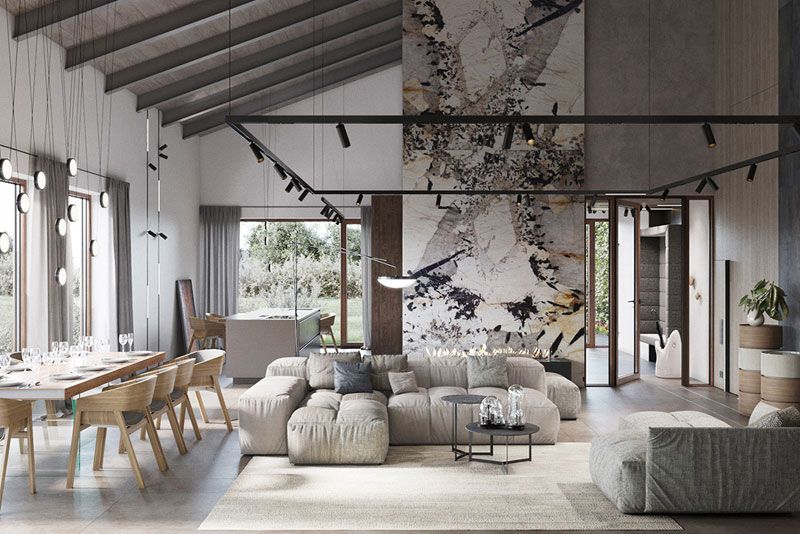
Modern country furniture keeps the warmth of traditional country interiors without carrying all of their visual weight. Wood still matters, comfortable upholstery still belongs, and furniture should look useful rather than precious. What changes is the editing: silhouettes become simpler, finishes quieter, and obviously rustic details appear in smaller doses.
That difference becomes obvious when shopping. A chunky distressed cabinet, gray-washed dining set, and sofa covered in checks may all be sold under a country label, but putting them together risks making the room feel more themed than relaxed. A few pieces can establish the direction; everything else does not need to reinforce it.
What Makes Modern Country Furniture Feel Modern
Most of the country feel comes from materials and function. Solid or visibly grained wood, woven fibers, linen, wool, practical storage, substantial tables, and furniture built for everyday use all fit naturally. None of those features has to look deliberately old.
The modern side is less about introducing overtly contemporary pieces than removing excess. Decorative carving becomes less important, artificial aging is limited, and proportions tend to be simpler. A sideboard might use warm oak doors with straightforward hardware, while a dining table keeps its thick timber top but loses the heavy turned base and matching chairs.
Color does not have to stop at beige and white. Muted green, clay, charcoal, deep blue, warm brown, and restrained black sit comfortably beside natural timber, especially when larger surfaces remain calm. They also help move the room away from the pale gray-and-white farmhouse palette associated with an earlier decorating cycle.
The broader country style furniture characteristics still provide the foundation: practical forms, natural materials, sturdy construction, and visible texture. Those foundations still work, but a modern country room does not need to emphasize all of them at once.
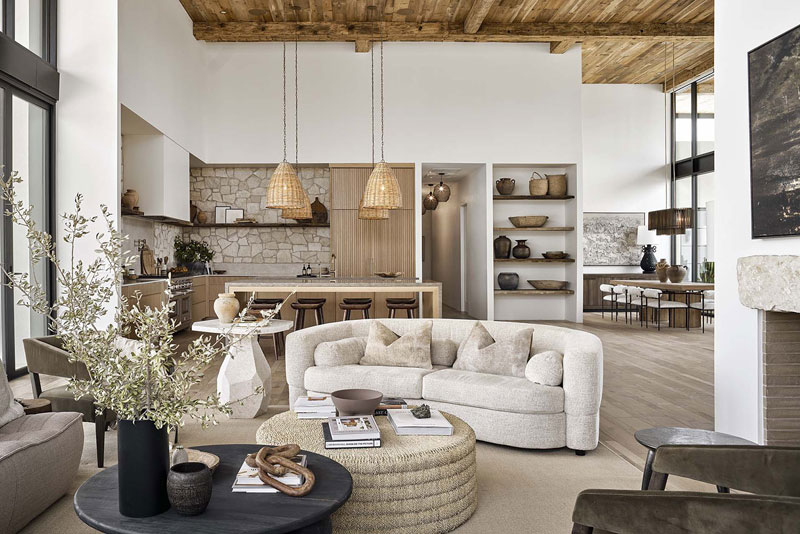
Modern Country, Farmhouse and Rustic Are Not the Same Look
Furniture retailers use these labels loosely, which is why two pieces described as “country” may have almost nothing in common. Looking at shape, finish, and surface texture is more useful than relying on the product name.
| Style | Typical Furniture Shape | Finish and Texture | Overall Effect |
|---|---|---|---|
| Modern country | Simplified, substantial but not bulky | Natural wood, restrained paint, limited distressing | Warm, relaxed and comparatively clean |
| Farmhouse | Practical, sturdy, straightforward | Natural or painted wood, some aging | Casual and functional |
| Rustic country | Heavier, rougher, more traditional | Pronounced grain, wear, reclaimed or aged surfaces | Strongly textured and traditional |
Take a farmhouse dining table as an example. Surrounded by lightly shaped chairs, simple lighting, and a relatively plain sideboard, it fits easily into a modern country room. Add distressed benches, barn-style details, matching rustic storage, and several reclaimed-look surfaces, and the same table starts reading much more strongly as farmhouse.
Modern country leaves more room for pieces that do not announce the same style. A timber table beside a plain cabinet or upholstered chair often feels more settled than a room where every item repeats the grain, finish, and weight of its neighbors. The relationship between the pieces matters more than whether they came from the same collection.
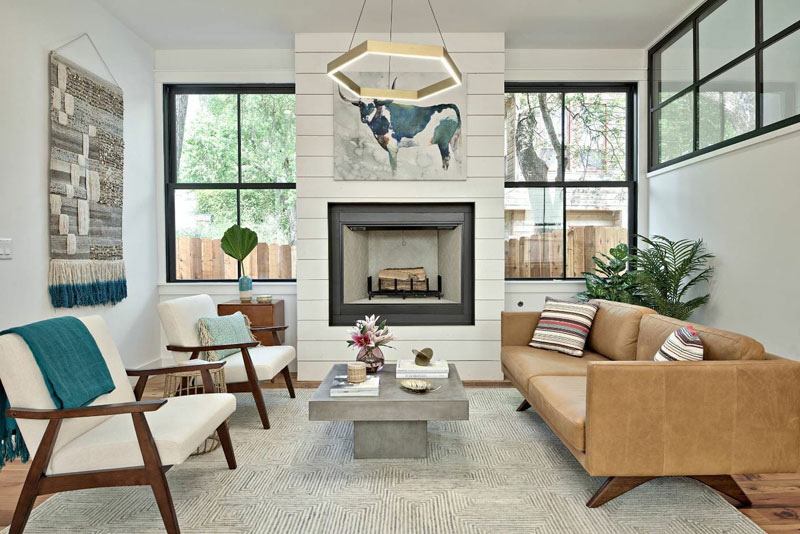
Start With One Piece That Carries the Country Character
Instead of trying to find a country version of every furniture category, decide which piece deserves to carry most of the traditional material or form. That choice gives the room an anchor without forcing every other item to compete with it.
In a dining room, that will often be the table. A living room may rely on a broad wood coffee table, sideboard, or cabinet, while a bedroom gets much of its identity from a timber bed or chest. Once that anchor is in place, quieter furniture around it no longer looks out of place.
This also reduces the temptation to buy the same timber repeatedly. An oak table does not require oak chairs, an oak buffet, and an oak display cabinet from the same collection; by the fourth matching piece, the grain itself may stop being interesting.
The anchor should still make sense for its construction, size, storage, or comfort even if the room changes later. That gives it a reason to stay beyond the current decorating scheme.
Pair Rustic Materials With Cleaner Furniture Shapes
Visibly grained or knotty timber already supplies a strong country reference. It does not also need turned legs, decorative braces, a thick apron, iron straps, and manufactured wear on the same piece.
Storage furniture shows the idea particularly well. Warm wood doors with simple pulls may provide enough texture on their own, and a woven chair does not need an elaborate traditional frame when the weave is already doing the decorative work. House & Garden’s examples of modern country design use a similar balance, placing rural materials and familiar warmth alongside simpler furniture and restrained color.
The effect becomes especially useful in smaller rooms. Thick legs, deep moldings, rough timber, and dark finishes make furniture appear physically heavier, sometimes more than its actual dimensions warrant. Reducing that bulk lets the material remain prominent without allowing one cabinet or table to dominate the room.
Keep Wood Natural Without Making the Room Heavy
A timber floor, dining table, chairs, cabinet, coffee table, shelving, and exposed beams may each look appealing on their own. Put all of them together and the result can become surprisingly dense, even when none of the pieces is particularly dark or oversized.
Variation gives the eye somewhere to stop. Light and medium woods may sit beside deeper tones when their undertones relate reasonably well, while upholstery, paint, stone, woven fibers, or metal interrupt the timber. Not every break needs to be dramatic; sometimes one painted cabinet in a wood-heavy room is enough.
Surface treatment matters as much as color. Strong wire-brushing, gray washes, deep artificial saw marks, and uniformly battered edges tend to push new furniture toward a deliberately rustic appearance. Visible grain already provides texture, so the finish does not need to exaggerate it further.
Older wood does not need to be corrected into perfection either. Minor wear and irregular grain often look more convincing when nearby pieces are comparatively plain, because the age belongs to one object instead of becoming a treatment repeated around the room.
Painted Furniture Works Better in Smaller Doses
Painted furniture still fits comfortably into modern country interiors, but a room full of distressed white cabinets and tables quickly recalls an older farmhouse formula. One painted piece can be useful precisely because it interrupts the wood instead of trying to imitate it.
A sideboard, cabinet, or pair of nightstands may be enough. Muted green, warm off-white, clay, soft gray, deep blue, and near-black all work when they connect to something else in the room rather than appearing as isolated “country colors.”
Paint also solves a practical problem. Once a room already contains a wood floor and two different timber finishes, introducing a third almost-match is often less convincing than choosing a clearly painted piece. The distinction looks deliberate rather than accidental.
There is little reason to sand every edge or add dark glaze afterward. If the color suits the room and the furniture has a useful shape, it does not need simulated age to justify its place.
Upholstery Should Add Texture, Not Cottage Clutter
Texture usually carries this style more successfully than a collection of traditional patterns. Linen, cotton, wool, and substantial woven fabrics soften timber furniture while leaving plenty of room for wood grain, ceramics, baskets, and other materials elsewhere.
Pattern still belongs. Narrow stripes, small checks, and restrained botanical or geometric designs suit an accent chair, bench, or cushion, particularly when sofas and other large upholstered pieces stay calmer. A room becomes harder to read when curtains, rugs, sofas, chairs, and cushions are all competing for attention.
Comfort matters just as much as appearance. Country furniture has always had a practical side, and a dining chair chosen because it looks appropriately rustic but becomes uncomfortable after twenty minutes is not serving that tradition particularly well.
Let one upholstered piece carry the stronger pattern or tactile surface while the others stay quieter. They can contribute through comfort, scale, and texture without needing another decorative motif.
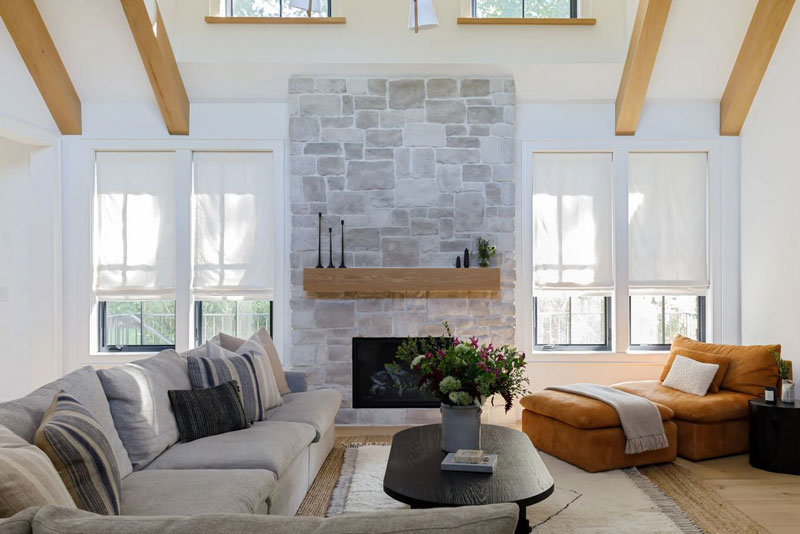
Build a Modern Country Living Room Around Contrast
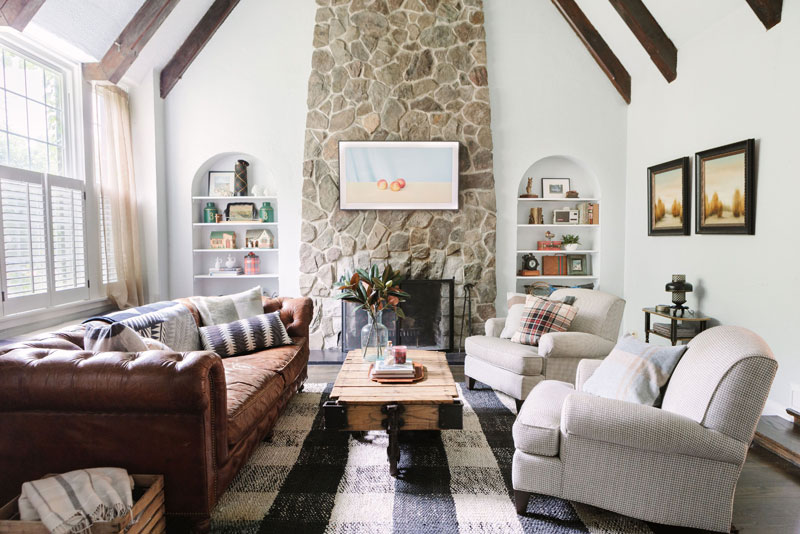
Living rooms contain enough furniture to become cluttered with style references quickly. A sofa, armchairs, coffee table, side tables, media unit, storage, lamps, and occasional furniture do not all need a rustic treatment.
Start with the largest practical pieces. A relatively simple sofa gives a wood coffee table or textured chair more presence, while a timber sideboard introduces another natural surface without requiring a country-style media unit as well. Metal, glass, or contemporary lighting may sit comfortably nearby and prevent the material palette from becoming too uniform.
Scale needs variation too. A broad coffee table pairs more easily with lighter side furniture than with another bulky chest, and a tall wood cabinet often looks better with some empty wall around it. Leaving that space can make a substantial piece feel intentional rather than simply oversized.
Books, throws, ceramics, baskets, and lamps can still make the room feel lived in. The furniture itself has less work to do when everyday objects already bring softness and familiarity.
Build a Modern Country Dining Room Without a Farmhouse Set
Dining rooms become overly coordinated very easily because complete furniture suites are convenient. Table, chairs, bench, sideboard, and hutch arrive in identical timber with the same hardware and surface treatment, so there is little left for the room to develop over time.
A modern country dining room can begin with the table and work outward. Let it provide the strongest wood presence, then choose chairs for comfort, scale, and shape rather than for an exact color match. A sideboard might be painted or simpler in profile; it only needs to hold its own beside the table, not imitate it.
That is one of the differences from more straightforward country farmhouse furniture, where familiar rustic construction and farmhouse forms may play a larger role. Modern country retains the practical side while allowing surrounding pieces to come from a wider vocabulary.
Before adding another item, consider what job it will actually do. That question is especially useful with benches, hutches, open shelving, and extra storage, because these pieces can occupy a surprising amount of space:
- use a bench only where getting in and out will remain convenient;
- choose upholstered chairs when long meals make comfort more important than a purely rustic appearance;
- favor closed storage if open shelving would mainly expose clutter;
- reserve oversized hutches for rooms with enough wall and floor area to support them;
- let lighting introduce a different material or shape instead of automatically choosing another rustic fixture.
Once the table and one storage piece establish enough warmth, another matching object rarely adds much simply because it belongs to the same collection. More variation usually gives the individual pieces a better chance to register.
Storage Furniture Can Do More Than Look Rustic
Practical storage is one country tradition worth keeping. Sideboards, chests, cabinets, benches, and beds with drawers can justify their footprint through both appearance and usefulness, which matters increasingly as rooms become smaller or serve several purposes.
A decorative cabinet with shallow shelves may contribute less than a plainer unit with deep drawers, adjustable shelving, or concealed cable storage. The same applies to an entry bench: if it actually handles shoes, bags, or seasonal items, its substantial form has a reason to occupy valuable floor space. If it supports only baskets and decorative cushions, another solution may work harder.
Closed storage also helps the rest of the room. Timber grain, upholstery, ceramics, books, woven surfaces, and everyday clutter create plenty of texture already; hiding some of the practical mess lets the materials that were chosen deliberately remain visible.
That functional emphasis belongs naturally in modern country furniture rather than sitting apart from the look. It is one of the things that keeps a room from becoming a collection of rustic props.
What Makes Modern Country Furniture Look Dated
A traditional table or genuinely worn cabinet does not make a room dated by itself. Problems usually appear when several highly recognizable rustic trends are repeated together until the furniture starts identifying a particular decorating era.
Several details deserve extra restraint because they become conspicuous when repeated. None is automatically wrong, but using several of them together can make the room feel more tied to a past trend:
- artificial distressing on nearly every wood surface;
- gray-washed furniture repeated throughout the home;
- barn-door details where an ordinary door or cabinet front would work better;
- complete matching farmhouse suites;
- oversized rustic furniture squeezed into small rooms;
- word signs and other literal country motifs;
- reclaimed-look surfaces manufactured to appear uniformly old.
A sliding door is useful where swing clearance is limited, and a genuinely old painted cabinet might be the most interesting item in an otherwise restrained room. Context matters more than the label attached to the detail. Architectural Digest’s examples of how to modernize a rustic country house show the same principle, allowing worn timber and older pieces to sit beside cleaner surfaces, restrained color, and furniture from different periods.
Repetition is usually what dates the room. Removing one exaggerated rustic treatment often changes the balance more effectively than buying another object specifically marketed as modern.
Let the Country Part Come From Materials, Not Props
Modern country furniture does not need much explanation once material, proportion, and function are carrying the room. Warm timber, comfortable upholstery, useful storage, woven surfaces, and a few substantial pieces already provide plenty of country reference.
Some furniture may be old and some new. Natural wood can sit beside paint, metal, upholstery, or simpler contemporary shapes without weakening the overall effect, and small differences in finish often make the room look less staged. There is no need to smooth those differences away.
Choose furniture for how well it works in the space first. When the strongest pieces already provide warmth, texture, and permanence, everything around them is free to stay quieter.