
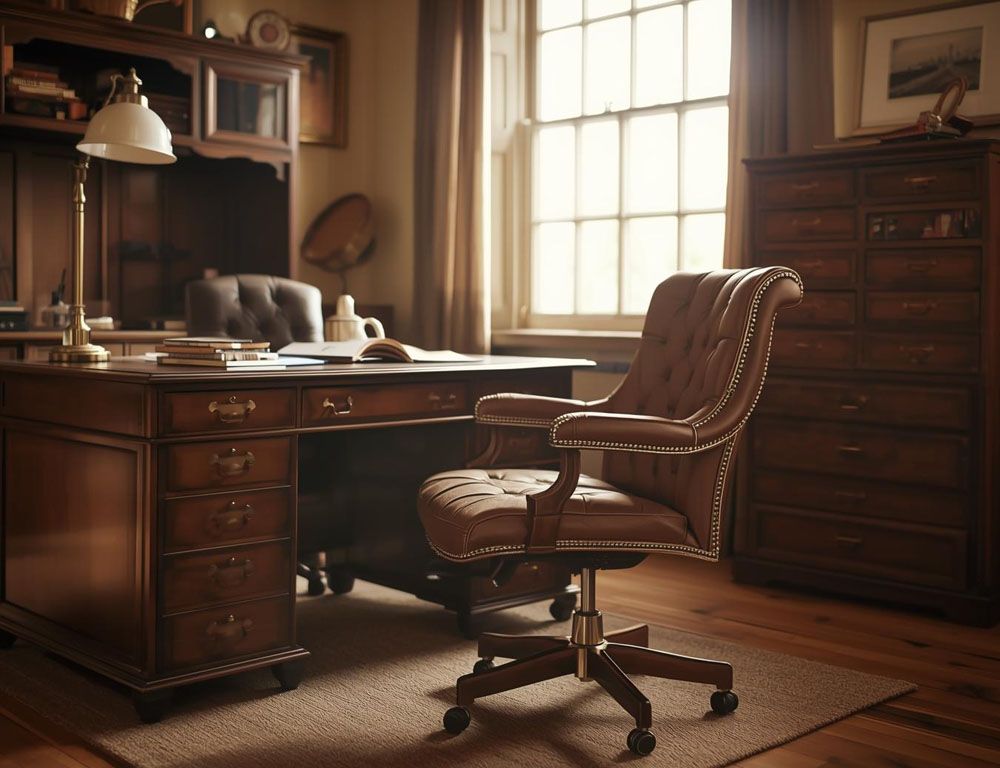
Vintage office furniture can bring wood grain, older hardware, and less standardized proportions into a workspace, but age alone does not make a desk, chair, or cabinet worth buying. The piece still has to fit the room, suit the way you work, and handle daily use without becoming a restoration project.
That changes the buying process. A beautiful walnut desk can be too shallow for a monitor, an executive chair can look impressive while offering poor support, and a heavy filing cabinet may solve a storage problem you no longer have. The best vintage pieces are the ones that earn their place after the nostalgia wears off.
Vintage Office Furniture Should Solve a Workspace Problem
Start with function before period, maker, or finish. A vintage desk should provide enough depth for the equipment you use, a chair should suit the hours you spend in it, and storage should hold something you actually need to store. Curved drawer fronts, teak grain, brass hardware, or a distinctive pedestal base can distract from limitations that become obvious only after the piece reaches the room.
Measure more than the furniture itself. Check doorways, stairs, the space behind a task chair, drawer clearance, and whether the desk can sit far enough from the wall for cables or monitor arms. A few extra inches can decide whether a piece feels substantial or simply oversized.
A piece does not need to do everything. A compact writing desk may be perfect for laptop work, while a long credenza may be more useful in the same room because it hides supplies, supports a printer, and keeps the main work surface clear.
Which Vintage Office Pieces Make Sense for Current Work
Different furniture types age differently because modern work asks different things from them. A desk designed for paper and a telephone has different strengths and limitations from one expected to hold two monitors, a laptop dock, speakers, and charging equipment.
| Piece | Best Use Today | Main Thing to Check | Common Problem |
|---|---|---|---|
| Writing desk | laptop work, writing, light daily use | depth and knee clearance | too shallow for larger setups |
| Executive desk | dedicated office with more floor space | overall dimensions and drawer access | bulky and difficult to move |
| Office chair | occasional or daily seating | support, height and base condition | poor ergonomics |
| Credenza | printer station and closed storage | doors, drawers and veneer | hidden damage or sagging |
| Filing cabinet | paper-heavy work | drawer movement and locks | excessive weight |
| Bookcase | books, supplies and display | shelf strength and stability | sagging or wobble |
No single category is automatically better because it is older. What matters is whether the furniture’s original purpose still lines up with what the office needs now.
Start With the Desk, Not the Decade
A vintage office desk usually sets both the working conditions and the visual tone, so a bad fit is hard to ignore. It is also easy to misjudge from photographs because scale, knee clearance, and usable depth are not always obvious.
A mid-century desk may look compact because of slim legs, shallow drawers, and a raised base. Those same features can work well in a small office, but they can also reduce usable depth or knee room. Judge the desk from the chair position, not only from the front.
Compact Writing Desks Need Enough Working Depth
Vintage writing desks were often designed for correspondence, paperwork, or occasional use rather than a permanent screen setup. That makes them attractive in apartments and smaller rooms, but the surface still has to accommodate the equipment you use every day.
A laptop-only setup may fit comfortably where a large monitor does not. Measure the usable depth after accounting for drawers, raised backs, decorative edges, or shelving. If a monitor has to sit at the front edge of the desk, the piece may be visually right and functionally wrong.
Knee clearance matters just as much. Shallow center drawers, low aprons, or thick rails can reduce legroom, particularly when the chair needs to rise higher for comfortable screen use. A compact desk is useful only when its proportions work for the person sitting at it.
Executive Desks Need More Room Than Product Photos Suggest
A vintage executive desk can provide a large surface and substantial storage, but those advantages come with scale. Deep pedestals, wide drawer banks, and heavy tops require more floor area than many home offices can comfortably give them.
Allow for the chair to roll back and for drawers to open without hitting a wall, cabinet, or another piece of furniture. Large desks can also be surprisingly difficult to move through stairs, hallways, and narrow doors, especially when the top does not separate from the base. More drawers should not decide the purchase either. If most files are digital, a smaller desk with better working depth may be more useful than an impressive executive piece filled with storage that rarely gets used.
A Vintage Office Chair Has to Pass a Modern Comfort Test
Vintage office chairs vary widely in comfort. Some have well-shaped backs and solid frames; others were built around different expectations for posture, desk height, and time spent seated. Check seat height first, then back support, arm position, cushioning, swivel action, and the stability of the base. For a chair intended for daily use, OSHA’s guidance on office chair fit and adjustment is a useful reference because the chair needs to support the person using it rather than merely fit the period look.
Upholstery deserves a separate look. Worn fabric or tired foam can often be replaced, but a cracked frame, damaged swivel mechanism, or unstable base is a larger concern. Replacement casters also need to suit the floor and the chair’s original mounting system.
For full-day computer work, a modern ergonomic chair can be the better choice even in a room furnished with vintage pieces. The older chair can still work as occasional seating, reading furniture, or a secondary desk chair without being forced into a job it no longer performs well.
Storage Furniture Has to Earn Its Footprint
Storage is where older office furniture can be especially practical. Credenzas, filing cabinets, and shelving can hide supplies, printers, paper, chargers, and equipment that would otherwise collect on the desk.
A credenza is often the most adaptable option. It provides closed storage and can support a printer or charging station without taking over the main work surface. Check that doors close properly, drawers move evenly, and long shelves have not begun to sag.
A vintage filing cabinet can be durable but surprisingly heavy, and its value depends on whether paper files still matter in the way you work. Before bringing one home, check drawer action, locks, corrosion, and whether it can be moved safely through the building.
Bookcases and modular shelving offer more flexibility, although open storage only helps when the contents remain organized. A wall of vintage shelving can look impressive while creating more visual clutter than a smaller closed cabinet. If display space is not actually needed, closed storage may be the quieter choice.
Solid Wood, Veneer and Age Do Not Tell the Whole Story
Older office furniture is often described using wood species as a shorthand for quality: walnut desk, teak credenza, rosewood executive piece. Those descriptions are useful, but they do not tell you how the furniture was built. Good veneer can be entirely appropriate on large drawer fronts, cabinet doors, and broad panels. The same is true when comparing solid wood furniture: the material label matters less than construction, condition, and how the piece has aged.
Condition matters more than the label. A well-made veneered credenza with stable panels and sound joints can be a better purchase than a solid wood desk with loose connections, warped parts, or repeated amateur repairs. Clean drawer movement, stable joints, intact surfaces, and sensible previous repairs are more useful signals than weight or wood species alone.
An old maker’s label or desirable species name is not enough evidence of quality on its own. Inspect the construction you can actually see and pay attention to how the piece has held up.
Inspect the Piece Before You Pay for Its History
A showroom, resale listing, or marketplace photo can hide most of the problems that matter. Whenever possible, inspect the piece in person and look beyond the surfaces that were styled for the listing. The underside, back, drawer interiors, and hardware often reveal more than the top. These areas show repairs, replaced screws, swelling, missing parts, and structural changes that are difficult to disguise.
The following checks take only a few minutes and can reveal more than another set of listing photos. They are especially useful when the seller cannot provide much history for the piece:
- press gently on the corners to check for wobble or loose joints;
- open every drawer and door, not just the easiest one;
- inspect veneer edges for lifting, bubbling, or missing sections;
- look for water damage, especially near the floor and back panels;
- check screws, brackets, and hardware for improvised repairs;
- smell enclosed drawers or cabinets for persistent damp or musty odors;
- examine the underside for cracks, added supports, or missing components;
- confirm the exact dimensions before arranging transport.
Cosmetic wear does not always matter much. A scratched finish can be easier to address than a desk that twists under pressure or a credenza with warped doors.
Restoration Can Be Worth It Until the Structure Is the Problem
Not every worn piece needs professional restoration. Minor finish wear, light scratches, tired hardware, and outdated upholstery can sometimes be handled without changing the character of the furniture. The Canadian Conservation Institute’s recommendations for caring for older wood furniture also favor a cautious approach to existing finishes rather than unnecessary intervention.
Structural problems are different. A severely warped desktop, widespread loose joints, badly damaged veneer over an unstable substrate, or missing custom components can turn an inexpensive purchase into a costly project. Labor, transport, and replacement parts can exceed the original purchase price surprisingly quickly.
Restoration makes the most sense when the finished piece will be used regularly. Spending heavily on furniture that remains too large, too shallow, or uncomfortable after the work is complete solves the wrong problem.
Older Furniture Must Still Work With Current Technology
Many vintage desks were designed before monitors, docks, chargers, and cable management became part of everyday office furniture. That does not make them obsolete, but compatibility deserves attention before purchase. Check whether the desktop has enough depth for the screen distance you prefer and whether monitor-arm clamps can attach without damaging delicate edges or interfering with drawers. Thick aprons and enclosed backs can also make clamp-on accessories difficult.
Cable routing should be as reversible as possible. Under-desk trays, removable clips, and freestanding cable organizers are usually better than drilling holes into an older desk. Printers and larger equipment often work better on separate storage furniture, which preserves working space and reduces the need to modify the desk permanently.
Mixing Vintage and Modern Office Furniture Works Better Piece by Piece
A modern home office does not need a full vintage suite. One older desk or credenza may provide enough material and character while newer furniture handles tasks where current ergonomics or storage design works better. The furniture does not have to carry the entire historical reference either. In retro office design, color, lighting, surfaces, and a few older pieces can share that job.
A vintage desk beside a contemporary chair is often a sensible combination, especially when the chair is used for long work sessions. Modern shelving can provide flexible storage without competing with the desk, and neither piece needs to imitate the other.
Exact wood matching is unnecessary. Related undertones, repeated metal finishes, or similar proportions can connect the pieces without making the room look like a matched set. Some variation usually helps the older furniture feel integrated rather than staged.
Buy the Piece for the Work It Can Still Do
Vintage office furniture is most convincing when it performs a useful job. A desk should provide a workable surface, a chair should suit the hours spent in it, and storage should justify the space it occupies. That practical test matters more than how impressive a listing looks.
Age, maker, wood species, and originality can all matter, but they should come after dimensions, construction, condition, and everyday use. A modest writing desk that fits the room may be a better purchase than a rare executive desk that dominates it. If the dimensions, condition, and function are right, the age of the piece becomes a bonus rather than the main argument for keeping it.