
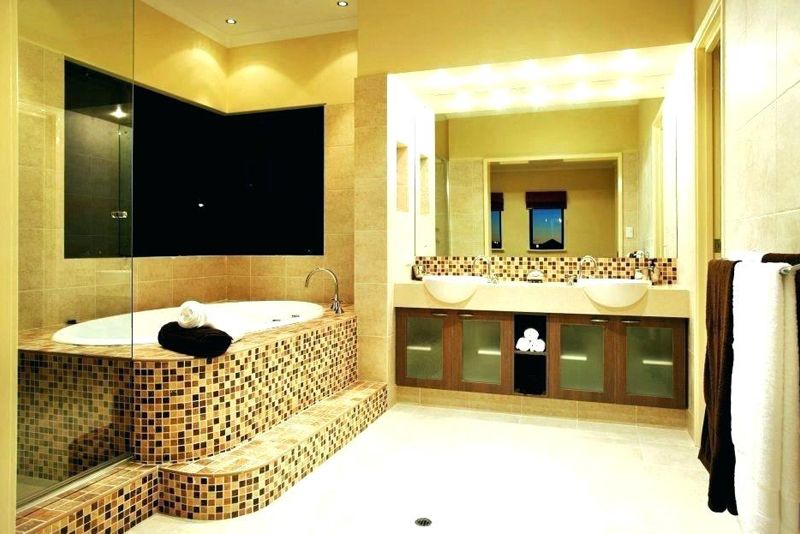
Yellow can make a bathroom feel warmer, brighter, or more playful, but much depends on the shade and the surfaces around it. Pale butter yellow behaves very differently from mustard, ochre, or a sharper lemon tone once tile, artificial light, wood, metal, and white sanitaryware enter the picture.
It helps to decide first how much attention the color should command. Yellow can cover the background, define one major feature, or appear in smaller accents, and each approach needs a slightly different supporting palette.

Choosing the Right Yellow for a Bathroom
Yellow shifts noticeably as the light changes. A soft cream-yellow may sit close to neutral in strong daylight, then look considerably warmer after the bathroom lights come on in the evening.
Nearby finishes change the effect as well. Bright white tile tends to sharpen yellow, while warm stone, beige grout, natural wood, or creamier surfaces usually soften it.
Test larger samples beside the materials that will remain in the bathroom rather than judging a paint chip on its own. Check them in the morning, later in the day, and under the room’s artificial lighting before committing to a large area.
Pale Yellow, Butter Yellow, Mustard or Ochre?
Pale and butter yellows are easier to spread across broad surfaces because they sit closer to warm neutrals. Walls or cabinetry in these shades can carry plenty of color without making yellow the first thing noticed from the doorway.
Mustard and ochre have more visual weight and often suit areas with a clear boundary. A vanity, section of paneling, tiled wall, or freestanding bath gives the deeper shade a defined place in the room.
Lemon and sunflower tones produce a livelier result. They are easier to adjust later when introduced through paint or smaller features rather than repeated across several permanent finishes.
Yellow and White Bathroom Ideas Without a Flat Color Scheme
White gives yellow some visual breathing room, which explains why the combination appears so often. Sinks, tubs, ceilings, countertops, or areas of white tile can divide stronger yellow surfaces without removing the warmth from the room.
There is no need for every white finish to look identical. Glossy porcelain, matte paint, stone, textured tile, and cotton textiles all catch light differently, so an apparently simple two-color scheme can still have depth.
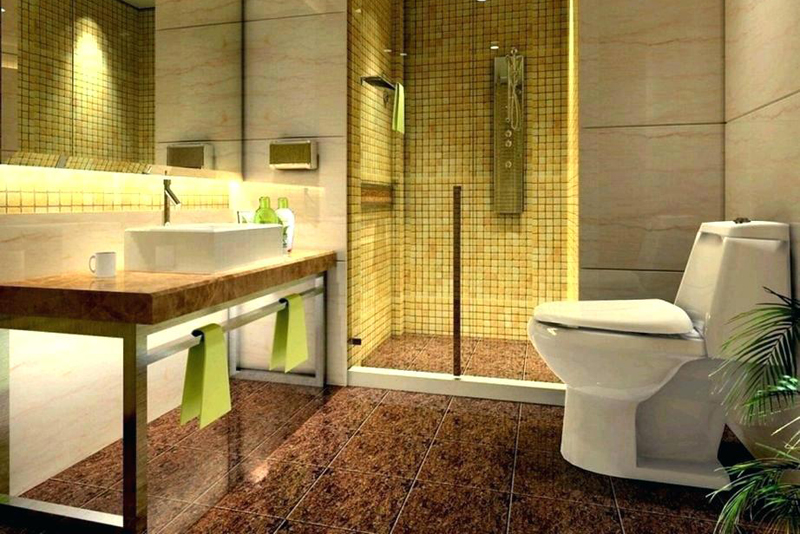
Warm off-white tends to mellow mustard and ochre, whereas a cleaner white produces a sharper boundary around brighter yellows. Which direction looks better depends on whether the room is meant to feel soft and relaxed or crisper and more graphic.
Wood introduces another layer without demanding a third strong color. Oak, walnut, rattan, and similar finishes are especially useful when yellow and white together begin to feel too clean or flat.
Yellow and Blue Bathrooms Work Better With Controlled Saturation
Blue and yellow create a clear color contrast, but the pairing can become restless when both colors are highly saturated and used across large surfaces. Muting at least one of them usually makes the scheme easier to live with.
Soft blue beside mustard or ochre has a very different character from primary blue against bright yellow. Homes & Gardens shows yellow alongside blue, green, white, black, wood, and patterned finishes, which is a useful reminder that yellow does not need one prescribed companion color.
The size of each color field matters as much as the exact shades. Two bold colors may work perfectly well when one clearly occupies less visual space than the other.
Should Yellow or Blue Be the Main Bathroom Color?
Letting one shade lead usually gives the room a clearer hierarchy. Pale blue walls with a mustard vanity, for example, read differently from alternating equally strong blue and yellow across tile, cabinetry, walls, and textiles.
The relationship can just as easily be reversed. Yellow might carry the walls while blue appears in the vanity, towels, artwork, or a limited section of patterned tile.
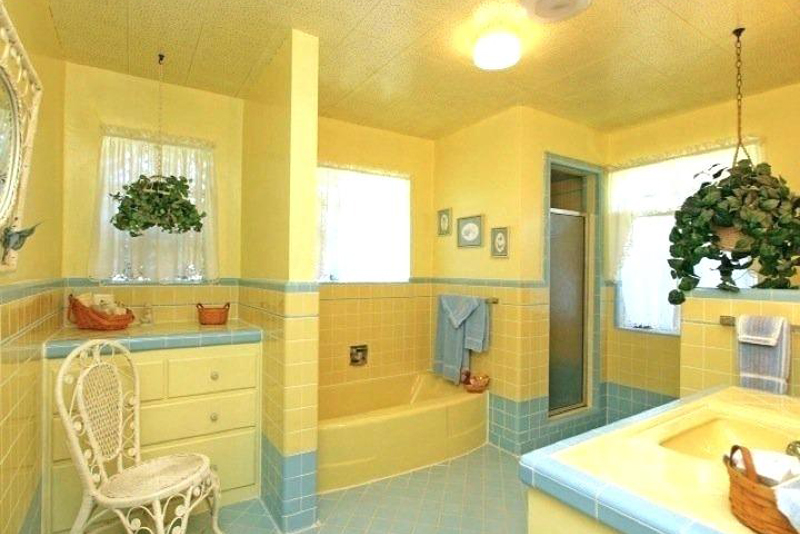
Repeating the secondary color once elsewhere in the room helps it feel intentional. A blue vanity with one smaller blue detail usually looks more connected than a single isolated object surrounded entirely by yellow.
Yellow and Green Bathroom Ideas Feel More Natural With Wood
Yellow and green are easier to combine when both move toward softer, earthier versions. Ochre with olive, butter yellow with sage, or dusty yellow with a deeper green creates a much calmer effect than pairing two highly saturated shades.
Wood fits naturally between them because it shares some of their warmth without becoming another strong color. A timber vanity, mirror frame, shelf, or stool can bridge the two sides of the palette.
Plants may reinforce the relationship if the room offers the light and conditions they need. They work best when selected as living plants first rather than as a convenient green decorating accessory.
This type of palette also leaves room for future changes. When the wood and green elements are relatively permanent, yellow paint or textiles can be adjusted later without rebuilding the whole scheme.
Retro Yellow Bathroom Ideas Without Creating a Time Capsule
Mustard yellow naturally carries a retro association, which can be useful when an older bathroom already contains yellow tile or period details. Replacing everything is not the only route to making those features feel deliberate again.
Existing yellow tile can sit comfortably beside warm cream, dark wood, muted blue, olive green, or restrained black accents. Changing the surfaces around it often alters its character more than trying to disguise the tile itself.
A few period-influenced details are usually enough. Rounded mirrors, globe lighting, patterned flooring, or a vanity with a subtle retro reference can support mustard tile without turning the room into a themed reproduction.
What Can You Pair With Existing Mustard Yellow Bathroom Tile?
Look first at the undertone of the tile. Some mustard shades lean orange or brown, while others have more green or gray in them, and those differences change which neighboring colors feel settled.
Warm mustard often sits comfortably with cream, walnut, olive, and muted blue. Cooler yellow tile may respond better to crisp white, charcoal, dark green, or a cooler wood tone.
Do not rely on a digital swatch when matching an existing tiled bathroom. Glaze, grout, reflections, and the room’s own lighting can shift the apparent color enough to make an online match misleading.
Dark Yellow and Ochre Can Make a Bathroom Feel Warmer
Deep yellow does not automatically make a bathroom feel smaller. Coverage, available light, surrounding colors, and surface texture all influence how heavy the finished room feels.
Ochre on a vanity or on the lower section of a wall gives the color a strong presence without surrounding the room completely. Used across all four walls, it creates a more immersive atmosphere that may suit a compact powder room just as well as a larger bathroom.

There is also no universal reason to avoid yellow flooring or ceilings simply because the walls are dark yellow. Tonal rooms can work when adjacent surfaces vary enough in value, sheen, or texture to remain visually separate.
White sanitaryware, stone, wood, dark metal, or patterned textiles can provide those breaks. The room needs contrast somewhere, but that contrast does not always have to come from making everything else pale.
Small Yellow Bathroom Ideas Can Be Bolder Than Expected
Compact bathrooms do not have to retreat into pale color. Because there is less wall area, a stronger yellow can create a concentrated effect without spreading into the rest of the home.
A single yellow feature is the easiest way to control that intensity. A vanity, one painted wall, backsplash, tiled shower section, or colored bath exterior can carry most of the room’s personality while quieter finishes sit around it.
Another route is to use yellow more extensively and change the material rather than the color. Painted wall, glazed tile, fabric, and cabinetry can occupy related yellow tones without collapsing into one uninterrupted surface.
Small rooms often expose proportions more clearly than large ones, so placement becomes especially noticeable. A bold vanity with breathing room around it may feel more deliberate than several smaller yellow accents competing for attention.
How Much Yellow Should You Use in a Bathroom?
The strength of the shade matters more than an arbitrary percentage. A subdued butter yellow can comfortably cover more space than an intense acid yellow because it puts less visual pressure on the rest of the room.
Permanence matters too. A painted wall can be changed comparatively easily, whereas replacing tile may involve demolition, waterproofing, labor, and a much larger budget.
A practical hierarchy looks like this:
- use yellow accessories when you want the lowest commitment;
- use paint when the color should noticeably shape the room;
- use a colored vanity when one defined focal point is enough;
- use yellow tile when the shade is intended to stay for years;
- combine several yellow surfaces when an immersive palette is genuinely the goal.
There is no ideal ratio that applies to every bathroom. If the vanity, bath, floor, walls, and decorative details still read as separate elements, the color distribution is probably doing its job.
Yellow Bathroom Tile, Paint or Vanity?
Paint gives the most flexibility across a large surface. It is a practical way to try butter yellow, mustard, ochre, or a warmer cream before committing similar colors to tile or cabinetry.
Tile introduces other variables because grout, gloss, pattern, and scale become part of the color. Small glazed yellow tiles can appear much more animated than one painted wall even when both materials are close in hue.
A yellow vanity concentrates the color into a single architectural feature. That works particularly well when most of the bathroom already exists and there is no reason to replace serviceable tile or sanitaryware simply to introduce a new palette.

When the project also involves vanity proportions, mirrors, storage, faucets, and lighting, our modern bathroom ideas deal with those decisions separately. This page keeps the focus on how yellow itself behaves in the room.
Which Yellow Bathroom Update Is Easiest to Reverse?
Textiles and accessories carry the least commitment. Towels, bath mats, artwork, storage pieces, and a shower curtain can introduce yellow without altering a permanent surface.
Paint occupies the middle ground because it can transform the room but remains comparatively easy to replace. Cabinetry and especially tile ask for more confidence in the shade because changing them later takes more work.
If yellow tile is being installed rather than inherited, the color should make sense with the tile’s scale, surface, grout, and location. Choosing the material only because the shade happens to be fashionable gives the decision very little support once tastes move on.
Bathroom Lighting Can Change How Yellow Looks
Yellow already contains warmth, so warmer artificial light can intensify it. A mustard wall that looks balanced in daylight may shift toward amber after dark when the room depends entirely on electric lighting.
Cooler light changes the relationship in another direction and can make certain yellows appear sharper or slightly greener. Looking at the actual samples under the fixtures that will remain in the bathroom is much more reliable than choosing a theoretical color temperature first.
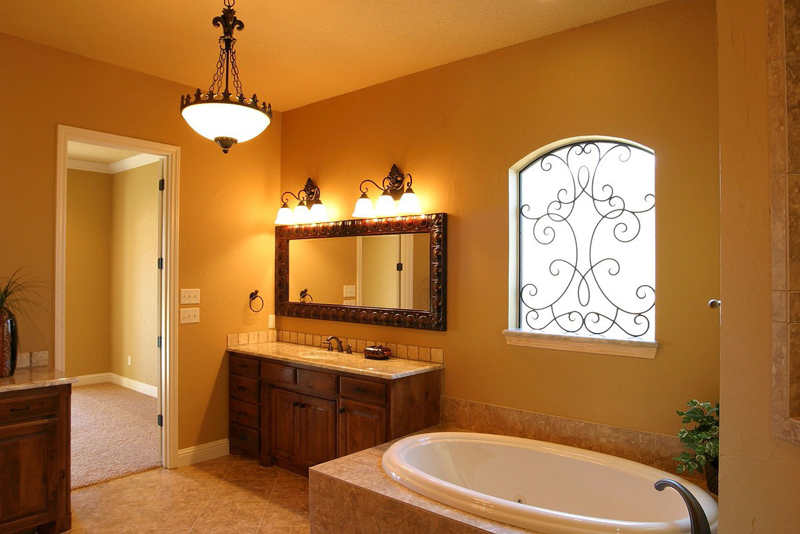
Lighting around the mirror has a practical role as well. A flattering warm atmosphere is less useful if skin tones, grooming details, or other colors become difficult to judge accurately.
Benjamin Moore’s bathroom color inspiration also treats bathroom palettes through relationships between wall, trim, and accent colors rather than presenting one shade as an isolated choice. That is especially relevant with yellow, because surrounding whites and neutrals can change its character quickly.
Yellow Bathroom Decorating Ideas Without a Full Renovation
Paint is not the only way to test yellow. Towels, artwork, a mirror frame, small storage pieces, a stool, or a shower curtain can shift the palette without disturbing tile, plumbing, or cabinetry.
This approach is particularly easy in bathrooms that already have neutral permanent materials. White, cream, gray, stone, and wood give yellow accents enough room to register without requiring several other colors to change at the same time.
For a broader refresh built around mirrors, textiles, accessories, and similar lower-commitment changes, our bathroom decorating ideas cover that intent in more detail. Here, those elements matter mainly as ways to control the amount of yellow.
Repeating the color a few times is usually enough to connect the room. Once every shelf, towel, container, and decorative object is yellow, the repetition starts to overpower the individual pieces.
Yellow Bathroom Design Mistakes Usually Come From Too Much Agreement
Choosing an unpopular shade is rarely the main problem. Bathrooms become harder to balance when too many surfaces share almost the same color, intensity, and texture.
A bright yellow wall beside equally bright yellow tile, cabinetry, towels, and accessories leaves very little hierarchy. White, wood, stone, blue, green, black, or another quieter material can interrupt that repetition and give the stronger yellow more definition.
A few problems are worth catching before materials are ordered:
- selecting yellow paint without checking it under bathroom lighting;
- matching every accessory to one exact shade;
- combining several highly saturated colors with no quieter surface;
- choosing permanent yellow tile based mainly on a passing trend;
- assuming a small bathroom should use only pale yellow;
- pairing very warm lighting with an already orange-leaning yellow without testing it;
- ignoring undertones in existing stone, tile, flooring, or cabinetry.
Samples are far more useful when placed together than when judged separately. What looks appealing on its own may feel entirely different once the permanent materials and actual light of the bathroom enter the comparison.
Yellow Bathroom Ideas Work Best When the Shade Has a Clear Role
Yellow can sit quietly in the background, anchor one major feature, or appear as a smaller accent. Problems usually start when walls, vanity, tile, textiles, and accessories all compete to be the main yellow statement.
Pale yellow can warm a broad surface without dominating it, while mustard or ochre can give a vanity or tiled area much stronger identity. Brighter yellows become easier to live with when their boundaries are clear and the surrounding materials have enough restraint.
The finished bathroom does not need to announce its color scheme from every angle. When the shade supports the room rather than replacing the room’s entire design, yellow tends to feel much less dependent on a particular trend cycle.